TRENDING

Monday, 2 November 2026
----------------------
22 Jumada Al-Awwal 1448 AH
Massive protests have swept across India's capital, New Delhi, as opposition parties and activists rally against the deletion of nearly 130 million names from the country's voter rolls. This unprecedented purge raises fundamental questions about democratic fairness and who truly holds the power in the world's largest democracy.
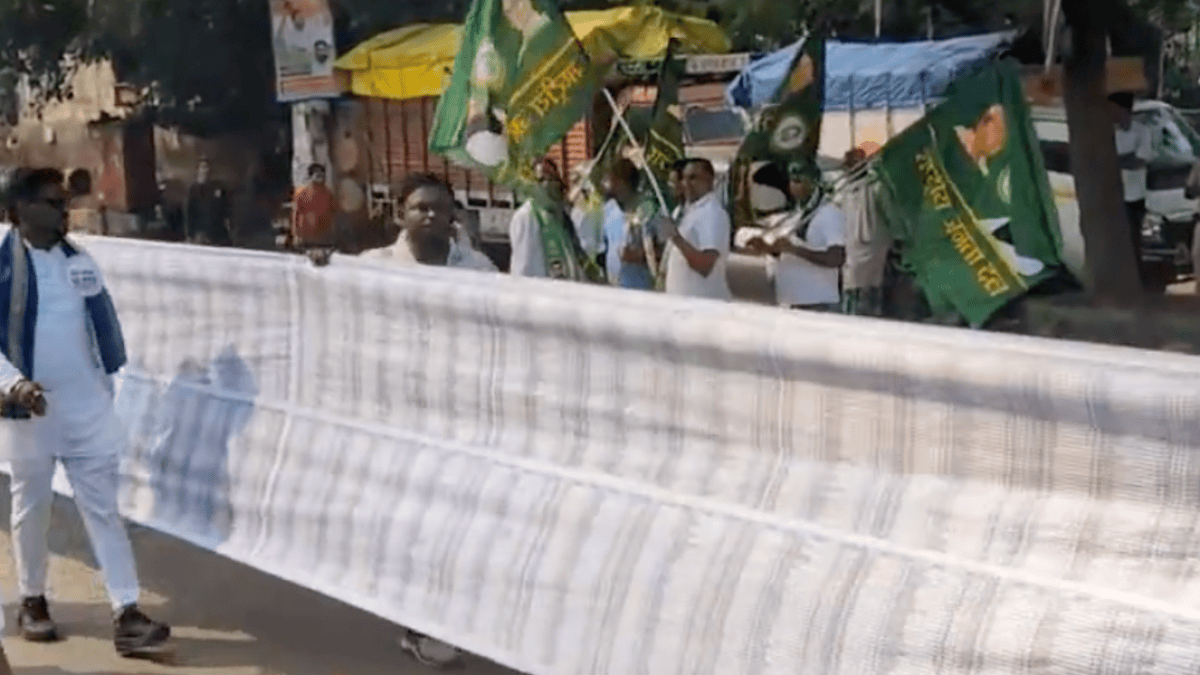
In a striking display of public discontent, protesters in New Delhi recently unfurled a one-kilometer-long banner bearing the names of citizens allegedly removed from India's voter rolls. This dramatic demonstration was part of a larger, sustained campaign by opposition parties and civil society groups, who are demanding the resignation of the country's election chief. Their core grievance centers on the reported deletion of nearly 130 million names from the electoral registers, a move they argue disproportionately affects marginalized communities and undermines the integrity of the democratic process.
The deletion of such a vast number of voters from the electoral rolls is not merely an administrative exercise; it is a profound act with far-reaching implications for the balance of power within India's democratic framework. The Election Commission of India (ECI), constitutionally tasked with overseeing free and fair elections, possesses significant autonomy. However, its actions are always scrutinized through the lens of political advantage, especially in a country as diverse and politically charged as India.
At its core, the power dynamic revolves around electoral advantage. Any large-scale deletion or inclusion of voters can shift the demographic composition of constituencies, potentially benefiting one political party over another. The ruling Bharatiya Janata Party (BJP), like any incumbent, seeks to consolidate its power, and the electoral rolls are a critical tool in this endeavor. While the ECI often cites reasons like duplicate entries, deceased voters, or individuals who have moved, the sheer scale of the deletions—representing roughly 15% of the total electorate—raises suspicions among opposition parties and civil society groups.
The process of voter registration and deletion is often opaque and complex, placing the onus on individual citizens to verify their status and re-register if necessary. This complexity, coupled with a lack of robust public awareness campaigns, creates a systemic disadvantage for those with limited access to information, technology, or bureaucratic navigation skills. The power, therefore, lies not just with the ECI, but also with the political actors who can leverage these administrative processes for electoral gain, whether through active manipulation or passive benefit from systemic inefficiencies.
The Election Commission of India is designed to be an independent body, a pillar of India's democracy. However, its independence has been a subject of debate, particularly under successive governments. Critics argue that the appointment process for election commissioners, which often involves the executive, can subtly influence the body's orientation. When the ECI undertakes such a massive 'clean-up' operation, its motivations and methodologies become central to the public discourse. Is it a genuine effort to purify the rolls, or does it inadvertently—or intentionally—serve a political agenda? The lack of transparent, verifiable data on *who* has been deleted, and *why*, fuels these suspicions, eroding public trust in the very institution meant to safeguard democratic fairness.
India's federal structure adds another layer of complexity. While the ECI is a national body, the actual implementation of voter registration and deletion often falls to state and local government officials. These officials, while ostensibly neutral, can be subject to local political pressures. The interaction between national directives from the ECI and local administrative realities can lead to inconsistencies and potential abuses. The power to influence local electoral officers, even subtly, can translate into significant electoral gains at the grassroots level, where elections are often decided by narrow margins.
The deletion of nearly 130 million names from India's voter rolls is not an abstract statistic; it represents a profound human cost, impacting the lives and political agency of millions of ordinary citizens. For those whose names have vanished, the right to vote—a fundamental pillar of democratic participation—is suddenly revoked, often without their knowledge or adequate recourse.
Imagine discovering, often on election day itself, that your name is no longer on the list. The burden then falls squarely on the individual to prove their eligibility, a process that can be arduous, time-consuming, and costly. This disproportionately affects daily wage earners, migrant laborers, and those in remote rural areas who cannot afford to take time off work, travel to administrative offices, or navigate complex bureaucratic procedures. For them, the right to vote becomes a privilege, not a guarantee, dependent on their ability to overcome systemic hurdles.
The demographic breakdown of the deleted voters is crucial. While official statements often attribute deletions to duplicates or deceased individuals, anecdotal evidence and studies suggest that marginalized communities, religious minorities, and lower-caste groups are often overrepresented among those removed. These groups frequently face challenges in accessing official documentation, have less stable addresses, and may be less informed about administrative updates. If the deletions are indeed concentrated within these communities, it amounts to a silent disenfranchisement, effectively diminishing their collective political voice and their ability to influence policy decisions that directly affect their lives. This is not just about losing a vote; it's about losing representation and the power to hold elected officials accountable.
Beyond the immediate loss of voting rights, such large-scale deletions erode public trust in democratic institutions. When citizens feel their voice is being systematically silenced, or that the electoral process is rigged against them, it fosters cynicism and apathy. This can lead to decreased civic engagement, a weakening of democratic norms, and potentially, social unrest. For a country as diverse and populous as India, maintaining faith in the fairness of its elections is paramount to its social cohesion and stability. The human cost is therefore also a cost to the collective democratic spirit of the nation.
Governments and official bodies, when faced with controversies of this magnitude, often employ specific narratives to manage public perception. In the case of India's voter roll deletions, the official narrative typically emphasizes administrative efficiency, the need to
Official reasons cited by the Election Commission of India include duplicate entries, deceased voters, and individuals who have moved. However, opposition parties and activists allege that the process is opaque and potentially targets specific demographics for political advantage.
The deletion of millions of names can lead to widespread disenfranchisement, erode public trust in electoral institutions, and potentially alter election outcomes. It raises concerns about the fairness and integrity of the democratic process in the world's largest democracy.
While official data is limited, reports suggest that marginalized communities, religious minorities, and lower-caste groups are disproportionately affected. These groups often face greater challenges in accessing official documentation and navigating complex bureaucratic processes to verify or re-register their voting status.
Source referenced: ALJAZEERA
This brief was synthesized by our Editorial Engine and reviewed by The Ground Narrative team.