TRENDING

Sunday, 1 November 2026
----------------------
21 Jumada Al-Awwal 1448 AH
The United States added three Chinese companies to its Forced Labor Prevention Act list, prompting a fierce rebuttal from Beijing. The move deepens a trade dispute that reverberates through factories, markets, and ordinary lives on both sides of the Pacific.
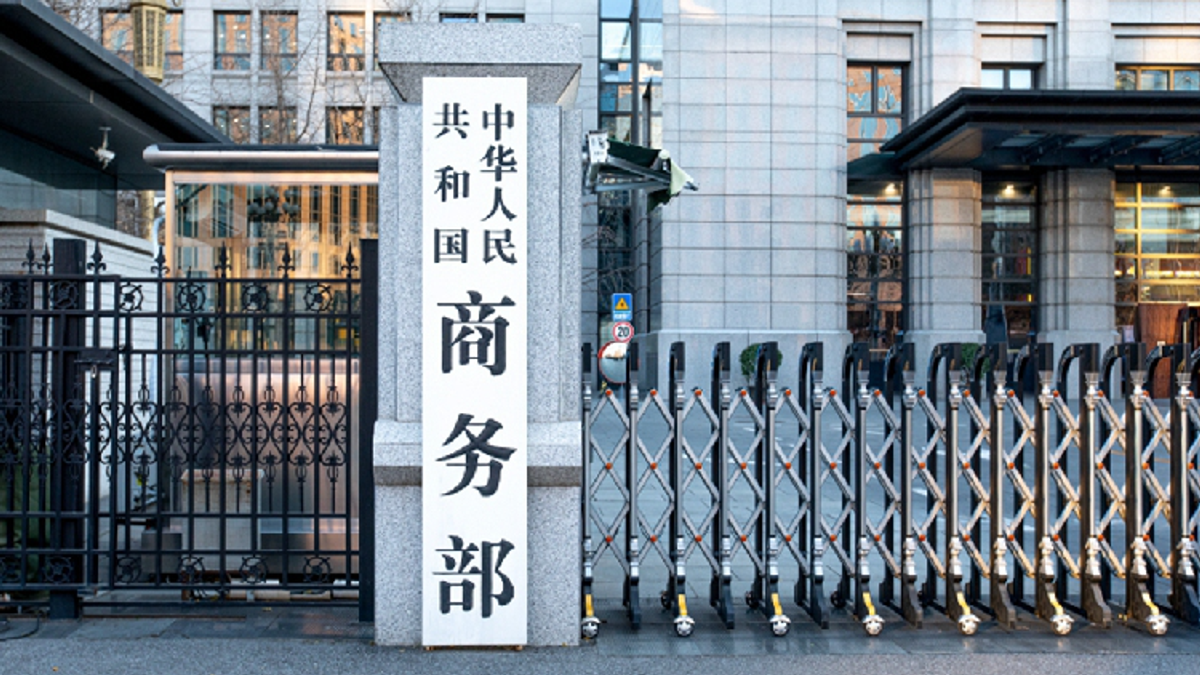
The United States announced on October 29, 2026 that three Chinese entities were placed on the Uyghur Forced Labor Prevention Act Entity List, effectively barring them from U.S. imports. China responded through its Ministry of Commerce and Foreign Ministry, condemning the action as unfounded protectionism and vowing counter‑measures.
The episode sits at the intersection of three structural forces that have shaped Sino‑American relations for over a decade.
Washington frames the blacklist as a compliance tool for the Forced Labor Prevention Act, a law passed in 2021 after bipartisan pressure from labor groups and human‑rights NGOs. Legislators use the issue to signal moral leadership to constituents, especially in swing states where supply‑chain ethics have become electoral fodder. In Beijing, the narrative is inverted: the government portrays the blacklist as a continuation of a long‑standing campaign to delegitimize its governance in Xinjiang, rallying nationalist sentiment ahead of the 2027 Party Congress.
Both economies remain deeply intertwined. The three firms targeted are involved in biomedical technology—a sector where Chinese R&D capacity has surged and U.S. firms rely on Chinese components for cost‑effective production. By blacklisting them, the United States hopes to pressure Chinese firms to alter internal labor practices while simultaneously nudging multinational buyers toward alternative suppliers, many of which are based in Southeast Asia or on‑shore U.S. facilities.
The move aligns with a broader U.S. strategy to tighten export controls on emerging technologies, a policy area where allies such as the European Union, Japan, and Australia have signaled willingness to coordinate. For Beijing, the blacklist provides a pretext to accelerate its “dual‑circulation” policy, pushing for greater self‑sufficiency in high‑tech sectors and deepening ties with the Belt and Road network to offset potential market losses.
While diplomatic statements focus on abstract principles, the fallout lands on concrete groups.
In Xinjiang’s industrial parks, thousands of workers—both ethnic Uyghurs and Han—face heightened uncertainty. Companies flagged by the list risk losing export contracts, prompting layoffs or wage cuts. Even if the allegations of forced labor are contested, the perception of risk can trigger pre‑emptive downsizing, leaving families without income.
Beyond the three headline firms, dozens of Chinese SMEs supply components to the blacklisted entities. Their exposure to U.S. markets is indirect but significant; a loss of downstream orders can cascade into cash‑flow crises, forcing some to close or seek cheaper labor elsewhere, often in regions with weaker labor protections.
Western institutional investors, guided by ESG (environmental, social, governance) mandates, are compelled to divest from any firm linked to the blacklist. This triggers market volatility for Chinese tech stocks, eroding retirement savings for Chinese citizens who hold domestic equities, and prompting fund managers to re‑allocate capital toward sectors deemed “politically safe,” potentially inflating asset bubbles elsewhere.
Official narratives on both sides omit layers that shape the real power balance.
U.S. manufacturers of medical devices have lobbied for stricter import controls, arguing that reliance on Chinese components threatens national security. Their influence is downplayed in public statements that frame the blacklist solely as a human‑rights measure.
Beijing’s condemnation of the blacklist is couched in the language of “false allegations,” yet the same apparatus that monitors labor practices also tightens surveillance of ethnic minorities and civil society. The human cost of that repression is largely invisible in the trade‑focused debate.
Countries in Central Asia and the Middle East, which have become alternative hubs for Chinese biotech production, receive little attention. Their regulatory capacity is limited, raising the risk that any labor‑rights concerns are simply shifted rather than resolved, a nuance absent from both Washington’s and Beijing’s press releases.
The next months will reveal whether the blacklist becomes a one‑off punitive gesture or the opening move of a broader export‑control campaign.
- Policy escalation: Watch for additional Chinese firms added to the list, especially those involved in semiconductor manufacturing, a sector already under intense scrutiny.
- Retaliatory measures: Beijing may impose its own export restrictions on critical minerals or launch investigations into U.S. firms operating in China, signaling a tit‑for‑tat escalation.
- Supply‑chain realignment: Track shifts in procurement by multinational corporations; a move toward “friend‑shoring” in Southeast Asia could reshape labor markets across the region.
- Domestic political cues: U.S. congressional hearings on forced labor and Chinese lobbying disclosures will indicate how much political mileage the issue continues to generate.
- Human‑rights reporting: Independent NGOs are likely to increase monitoring of Xinjiang factories, and any credible evidence—positive or negative—could tilt public opinion and affect future policy decisions.
Staying alert to these signals will help ordinary citizens understand how a list of three companies can ripple through economies, influence election debates, and ultimately affect the daily lives of workers far beyond the headlines.
The U.S. government says the firms are linked to alleged forced labor in Xinjiang, and the listing is meant to enforce the Forced Labor Prevention Act and protect supply‑chain integrity.
Companies risk losing U.S. market access, which can lead to layoffs, wage cuts, or shutdowns for factories and suppliers, directly impacting workers and their families.
Analysts expect more Chinese entities could be added to the list, while Beijing may respond with its own export restrictions or legal challenges, further tightening the trade relationship.
Source referenced: CGTN
This brief was synthesized by our Editorial Engine and reviewed by The Ground Narrative team.