TRENDING

Sunday, 1 November 2026
----------------------
21 Jumada Al-Awwal 1448 AH
Decades after the Cold War's end, the promise of a unified Europe remains elusive, replaced by conflict. This analysis delves into the post-Soviet choices that alienated Russia and set the stage for the war in Ukraine.
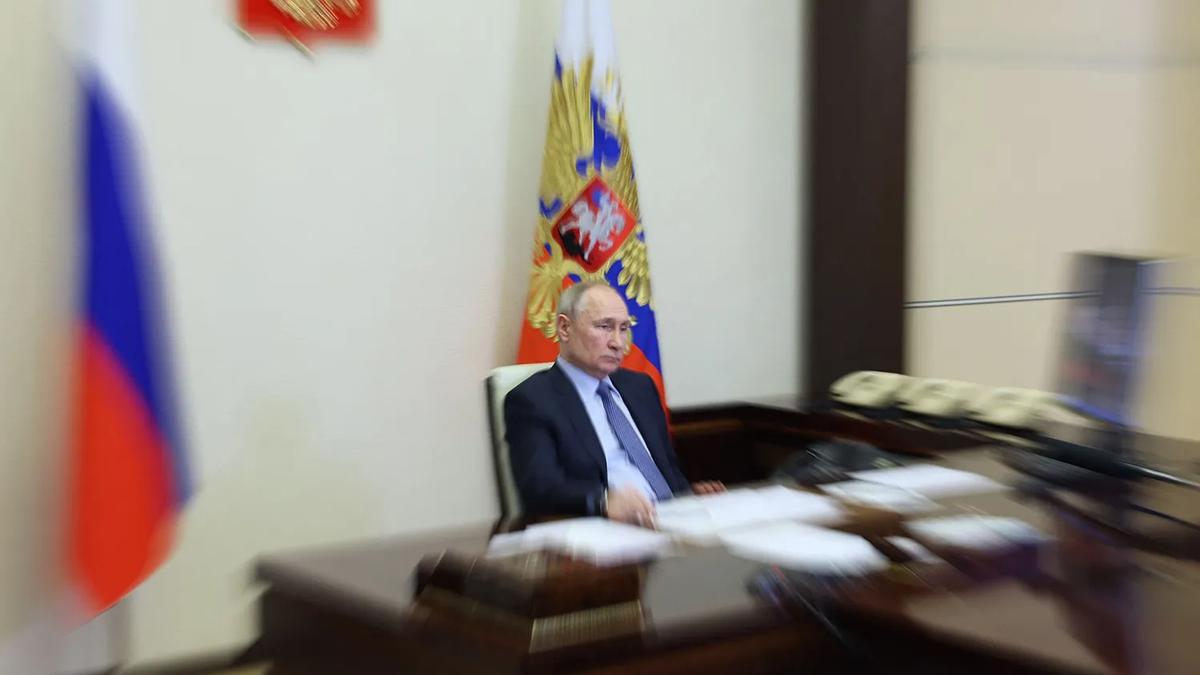
Russia's full-scale invasion of Ukraine in February 2022 shattered the illusion of a stable post-Cold War European order, unleashing widespread destruction and human suffering. This conflict, however, is not an isolated event but the culmination of decades of deteriorating relations between Moscow and the West. Recent analyses highlight a critical period following the collapse of the Soviet Union, suggesting that a series of strategic choices and missed opportunities by Western powers, particularly the United States, contributed significantly to Russia's alienation and its eventual turn towards confrontation.
The fall of the Berlin Wall and the dissolution of the Soviet Union presented a unique moment in history—a chance to forge a new, inclusive European security architecture. Instead, the period that followed was characterized by a fundamental divergence in vision between Washington and Moscow, shaping the power dynamics that led to the current crisis. At the heart of this divergence lay the question of NATO's future and Russia's place in the emerging world order.
In 1990, as Germany moved towards reunification, U.S. Secretary of State James Baker famously assured Soviet leader Mikhail Gorbachev that NATO would not expand "not one inch" eastward. This promise, however contested its official standing, became a symbol of Moscow's perceived betrayal by the West. As the sole remaining superpower, the United States largely dictated the terms of the post-Cold War settlement. While Western European nations might have been open to a more accommodating security alliance that included Russia, Washington doubled down on the existing NATO framework. The alliance, originally designed to "keep the Russians out, the Americans in, and the Germans down," sought a new purpose. This came in the form of eastward expansion.
Despite Russian complaints, NATO welcomed Poland, the Czech Republic, and Hungary in 1999, followed by a "big bang" expansion of seven more countries in 2004. For Central and Eastern European nations, this was a logical and understandable move, driven by historical anxieties about a resurgent Russia and a desire for security guarantees. For Moscow, however, each expansion was seen as a direct encroachment on its security interests and a violation of implicit understandings. This perception was exacerbated by NATO's evolving doctrine, particularly its shift from a purely defensive pact to an alliance willing to use offensive force, as demonstrated by its unilateral bombing campaign in Serbia in 1999 during the Yugoslav wars. Russia's inability to prevent this action highlighted its diminished power and fueled nationalist resentment at home.
Economically, the West's approach to post-Soviet Russia also played a critical role. Unlike the Marshall Plan that rebuilt Western Europe after World War II, Russia received painful International Monetary Fund loans in exchange for deeply unpopular economic reforms. This period of economic free fall in the 1990s, marked by widespread corruption and hardship, further destabilized the country and undermined any public goodwill towards Western models. The lack of genuine economic integration or support, coupled with the rapid expansion of NATO, created a fertile ground for anti-Western sentiment.
Even in the early 2000s, when Vladimir Putin first came to power, there were missed opportunities for reconciliation. Putin initially expressed openness to the West, offering significant intelligence assistance to the United States after 9/11 and even approving NATO bases in Central Asia. However, these gestures were largely perceived by Washington as a desperate bid for an ally rather than a genuine overture from a potential partner. This perceived snub, combined with continued NATO expansion and the growing assertiveness of U.S. foreign policy, solidified Moscow's conviction that the West was not interested in a partnership of equals but rather in maintaining its unipolar dominance. Ukraine, with its strategic location and historical ties, ultimately became the ultimate battleground where these clashing visions of security and power converged.
The decisions made in the decades following the Cold War, driven by competing power interests and strategic miscalculations, have culminated in immense human suffering. The most immediate and devastating cost is borne by the people of Ukraine.
For Ukrainians, the cost is existential. Millions have been displaced, becoming refugees in their own country or seeking asylum abroad. Tens of thousands of civilians and soldiers have been killed or wounded. Cities and towns have been reduced to rubble, essential infrastructure destroyed, and the nation's economy crippled. The war has inflicted deep psychological trauma, tearing apart families and communities. Beyond the immediate violence, the long-term impact on Ukraine's development, demography, and national identity will be profound, requiring generations to heal and rebuild.
While the direct violence is primarily in Ukraine, Russian citizens also bear a significant cost. The war has led to unprecedented international sanctions, impacting daily life, limiting access to global markets, and isolating the country culturally and economically. Thousands of Russians have fled the country to avoid conscription or political repression. Domestically, the conflict has fueled an increasingly autocratic regime, with a severe crackdown on dissent, independent media, and human rights. The future for young Russians is one of diminished opportunities and international isolation, while the nation's resources are diverted to a protracted war, hindering social and economic development.
Beyond the immediate belligerents, the conflict has destabilized the entire European continent. Millions of Ukrainian refugees have strained social services in neighboring countries. Energy markets have been volatile, leading to higher costs for consumers across Europe. Defense spending has surged, diverting funds from other critical public services. The war has also exacerbated global food insecurity, particularly impacting vulnerable nations dependent on Ukrainian grain exports. The erosion of trust and the re-emergence of bloc-based divisions threaten decades of diplomatic progress and regional cooperation.
Perhaps the most insidious human cost is the erosion of trust in international institutions and the norms of peaceful coexistence. The perceived breaking of promises, the unilateral actions, and the failure of diplomacy have weakened the very foundations of global governance. This makes future conflicts more likely and collaborative solutions to shared global challenges, such as climate change or pandemics, increasingly difficult to achieve. The human cost is not just measured in lives lost or homes destroyed, but in the collective loss of faith in a truly interconnected and peaceful world order.
In the aftermath of the Soviet Union's collapse, both Western and Russian narratives have selectively highlighted aspects of history, often downplaying their own contributions to the current state of affairs. The full story of how Moscow broke with the West and unleashed a more chaotic world is complex, often obscured by convenient omissions.
The dominant Western narrative often frames Russia's aggression in Ukraine as purely unprovoked and driven by an inherent imperial ambition. While Russia's actions are undeniable, this framing frequently omits the historical context of NATO expansion and the perceived arrogance of a unipolar moment. What is downplayed is the significant analytical viewpoint that there were alternative paths—opportunities to integrate Russia into a broader European security framework, offer substantial economic aid akin to the Marshall Plan, and genuinely address Moscow's security concerns. The idea that the United States could have fostered a different relationship with a post-Soviet Russia, one based on partnership rather than containment, is often sidelined. The focus on Russia's internal authoritarian turn, while valid, often overshadows the external pressures and perceived slights that contributed to that turn.
Conversely, Russia's official narrative consistently portrays NATO expansion as an existential threat, justifying its actions in Ukraine as defensive measures against Western aggression. This narrative conveniently omits or downplays Moscow's own imperial ambitions, its suppression of democratic movements in its near abroad, and its long history of asserting dominance over neighboring states. The idea that Ukraine has a sovereign right to choose its own alliances and path is dismissed, framed instead as a puppet state of the West. Furthermore, the internal dynamics of Russia's political system—the consolidation of power by Vladimir Putin, the dismantling of democratic institutions, and the systematic repression of dissent—are rarely acknowledged as factors contributing to its belligerent foreign policy. The narrative of a unified Russia standing against a hostile West obscures the internal costs and sacrifices imposed on its own population.
Ultimately, both sides engage in a form of
Source referenced: FOREIGNPOLICY
This brief was synthesized by our Editorial Engine and reviewed by The Ground Narrative team.