TRENDING

Sunday, 1 November 2026
----------------------
21 Jumada Al-Awwal 1448 AH
China has voiced
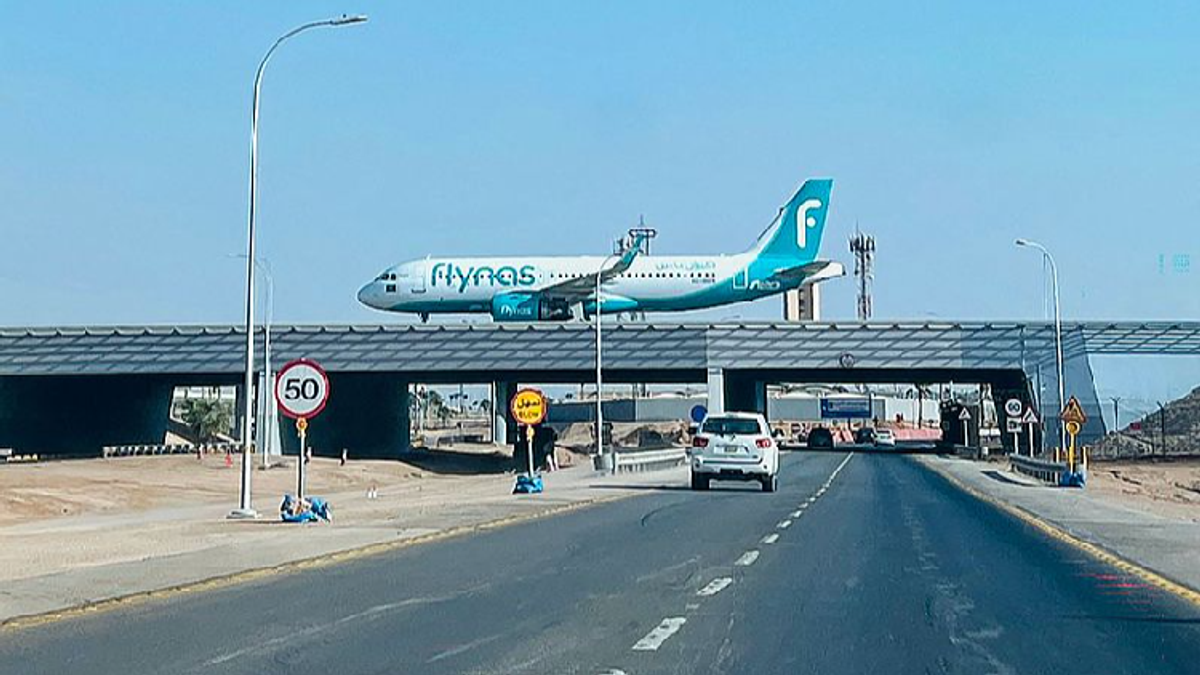
On October 28, 2026, China voiced "grave concern" over the ongoing volatility in the Middle East, specifically addressing reports of Yemen's Houthi forces targeting a Saudi Arabian defense ministry facility and a civilian airport. During a regular press briefing, Chinese Foreign Ministry spokesperson Guo Jiakun condemned attacks on civilian infrastructure and called for all parties to resolve their disputes through negotiation to restore regional peace and stability. This statement comes amidst continued reports of reciprocal strikes between Saudi Arabia and the Houthi movement.
China's pronouncement of "grave concern" is not merely a humanitarian gesture; it is a calculated articulation of its deep-seated economic and strategic interests in a region vital to its global ambitions. The Middle East is the primary source of China's energy imports, with Saudi Arabia being a cornerstone supplier. Stability in the Persian Gulf is paramount for securing these energy lifelines, which fuel China's vast industrial complex and sustain its economic growth. Any disruption, such as attacks on oil infrastructure or shipping lanes, directly threatens China's national security and economic prosperity.
Beyond energy, the Middle East is a critical node in China's ambitious Belt and Road Initiative (BRI). Ports, railways, and infrastructure projects across the region are designed to facilitate trade and connectivity between Asia, Africa, and Europe, consolidating China's economic influence. Instability, particularly in countries like Yemen which borders key shipping routes, poses significant risks to these investments and the broader vision of a Sino-centric global trade network. China seeks to expand its influence without becoming entangled in the region's complex military conflicts, preferring a diplomatic and economic approach that contrasts with the traditional US military-first presence. Its call for "dialogue and negotiation" reflects this strategy: a desire to de-escalate tensions and protect its economic interests without committing military resources or taking overt sides in local disputes.
For Saudi Arabia, the continued Houthi attacks represent a direct challenge to its sovereignty, national security, and regional dominance. The targeting of civilian airports and defense facilities underscores the Houthi movement's capacity for asymmetric warfare, using drones and missiles to project power deep into Saudi territory. This capability forces Riyadh to expend significant resources on air defense and to consider the political costs of continued conflict. Saudi Arabia's leadership, under Crown Prince Mohammed bin Salman, is aggressively pursuing economic diversification through Vision 2030, which relies heavily on foreign investment and a perception of stability. Persistent attacks deter investors and tourists, undermining these ambitious goals. The conflict with the Houthis is also inextricably linked to the broader proxy rivalry with Iran, which Riyadh views as supporting and arming the Yemeni rebels. Defending against Houthi aggression is therefore also a means of pushing back against Iranian influence in the Arabian Peninsula.
The Houthi movement, officially known as Ansar Allah, operates from a position of asymmetric strength, leveraging its ability to strike Saudi targets to gain political concessions and assert its legitimacy within Yemen. Their attacks serve multiple purposes: demonstrating their resilience and military capabilities, pressurizing Saudi Arabia to lift blockades and engage in negotiations on their terms, and rallying domestic support by portraying themselves as defenders against foreign intervention. The Houthis have successfully transformed a localized insurgency into a regional threat, forcing major powers to acknowledge their role in the Yemeni conflict. Their continued defiance, despite years of Saudi-led coalition intervention, highlights the limitations of conventional military power against a determined, ideologically driven non-state actor. The Houthi strategy is to raise the cost of Saudi involvement in Yemen to an unsustainable level, forcing a withdrawal or a negotiated settlement that solidifies their control over significant parts of Yemen.
This intricate web of power dynamics is further complicated by the evolving role of the United States. While historically the dominant external power in the Middle East, Washington's perceived pivot towards Asia and its more cautious engagement in regional conflicts have created a vacuum. This shift has allowed other powers, including China, to expand their diplomatic and economic footprints. China's call for dialogue, while seemingly benign, subtly positions it as a responsible stakeholder and potential mediator, contrasting with the US's more interventionist past. This dynamic allows Beijing to advance its interests without inheriting the security burdens that have historically plagued Washington's Middle East policy.
The reverberations of these power struggles are most acutely felt by ordinary people, particularly in Yemen, where the conflict has spiraled into one of the world's worst humanitarian crises. While the recent reports highlight Houthi attacks on Saudi soil, the daily reality for millions of Yemenis remains one of unimaginable suffering, largely unseen and unheard by the global public.
Years of conflict, exacerbated by blockades and economic collapse, have pushed Yemen to the brink of famine. Millions face severe food insecurity, relying on dwindling humanitarian aid that often struggles to reach those most in need. Children are particularly vulnerable, with widespread malnutrition leading to stunted growth and preventable diseases. The destruction of infrastructure – hospitals, schools, water systems, and roads – has crippled basic services, making survival a constant struggle. Displaced populations, forced from their homes by fighting, live in overcrowded camps with inadequate sanitation and shelter, vulnerable to epidemics. The targeting of civilian airports, while causing concern in Saudi Arabia, pales in comparison to the systemic destruction of civilian life and livelihoods that has defined the Yemeni conflict for nearly a decade.
For Saudi civilians, the Houthi attacks, particularly those targeting airports and urban centers, introduce a palpable sense of insecurity. While Saudi Arabia's advanced air defense systems intercept many projectiles, the psychological impact of living under the threat of missile and drone strikes is significant. Families must contend with emergency alerts, disruptions to air travel, and the constant reminder that the war, once distant, can now reach their homes. This fear can affect daily life, economic activity, and the overall sense of well-being, even if direct casualties are relatively low compared to the devastation in Yemen. The attacks also create an environment of uncertainty for foreign investors and tourists, potentially slowing the progress of Saudi Arabia's ambitious economic transformation plans and impacting job creation for ordinary Saudis.
Beyond the immediate conflict zones, the continued instability in the Middle East has broader human costs. Fluctuations in global oil prices, often triggered by regional tensions, impact energy costs for households worldwide. Disruptions to vital shipping lanes, such as the Bab el-Mandeb Strait at the mouth of the Red Sea, can lead to delays and increased costs for consumer goods globally. The specter of a wider regional conflagration, drawing in more actors, carries the potential for massive displacement, creating new refugee crises that strain international resources and burden neighboring countries. The human cost extends beyond direct casualties to the erosion of trust, the deepening of sectarian divides, and the perpetuation of cycles of violence that will affect generations.
While China's expression of "grave concern" and call for dialogue appears to be a neutral, peace-loving stance, the underlying narrative often downplays Beijing's strategic self-interest. China frames its involvement as purely diplomatic and economic, avoiding the historical baggage of Western powers in the region. However, its primary concern is not humanitarian intervention but the uninterrupted flow of oil and the security of its BRI investments. The stability China champions is a stability that serves its economic growth, not necessarily a fundamental shift in the power dynamics that fuel the conflict. Beijing has carefully cultivated relationships with all major players—Saudi Arabia, Iran, and other Gulf States—allowing it to project an image of impartiality while securing its access to resources and markets. This approach avoids the direct military entanglements that have historically burdened the United States in the region, allowing China to reap economic benefits without bearing the full security costs. What is often omitted is that China's "non-interference" policy, while lauded by some, also means it is less likely to exert significant pressure on human rights issues or to challenge the internal political structures of the regimes it partners with, prioritizing stability over deeper reform or accountability.
Saudi Arabia, in turn, often frames the Houthi attacks as unprovoked aggression from an Iranian proxy, downplaying its own extensive military intervention in Yemen since 2015. The narrative focuses on defending its borders and civilian infrastructure, while often omitting the devastating impact of its air campaign and blockade on the Yemeni population. The Saudi-led coalition's actions have contributed significantly to the humanitarian catastrophe in Yemen, a fact often minimized in official statements. By emphasizing the threat to its own territory, Riyadh seeks to garner international sympathy and justify its continued military operations, deflecting scrutiny from the broader consequences of its involvement. The complex internal dynamics of Yemen, including the historical grievances and political aspirations that fuel the Houthi movement, are often simplified into an external Iranian plot, rather than acknowledged as a multifaceted civil conflict with deep local roots.
The Houthi movement, for its part, frames its attacks on Saudi Arabia as legitimate acts of self-defense and retaliation against a foreign aggressor. While these attacks do target military facilities, the inclusion of civilian infrastructure like airports blurs the lines, and the human cost of such actions on Saudi civilians is often downplayed or dismissed as a necessary consequence of war. The Houthis leverage the narrative of resistance against Saudi and Western influence to maintain popular support within Yemen, often omitting or minimizing their own internal human rights abuses and the suppression of dissent in areas under their control. The complexity of their relationship with Iran is also often simplified, either as complete subservience by Saudi Arabia and its allies, or as purely indigenous by the Houthis themselves, obscuring the nuanced reality of shared strategic interests and limited material support.
What all powerful actors collectively downplay is the long-term, systemic nature of the region's conflicts. These are not isolated incidents but symptoms of deeper structural issues: unresolved historical grievances, competition for regional hegemony, the struggle for political legitimacy, and the legacy of external interventions. Calls for "dialogue" are often made without addressing the fundamental power imbalances and the existential stakes involved for the warring parties. The idea that a simple negotiation can resolve decades of animosity and proxy warfare often overlooks the deep-seated mistrust and the entrenched interests of various factions, both internal and external. The focus remains on immediate de-escalation rather than on a comprehensive, inclusive political settlement that addresses the root causes of instability and empowers the local populations to determine their own future.
The coming months will reveal whether China's "grave concern" translates into more concrete diplomatic action or remains largely rhetorical. Watch for any signs of Beijing increasing its mediation efforts, perhaps by hosting direct talks between Saudi and Houthi representatives, or by coordinating with other regional and international actors. A key indicator will be whether China leverages its significant economic ties to exert pressure on either side, though its historical preference for non-interference suggests this is unlikely to be overt.
On the ground, observe the frequency and targeting of Houthi attacks on Saudi Arabia, and Saudi-led coalition responses in Yemen. Any escalation, particularly targeting critical oil infrastructure or major population centers, would signal a dangerous deterioration of the conflict and could prompt stronger international reactions. Conversely, a sustained period of reduced strikes could indicate behind-the-scenes de-escalation efforts or a shift in tactical priorities.
Pay close attention to the humanitarian situation in Yemen. Despite the focus on cross-border attacks, the internal crisis remains dire. Any significant changes in aid access, funding, or the political will to address the famine and displacement will be critical. The international community's response, or lack thereof, to the ongoing suffering will highlight the true priorities of global powers.
Finally, monitor the broader Iran-Saudi relationship. While not directly mentioned in the intelligence, the Yemen conflict is a key proxy battleground. Any movements towards direct or indirect dialogue between Riyadh and Tehran, or a breakdown in existing back-channel communications, could significantly alter the dynamics of the Yemeni war and the wider regional security landscape. The evolving role of the United States in the Middle East, particularly its engagement with Saudi Arabia and Iran, will also continue to shape the environment in which these regional conflicts play out.
China's concern is primarily driven by its significant economic interests in the Middle East, including securing energy supplies and protecting its Belt and Road Initiative investments. Regional instability threatens these vital economic lifelines and its broader strategic ambitions.
The Houthi forces, or Ansar Allah, are a Yemeni political and armed movement. They seek to assert their control within Yemen, challenge Saudi dominance, and gain political concessions through asymmetric warfare, often aligning with Iran.
The Yemen conflict has led to one of the world's worst humanitarian crises, with millions facing famine, displacement, and lack of basic services. Saudi civilians also experience fear and disruption from Houthi attacks, impacting daily life and economic stability.
Source referenced: CGTN
This brief was synthesized by our Editorial Engine and reviewed by The Ground Narrative team.