TRENDING

Sunday, 1 November 2026
----------------------
21 Jumada Al-Awwal 1448 AH
The narrative of artificial intelligence as an unstoppable, inevitable force overlooks a crucial historical truth: the public's power to shape technological change. Just as ordinary people influenced the Industrial Revolution, citizens today can demand accountability and ethical deployment of AI.
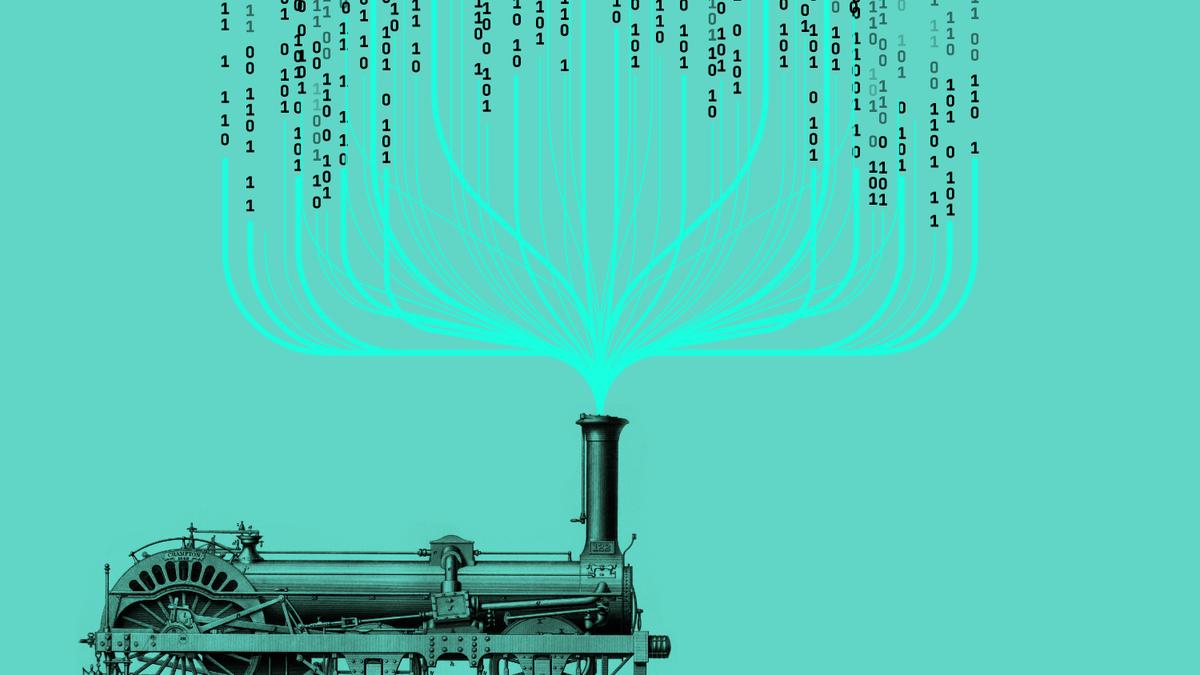
Across the globe, the rapid advancement of artificial intelligence is frequently presented as an inevitable, transformative force, poised to reshape societies and economies with unprecedented speed. This narrative often suggests that AI's trajectory is beyond human control, a technological 'revolution' that must simply be adapted to. However, this framing overlooks a fundamental lesson from history: the impact and spread of any potentially game-changing invention are ultimately determined not by the technology itself, but by the collective agency of people and institutions. The idea that AI is an intrinsically revolutionary force, too powerful to be contained or regulated, serves a specific agenda, often downplaying the very real capacity of the public to assert democratic oversight and shape its development.
The prevailing narrative of AI as an unstoppable revolution is a carefully constructed mechanism designed to centralize power and minimize accountability. At its core, this framework benefits a powerful alliance: the AI tech giants and the governments that leverage their innovations. For tech companies, portraying AI as an inexorable force allows them to accelerate deployment, bypass stringent regulations, and maximize profits without significant public pushback or liability for potential harms. They seek to operate in a regulatory vacuum, claiming their technology is too complex or too intrinsically revolutionary to be subjected to existing antitrust or product liability laws.
Governments, particularly the United States, play a dual role. On one hand, they are significant drivers of AI development through vast military and research contracts, mirroring how government funding fueled the Cold War rise of Silicon Valley and earlier industrial leaps. This public investment often grants them a vested interest in the rapid, unencumbered progress of AI for national security, economic competitiveness, and geopolitical advantage. On the other hand, the US government's current passivity regarding AI regulation effectively serves as an accelerant, allowing companies to push products to market without sufficient scrutiny. This inaction is not a neutral stance; it is a policy choice that prioritizes rapid innovation over public protection, creating an environment where the powerful can dictate the terms of engagement.
This dynamic creates a symbiotic relationship: tech companies benefit from government contracts and a light regulatory touch, while governments gain access to cutting-edge technology. Both parties benefit from a public perception that AI's advancement is a foregone conclusion, thereby discouraging organized resistance or demands for democratic control. The historical parallel to the Industrial Revolution is stark: early industrialists also sought to define their innovations as 'natural law' or 'progress' to dismantle traditional labor protections and customs, facing significant resistance from workers who understood the profound implications for their way of life. The power mechanics today are similarly geared towards maintaining control over the narrative and the pace of change, ensuring that the benefits accrue to a select few while the broader public bears the risks.
The human cost of an unregulated, rapidly deployed AI future is borne primarily by ordinary citizens, workers, and communities who have little say in its development but will face its profound consequences. The most immediate and visible cost is the potential for widespread job displacement. As AI automates tasks across various sectors, from manufacturing to white-collar professions, millions could find their livelihoods disrupted or rendered obsolete. Without proactive policies for retraining, universal basic income, or new forms of employment, this could lead to significant economic instability, widening inequality, and social unrest.
Historically, the introduction of new technologies has often been accompanied by attempts to erode worker protections. The Luddites of the 19th century, often mischaracterized as simply anti-technology, were in fact protesting the exploitative labor practices and the destruction of skilled trades brought about by the factory system. They sought to ensure that new machinery served collective needs rather than solely private profit. Today, AI poses a similar threat, potentially leading to increased surveillance in workplaces, algorithmic management that dictates tasks and performance, and a further devaluing of human labor. The ability of workers to organize and negotiate for fair terms could be severely undermined, leading to a race to the bottom in terms of wages and working conditions.
Beyond economic impact, the unregulated spread of AI carries significant societal risks. Defective or biased AI systems could perpetuate discrimination, make flawed decisions in critical areas like healthcare or criminal justice, and erode public trust in institutions. The ethical implications of autonomous weapons systems, widespread surveillance, and the potential for deepfakes and misinformation to destabilize democracies are profound. Without robust product liability laws, ethical guidelines, and democratic oversight, the public is left vulnerable to the unintended, and sometimes malicious, consequences of powerful technologies developed behind closed doors. The rapid pace of deployment means that these harms could become widespread before society has a chance to understand or mitigate them.
The narrative propagated by powerful actors — that AI is an unstoppable, inherently revolutionary force — deliberately omits several critical truths that empower the public to demand a different future. This framing is not an objective assessment of technological progress; it is a strategic maneuver to shape public perception and preempt resistance.
One of the most significant untold stories is the historical precedent of public resistance and agency in shaping technological change. The British Industrial Revolution, often cited as a model of rapid, inevitable transformation, was in fact a gradual process significantly slowed and shaped by the active resistance of working-class people. Despite lacking voting rights and legal unions, they organized, protested, and even broke machines, forcing the government to implement laws regulating working hours, safety, and child labor. Their actions demonstrate that technological progress is not an inexorable march but a contingent product of human will and collective action. The term 'Luddite' has been weaponized to dismiss legitimate concerns about technology's impact, obscuring the historical reality that these groups were not against machines, but against the exploitative relationships and unjust economic systems that new machines enabled.
Another crucial omission is the extent of public investment in AI development. Major technological leaps, including the rise of Silicon Valley and much of current AI research, have been heavily funded by government contracts, often for military applications. This means that taxpayers have been, and continue to be, the silent financiers of this 'revolution.' This public investment confers a legitimate right to demand a role in the development and governance of AI, ensuring that it serves collective well-being rather than solely private profit or state power. Governments and corporations downplay this fact to avoid accountability and maintain control over the technology's direction.
The powerful narrative of AI's 'unstoppable' nature also downplays the proven efficacy of regulation. The European Union, for example, has already passed comprehensive laws prohibiting AI systems that threaten human safety and rights, demonstrating that robust oversight is not only possible but can effectively slow the reckless rollout of AI products. This stands in stark contrast to the US government's current approach. Furthermore, historical examples like the nuclear non-proliferation treaties brokered between the United States and its arch-enemy, the Soviet Union, during the Cold War, prove that even the most dangerous technologies can be managed and limited through global cooperation and intentional policy. The claim that regulation would hand a disruptive advantage to rivals like China is largely a scare tactic; international standards and regulations can apply universally, ensuring a level playing field focused on safety and ethics.
As the AI landscape continues to evolve, several key indicators will reveal whether the public can reclaim its agency in shaping this technology or if powerful actors will succeed in cementing an unregulated future.
First, observe the emergence and strength of public pressure and organizing. Look for grassroots movements, labor unions, and advocacy groups demanding ethical AI, worker protections, and democratic oversight. The collective voice of citizens, reminiscent of the historical Luddites, will be critical in challenging the narrative of inevitability and forcing governments to act.
Second, pay close attention to regulatory developments beyond the European Union. Will other major economies, or even individual US states, follow the EU's lead in enacting comprehensive AI legislation? Specifically, watch for any shift in the US federal government's stance, particularly regarding the application of existing consumer protection, antitrust, and product liability laws to AI products. A move from passivity to proactive regulation would signal a significant change in power dynamics.
Third, monitor the international cooperation efforts around AI governance. Will nations move towards global norms, treaties, or shared frameworks for AI safety and ethics, similar to arms control agreements? The willingness of major powers to engage in such cooperation will be a strong indicator of whether the 'genie' can indeed be collectively managed.
Finally, continue to scrutinize the funding and deployment of AI in military contexts. The historical link between government military contracts and technological leaps remains strong. Watch for ethical debates and public outcry regarding autonomous weapons systems and the broader militarization of AI, as this area often drives the most rapid and least regulated advancements.
Source referenced: FOREIGNPOLICY
This brief was synthesized by our Editorial Engine and reviewed by The Ground Narrative team.