TRENDING

Monday, 2 November 2026
----------------------
22 Jumada Al-Awwal 1448 AH
A deadly blaze at Wang Fuk Court forced Hong Kong’s leader to apologize and unveil a sweeping reform package. The measures aim to fix systemic flaws, but ordinary residents will bear the real cost.
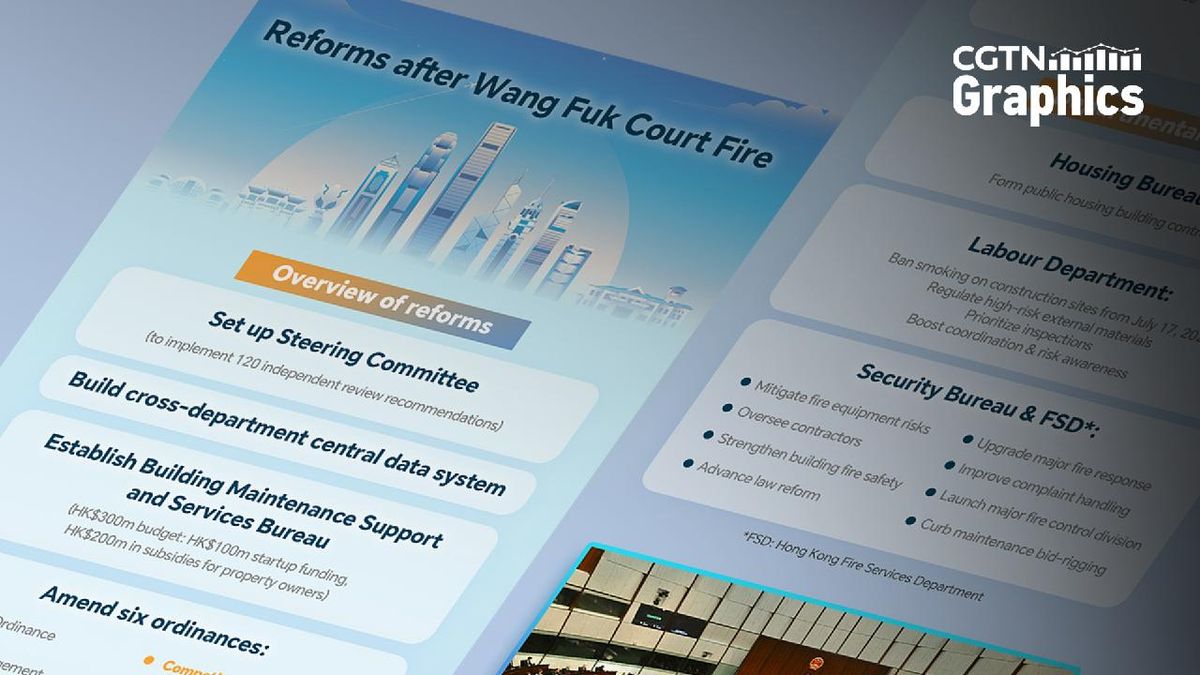
On October 31, 2026, a fire ripped through Wang Fuk Court, a high‑rise public housing block in Kowloon, killing several residents and displacing dozens more. Chief Executive John Lee appeared on television to apologise and released the Independent Committee’s investigation, which listed 120 recommendations for overhauling safety, management, and tenant rights.
The tragedy sits at the intersection of three powerful forces: the Hong Kong government’s political survival, the real‑estate conglomerates that dominate the city’s housing market, and Beijing’s broader agenda of maintaining stability in the Special Administrative Region.
- Political survival – Lee’s administration has been under pressure since the 2019 protests and the subsequent national security law. Any sign of governance failure threatens both local legitimacy and Beijing’s confidence in the “one country, two systems” model. By framing the fire as an isolated incident caused by outdated infrastructure, the government can present the reform package as a swift, decisive response, preserving its image.
- Real‑estate interests – The majority of Hong Kong’s housing stock is owned or managed by a handful of developers who also control the public‑private partnership contracts for public housing maintenance. The committee’s recommendations call for stricter fire‑safety audits, independent oversight, and a shift away from profit‑driven maintenance contracts. Implementing these changes would cut into the revenue streams of firms like Sun Hung Kai and Cheung Kong, giving the government a reason to negotiate tighter controls.
- Beijing’s stability calculus – The central government monitors Hong Kong’s social unrest closely. A large‑scale disaster that sparks public anger could be interpreted as a failure of the SAR’s governance, prompting Beijing to intervene more directly. By allowing Lee to lead the reform narrative, Beijing can claim that local authorities are capable of self‑correction, reducing the need for overt oversight.
The reform package itself reflects a compromise. It includes a new Housing Safety Authority staffed by civil servants and independent experts, mandatory quarterly fire drills, and a fund to retrofit older blocks. Yet, it also preserves the existing lease‑hold structure, keeping the long‑term profit model intact for developers.
The fire rendered over 200 families homeless, many of whom were already living in cramped, sub‑standard conditions. Temporary shelters are set up in community centres, but they lack privacy, heating, and adequate sanitation. For low‑income households, the loss of personal belongings translates into a financial shock that can take years to recover.
Firefighters and rescue crews worked around the clock, exposing themselves to toxic smoke and structural collapse risks. Several responders have reported respiratory issues weeks after the incident, highlighting gaps in protective equipment that the reform plan only partially addresses.
Wang Fuk Court housed a significant number of elderly tenants who struggled to evacuate quickly. The lack of accessible fire‑escape routes contributed to higher casualty rates among this vulnerable group. While the reforms propose retrofitting lifts and stairwells, the implementation timeline could span several years, leaving current residents exposed.
Beyond the physical injuries, survivors carry lasting psychological scars. The sudden loss of neighbours, the sight of flames engulfing familiar hallways, and the uncertainty of where they will live next have spiked rates of anxiety and depression in the community. Mental‑health services are stretched thin, and the reform package does not allocate dedicated funding for trauma counselling.
The Independent Committee’s report names several maintenance firms for neglecting fire‑safety protocols, yet the government’s press release glosses over any punitive measures. By focusing on systemic reforms rather than individual liability, officials sidestep the politically sensitive issue of holding powerful contractors legally responsible.
Official statements claim the fire was sparked by an electrical fault in a single unit. Independent engineers, however, have pointed to decades‑old fire‑break walls that were never properly sealed, allowing the blaze to spread rapidly. This technical detail is omitted from public briefings, downplaying the extent of construction shortcuts that have become commonplace.
The reform plan includes a HK$5 billion retrofitting fund, financed through a modest increase in public‑housing rents. For residents already paying the highest proportion of income on housing, even a small hike can push them into unaffordable territory. The government frames the cost as an investment in safety, but it does not foreground the immediate burden on tenants.
While Beijing’s spokesperson praised Hong Kong’s “swift response,” there is no public acknowledgment of the underlying governance challenges that led to the fire. This omission serves to maintain the narrative that the SAR is fully capable of self‑governance, masking the central government’s readiness to step in should unrest flare.
The next few months will reveal whether the announced reforms translate into concrete action or remain largely symbolic. Key indicators include: the appointment of the new Housing Safety Authority, the first round of fire‑safety audits, and any legal proceedings against the contractors named in the committee’s report. Watch for community protests demanding faster rehousing and for any shifts in rent policy that could signal hidden cost transfers to residents. Finally, monitor Beijing’s statements for any change in tone that might hint at deeper involvement in Hong Kong’s housing governance.
The committee issued 120 recommendations, including the creation of an independent Housing Safety Authority, mandatory quarterly fire drills, stricter fire‑safety audits, and a retrofitting fund to upgrade older public‑housing blocks.
While the reforms promise safer buildings, they also involve a modest rent increase to fund retrofits, and the implementation timeline may leave current tenants vulnerable for years.
Editor's Note: Analysis based on publicly released committee report and official statements; details on contractor liability remain limited.
Source referenced: CGTN
This brief was synthesized by our Editorial Engine and reviewed by The Ground Narrative team.


