TRENDING

Thursday, 22 October 2026
----------------------
11 Jumada Al-Awwal 1448 AH
Indian Prime Minister Narendra Modi vows 'stringent punishment' for exam fraud, but the youth-led 'Cockroach' protests pose a significant challenge to his government's authority and legitimacy.
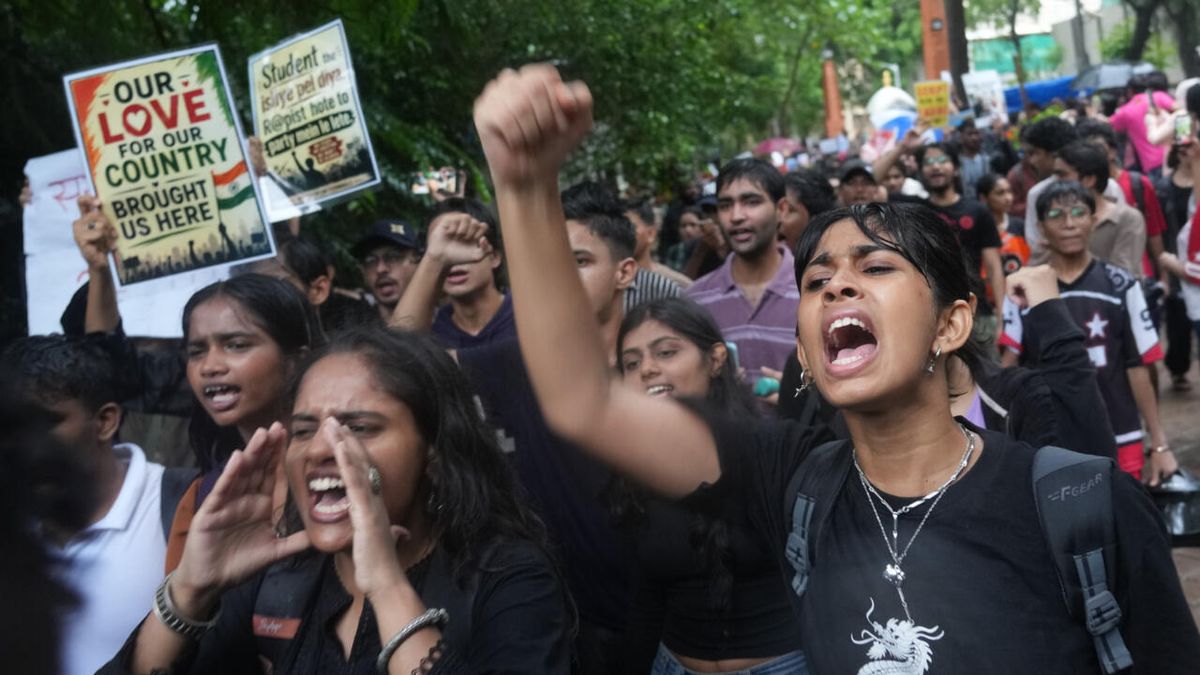
The 'Cockroach Janta Party' (CJP), a social media-driven movement, has emerged as a major force in India's youth-led protests against exam fraud and the government's handling of education. The protests, which began in May, have gained momentum in recent weeks, with thousands of students demonstrating in New Delhi and other cities.
The protests are sparked by a series of exam irregularities, including the leak of a medical entrance question paper and the online marking of examinations taken by nearly two million high school students. These incidents have undermined trust in India's testing system and fueled public anger.
Indian Prime Minister Narendra Modi has vowed to punish those involved in exam fraud, promising to set up fast-track courts to deal with the issue. However, his response has been seen as inadequate by many, who argue that the government has failed to address the root causes of the problem.
The 'Cockroach' protests have significant regional implications, as they pose a challenge to Modi's authoritarian style of governance. The protests have emerged as one of the biggest challenges to Modi since his re-election for a third term in office in 2024. The movement has also broadened its agenda to include concerns over unemployment, opportunities for young people, and what it describes as Modi's increasingly authoritarian style of governance.
The outcome of the 'Cockroach' protests will have significant consequences for India's politics and society. If the government fails to address the concerns of the protesters, it may lead to further unrest and erosion of trust in the system. On the other hand, if the government is able to address the issues, it may help to restore confidence in the education system and reduce the sense of disillusionment among young people.
The 'Cockroach' protests are part of a larger trend of youth-led movements in India, which have been driven by concerns over unemployment, education, and governance. The protests are also linked to the broader issue of India's economic and social development, which has been slow to address the needs of its young population.
The 'Cockroach' protests are driven by a desire for change and a sense of disillusionment with the current system. The movement is also motivated by a sense of frustration with the government's handling of education and the economy. The protesters are seeking greater accountability and transparency in the education system, as well as more opportunities for young people.
Editor's Note: The outcome of the 'Cockroach' protests will depend on the government's ability to address the concerns of the protesters.
Source referenced: FRANCE24
This brief was synthesized by our Editorial Engine and reviewed by The Ground Narrative team.


