TRENDING

Thursday, 15 October 2026
----------------------
4 Jumada Al-Awwal 1448 AH
Palestinians in Gaza have launched the #TheyLiedToYou social media campaign to challenge the international narrative that a 'ceasefire' has ended the conflict, asserting that the war and its humanitarian impact persist. This initiative highlights a critical struggle for narrative control amidst ongoing geopolitical tensions and humanitarian concerns.
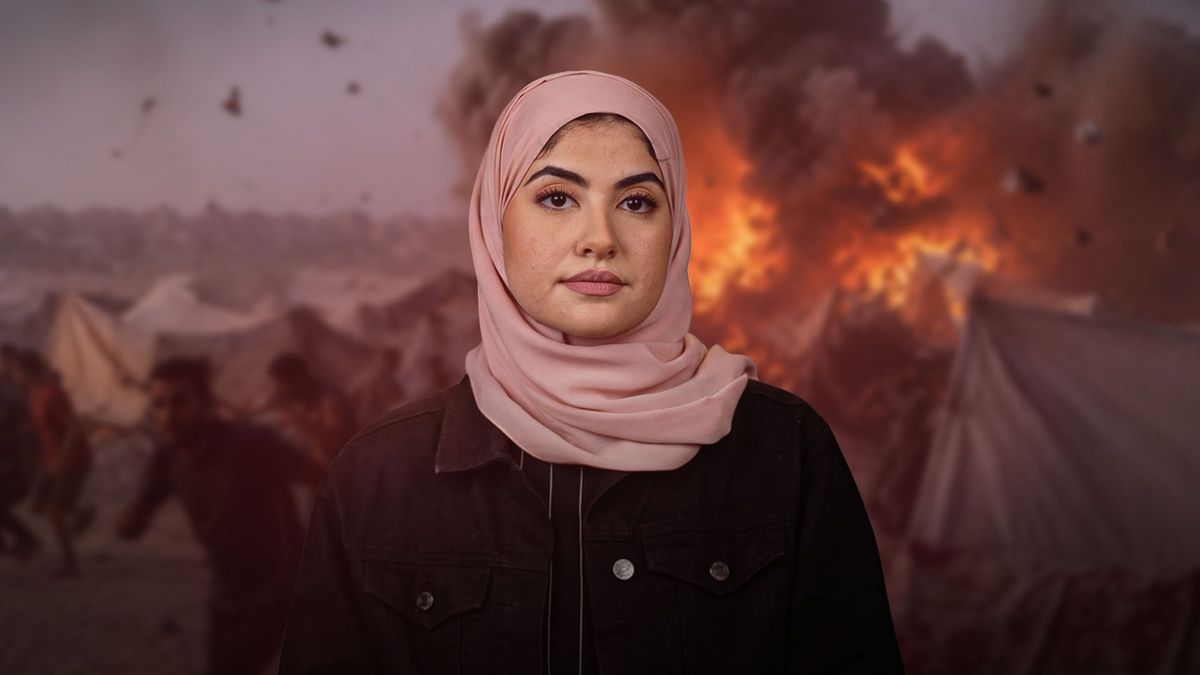
In a significant development reflecting the ongoing information warfare surrounding the Israeli-Palestinian conflict, Palestinians in Gaza have initiated the #TheyLiedToYou social media campaign. Launched to directly challenge the prevailing international narrative that a 'ceasefire' has brought an end to what they describe as Israel's 'genocide' in Gaza, the campaign asserts that the conflict, and its devastating consequences, have never truly ceased. This digital initiative, reported by Al Jazeera on July 19, 2026, through Nada Qaddourah's explanation, underscores a profound disconnect between external perceptions and the lived realities on the ground.
The campaign's core message is a direct refutation of any notion of normalcy or cessation of hostilities, aiming to keep international attention focused on the continuous suffering and perceived military actions. By leveraging social media, the organizers seek to bypass traditional media filters and directly communicate their perspective to a global audience, highlighting the strategic importance of narrative control in contemporary conflicts.
The #TheyLiedToYou campaign is a potent example of how digital platforms are utilized in modern geopolitical struggles to shape public opinion and influence international discourse. In an era where information spreads rapidly, the battle for narrative dominance is as crucial as military or diplomatic maneuvers. For Palestinians, this campaign represents an effort to reclaim agency over their story, challenging what they perceive as a misleading or incomplete portrayal of the situation by external actors or mainstream media.
From a geopolitical standpoint, the campaign's success in shifting or sustaining international attention could have several implications. If a significant portion of the global public or diplomatic community accepts the premise that the 'ceasefire' is a misrepresentation, it could:
* Undermine diplomatic efforts: International mediation and peace initiatives often rely on the perception of de-escalation. A sustained counter-narrative could complicate these efforts by questioning the legitimacy or effectiveness of any 'ceasefire' agreements.
* Increase pressure on Israel: By maintaining focus on ongoing suffering and alleged military actions, the campaign aims to galvanize international pressure on Israel regarding its conduct in Gaza.
* Influence humanitarian aid and policy: A narrative of continuous conflict, rather than a resolved 'ceasefire,' could impact the urgency and nature of humanitarian aid delivery and international policy responses.
The assertion that the 'war never really stopped' carries significant humanitarian weight. It implies that despite any official declarations of a 'ceasefire,' the population of Gaza continues to endure conditions akin to active conflict, including potential blockades, restrictions on movement, destruction of infrastructure, and ongoing violence. This perspective highlights the critical difference between a formal cessation of large-scale hostilities and the actual experience of security, stability, and recovery for civilians.
The campaign implicitly calls into question the efficacy and sincerity of any 'ceasefire' that does not fundamentally alter the daily realities for Palestinians in Gaza. It suggests that for those on the ground, the underlying causes of conflict and the mechanisms of control remain firmly in place, perpetuating a state of crisis that transcends intermittent periods of reduced overt violence.
The choice of a social media hashtag campaign underscores the growing power of digital activism in international relations. It allows for direct, unfiltered communication, potentially bypassing traditional media gatekeepers and reaching a global audience instantaneously. This democratizes the dissemination of information, enabling marginalized voices to challenge dominant narratives and mobilize support.
Looking ahead, the #TheyLiedToYou campaign is likely to intensify the information battle surrounding the Israeli-Palestinian conflict. Its impact will depend on its ability to resonate with international audiences, influence public opinion, and ultimately, pressure political actors. The campaign serves as a stark reminder that in complex geopolitical conflicts, the struggle is not only fought on battlefields or in diplomatic chambers but also in the realm of perception and narrative, where the truth, as experienced by those directly affected, often diverges sharply from official pronouncements.
Source referenced: ALJAZEERA
This brief was synthesized by our Editorial Engine and reviewed by The Ground Narrative team.


