TRENDING

Thursday, 15 October 2026
----------------------
4 Jumada Al-Awwal 1448 AH
The agency turned down a watchdog's call for automatically‑activating body cameras, a move that keeps critical footage out of public view. The decision deepens the gap between enforcement power and community safety.
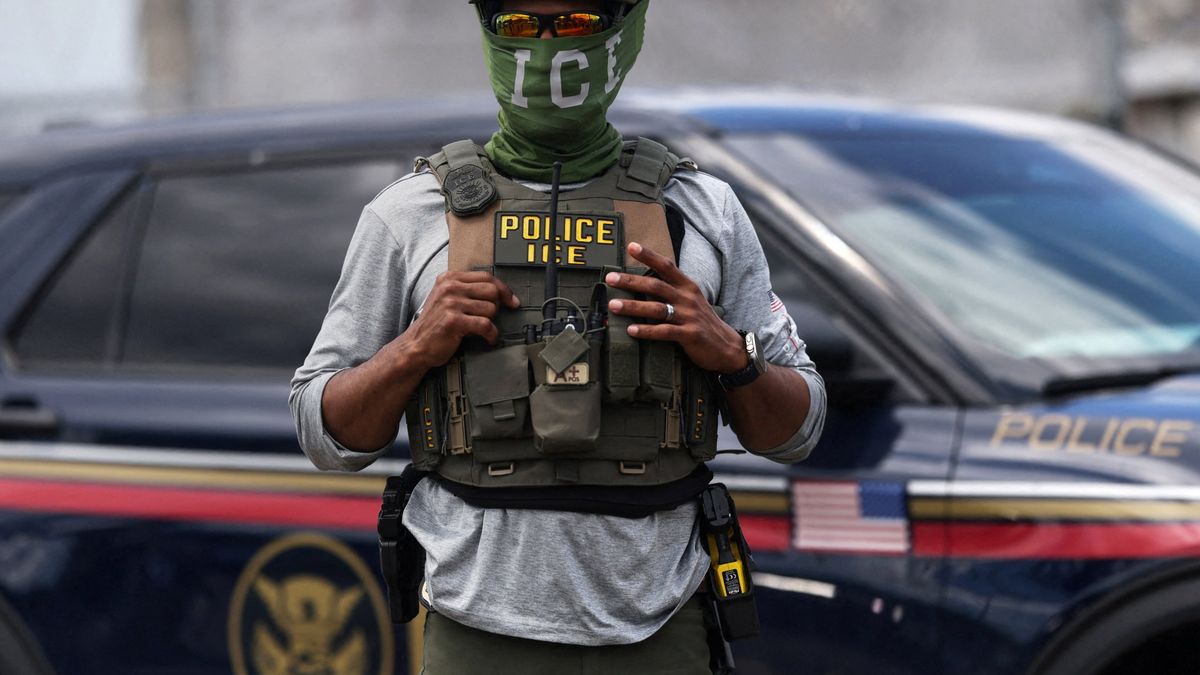
In early October 2026 the Government Accountability Office released a report urging ICE to upgrade its body‑camera guidelines. The report argued that cameras that turn on automatically—triggered by a gun draw, siren, or other high‑risk cue—could capture unplanned incidents where force is used. ICE responded by rejecting the recommendation, citing privacy worries about recording informants and victims without consent. The agency noted that all detention‑center offices had received body cameras by August, but training on their use was still underway. The refusal comes as a series of high‑profile shootings involving immigration agents have drawn national attention, including the deaths of two U.S. citizens in Minneapolis and a recent incident in New York where a man was shot while his five‑year‑old son sat in the back seat.
The debate over automatic cameras sits at the intersection of political survival, institutional self‑preservation, and budgetary leverage. For the Trump administration, maintaining a hard‑line immigration stance is a core electoral promise; conceding to more transparency could be framed as weakness, feeding rival narratives that the government is soft on border crime. At the same time, ICE relies on a culture of operational secrecy to protect informant networks and avoid legal exposure. Automatic recording threatens to create a permanent archive that could be subpoenaed, potentially compromising ongoing investigations and exposing agents to civil suits. Financially, the agency argues that expanding recording capabilities would increase data‑storage costs and require new oversight mechanisms—expenses that can be pushed onto a department already facing congressional funding delays. The GAO recommendation, while technically neutral, is a lever used by congressional Democrats to pressure the department into reform, tying future appropriations to compliance with transparency standards.
The communities most affected are the immigrant families living in neighborhoods where raids occur. In Minneapolis, the deaths of Renee Good and Alex Pretti sent shockwaves through a tight‑knit diaspora that already feels targeted by frequent enforcement sweeps. Families of the victims often face sudden loss of breadwinners, legal limbo, and the stigma of being labeled “illegal.” Children, like the five‑year‑old in the New York shooting, endure trauma that can translate into long‑term mental‑health challenges. Beyond individual families, local economies suffer when workers are detained or deported, creating labor shortages in sectors such as agriculture, hospitality, and construction that rely heavily on immigrant labor. Community organizations that provide legal aid and social services see spikes in demand after each high‑profile incident, stretching already thin resources. Moreover, the broader immigrant population lives under a cloud of uncertainty, which discourages reporting crimes or seeking medical care for fear of attracting enforcement attention.
ICE’s cited concern about “unauthorised recording of sensitive interactions” masks a deeper fear of accountability. By framing privacy as a protective measure for informants, the agency sidesteps the question of whether agents themselves are the ones needing protection from public scrutiny. The language also obscures the fact that existing body‑camera policies already allow for selective activation, meaning the technology exists but is under‑utilised.
Even if cameras were to record automatically, the agency controls the footage, deciding what is released and what is sealed. Past cases show that video evidence is often classified under “national security” or “investigative confidentiality,” limiting public access. This creates a de‑facto opacity that no amount of recording can fully dissolve without legislative mandates.
Democrats have used funding delays to extract concessions, but the strategy also risks alienating moderate voters who view immigration enforcement as a safety issue. By tying funding to reforms, the House can claim moral high ground while still allowing the executive branch to maintain a hard‑line posture, a balancing act that keeps the policy debate alive without forcing immediate change.
Watch for any shift in congressional appropriations that couples ICE funding with stricter recording mandates; such language often appears in amendment drafts before the full bill is released. Monitor court filings from families of shooting victims, as successful lawsuits could set precedents that force the agency to adopt more rigorous evidence‑preservation practices. Finally, keep an eye on internal DHS audits that may reveal whether training on existing cameras is truly completed or merely a public relations footnote. Each of these signals will indicate whether the current stalemate is loosening or tightening.
The agency says automatic activation could capture informants or victims without consent, risking exposure of sensitive investigations. Critics argue the claim also protects agents from scrutiny.
They would create real‑time video of confrontations, potentially clarifying disputed use‑of‑force incidents. However, the footage would still be controlled by ICE, limiting public access.
Source referenced: ALJAZEERA
This brief was synthesized by our Editorial Engine and reviewed by The Ground Narrative team.