TRENDING

Thursday, 15 October 2026
----------------------
4 Jumada Al-Awwal 1448 AH
President Trump’s boast of new oil and mineral projects in Greenland has met a firm Danish reminder that Greenland’s laws still apply. The agreement opens a path for U.S. military expansion while leaving Greenlanders to grapple with environmental and sovereignty stakes.
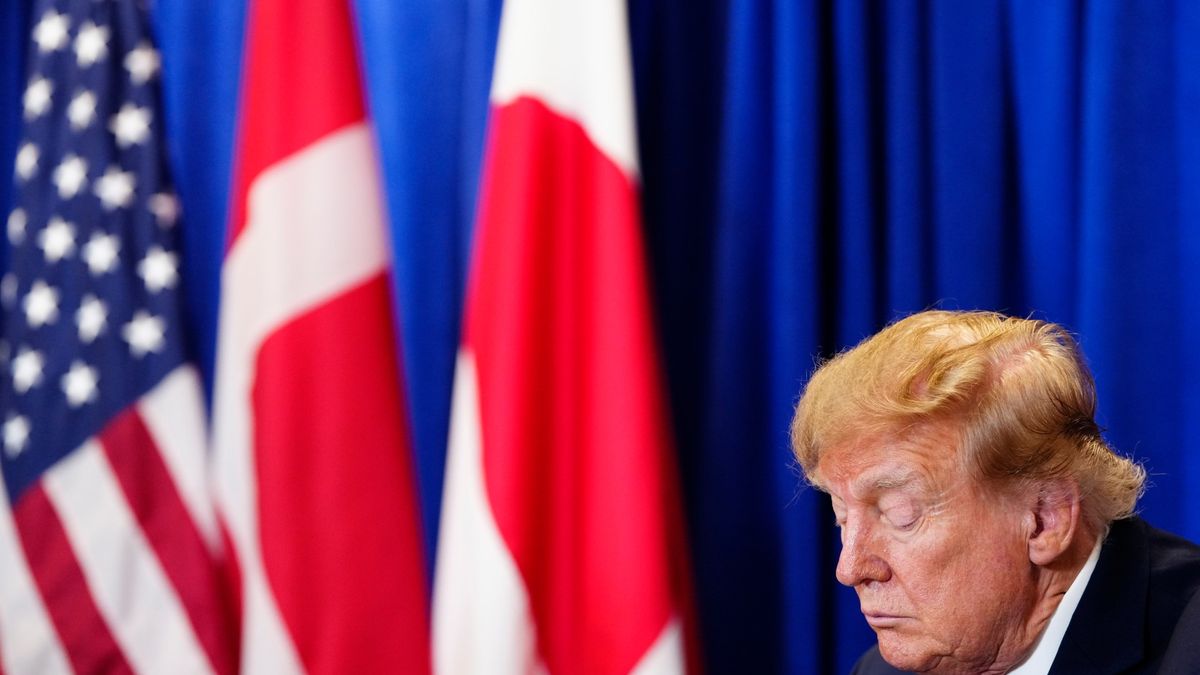
President Donald Trump took to Truth Social in late September to declare that oil, gas and mineral extraction would soon begin in Greenland, a semi‑autonomous territory of Denmark. The claim followed a ten‑page agreement signed on the sidelines of the United Nations General Assembly by Trump, Danish Prime Minister Mette Frederiksen, and Greenlandic Prime Minister Jens‑Frederik Nielsen. The pact allows the United States to modernise the Pituffik Space Base and paves the way for two new military installations, including the so‑called “Golden Dome” missile‑defence system. It explicitly states that no preferential treatment is granted to U.S. investors over other NATO or EU actors, and it does not allocate new mining or drilling rights. Denmark’s foreign ministry, however, reiterated that Greenland’s 2021 ban on uranium mining and future oil exploration remains in force, and that any commercial activity must respect Greenlandic law.
The agreement sits at the intersection of three strategic calculations. First, the United States seeks to cement a permanent Arctic foothold as melting ice opens new shipping lanes and untapped hydrocarbon reserves. By expanding Pituffik and adding missile‑defence infrastructure, Washington signals to Russia and China that the high‑latitude region is a defended sphere of influence. Second, Denmark balances its NATO obligations with domestic political survival. Supporting a U.S. military upgrade satisfies alliance expectations, yet conceding any change to Greenland’s resource regime would provoke backlash from a population already wary of external exploitation. Third, Greenland’s own leadership walks a tightrope between leveraging the deal for economic diversification and preserving the 2021 ban that reflects widespread environmental concerns. The limited scope of the agreement—focusing on military rather than commercial rights—reflects a compromise: the United States gains strategic depth without overtly violating Greenland’s legal framework, while Denmark avoids a direct confrontation with a powerful ally.
The promise of oil and mineral extraction has reignited fears among coastal villages that rely on fishing and tourism. A 2024 study by the University of Copenhagen estimated that a single offshore drilling operation could reduce fish stocks by up to 12% in adjacent waters, directly threatening the livelihoods of over 15,000 Greenlanders. Moreover, the prospect of increased military traffic raises safety concerns for remote settlements that already contend with limited medical and emergency services. The ban on uranium mining, enacted after a series of public protests, was a response to the health risks associated with radioactive waste, and any perceived erosion of that ban could reopen old wounds.
Within Denmark, the deal has become a flashpoint for opposition parties that accuse the government of sacrificing environmental standards for geopolitical gain. Polls conducted in August 2026 show that 42% of Danish voters view the agreement as a betrayal of Greenland’s right to self‑determination, while 35% see it as a necessary security measure against Russian Arctic ambitions. The political cost is not abstract; it translates into parliamentary debates that could jeopardise the ruling coalition’s ability to pass other climate‑related legislation.
Greenland’s ice sheet holds roughly 10% of the world’s fresh water. Accelerated extraction activities risk accelerating melt rates, contributing to sea‑level rise that endangers low‑lying nations worldwide. Indigenous groups, such as the Inuit Circumpolar Council, have warned that increased industrial activity could disrupt traditional hunting routes, erode cultural practices, and expose communities to pollutants previously absent from the Arctic ecosystem.
The agreement’s language is deliberately vague about future mineral rights. While it states that no preferential treatment is granted, it does not clarify whether existing permits—like those held by the Texas‑based Greenland Energy—will be honoured despite the 2021 ban. Legal scholars note that the phrasing “respect the island’s laws” could be interpreted narrowly, allowing pre‑ban permits to slip through a regulatory loophole. This ambiguity gives the United States a foothold to claim de‑facto access should commercial interests later surface.
Trump’s public boasting serves a dual purpose: it reinforces his narrative of American energy independence while diverting attention from domestic economic pressures. By framing Greenland as a new frontier, the administration seeks to rally its base around a vision of resource‑rich expansion, even as the actual commercial component of the deal remains stalled. The omission of concrete timelines or investment figures suggests that the announcement is more about political theatre than immediate extraction.
Official statements from Washington and Copenhagen have largely sidestepped the climate dimension. While the United Nations has repeatedly warned about the Arctic’s vulnerability, the joint communiqué focuses on “modernising” infrastructure and “self‑determination.” This framing downplays the potential for increased greenhouse‑gas emissions from Arctic drilling, a factor that could undermine broader international climate commitments.
The next six months will reveal whether the United States moves from rhetoric to action. Key indicators include: (1) any issuance of new permits by the Greenlandic government for Greenland Energy or other firms; (2) the construction timeline for the “Golden Dome” missile‑defence system, which will be visible through satellite imagery; and (3) shifts in Danish parliamentary voting patterns that could signal a broader policy pivot. Observers should also monitor grassroots protests in Nuuk and coastal towns, as well as statements from the Inuit Circumpolar Council, which may influence the legal interpretation of Greenland’s resource bans. Finally, the reaction of Russia—particularly its own Arctic base expansions—will test whether the U.S. military upgrades are achieving their intended deterrent effect or simply adding another layer to a growing Arctic security competition.
The agreement does not allocate new mining or drilling rights and says existing bans remain, but legal ambiguities around pre‑ban permits leave room for future exploitation.
Increased military activity and potential resource projects could disrupt fishing, tourism, and traditional hunting, while also raising environmental and health concerns for local populations.
Source referenced: ALJAZEERA
This brief was synthesized by our Editorial Engine and reviewed by The Ground Narrative team.


