TRENDING

Thursday, 15 October 2026
----------------------
4 Jumada Al-Awwal 1448 AH
Algeria is reviving its role as a security broker in the Sahel, deploying troops, energy projects, and diplomatic muscle. The move reshapes regional power balances while ordinary people bear the brunt of new militarisation and resource extraction.
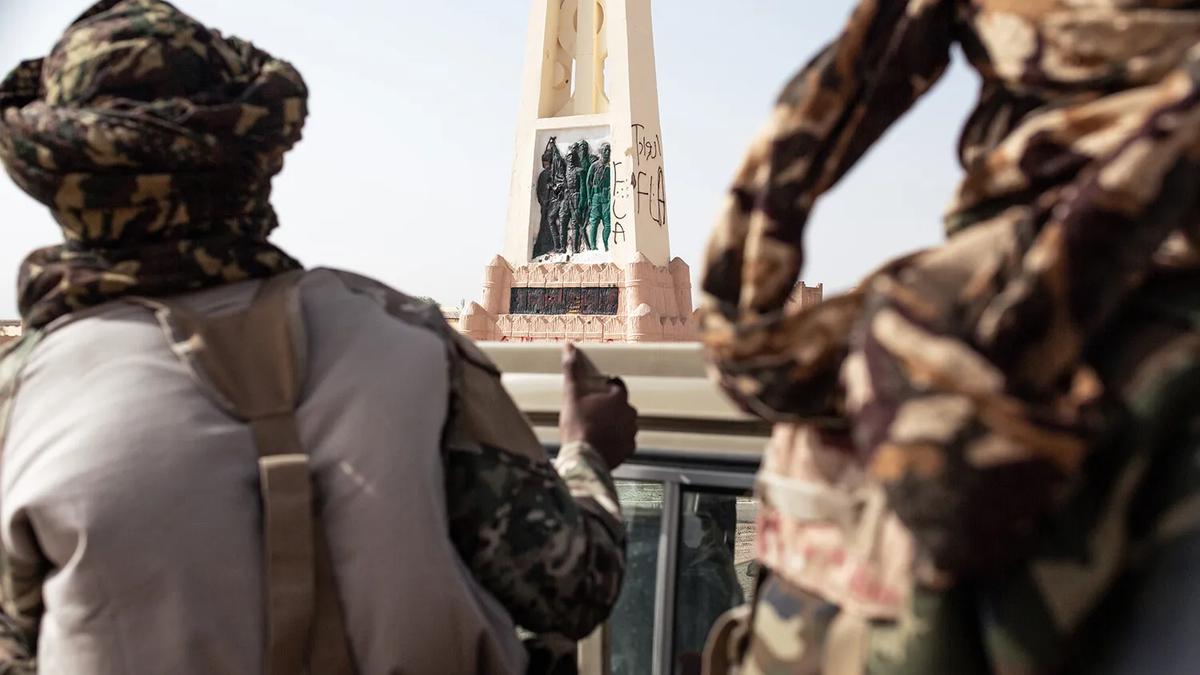
Algeria has announced a series of diplomatic, military, and economic initiatives aimed at re‑asserting its influence across the Sahel. After a year‑long diplomatic freeze with Mali, Algiers reopened its airspace, sent fighter jets to Niger, and revived oil‑and‑gas projects that link its Mediterranean coast to landlocked Sahelian states. The push comes as Russia and the United Arab Emirates expand their own footholds in the region, prompting Algiers to act before its rivals can dominate.
Algeria’s renewed Sahel engagement is driven by a blend of security, economic, and political calculations. First, the Sahel has long been viewed as a buffer zone; insurgent spillover into Algeria’s southern provinces threatens the stability of its own Tuareg communities. By positioning itself as a mediator, Algiers hopes to contain jihadist groups that could exploit porous borders.
Second, energy infrastructure underpins the strategy. The Trans‑Saharan gas pipeline and Sonatrach’s drilling in Niger’s Kafra block lock neighboring economies into long‑term contracts that funnel revenue toward Algerian state‑owned firms. This creates a dependency loop that bolsters Algiers’ bargaining power in regional forums.
Third, the military dimension signals a willingness to back diplomatic overtures with hard power. Deploying Sukhoi Su‑30 fighters and a refueling aircraft to Niger not only deters internal coups but also showcases Algeria’s air‑force capabilities to rivals like Russia, which supplies mercenaries to Mali, and the UAE, which funds proxy groups across the Sahel.
Finally, domestic politics play a subtle role. President Abdelmadjid Tebboune faces pressure to demonstrate decisive leadership after years of perceived diplomatic isolation. A visible Sahel policy offers a rallying point for nationalist sentiment and helps the regime claim a proactive stance on security.
Villages along Algeria’s southern frontier have seen an uptick in military patrols and checkpoints. While intended to curb insurgent movement, these measures disrupt traditional trade routes, limiting market access for pastoralists who rely on cross‑border livestock sales.
The revival of oil and gas projects brings an influx of foreign technicians and Algerian laborers to remote Sahelian sites. Construction camps often lack adequate healthcare, clean water, and safety standards, exposing workers to occupational hazards and disease outbreaks.
Militarised operations around Kidal, Kafra, and other strategic towns have forced thousands of civilians to flee. Internally displaced persons (IDPs) now crowd makeshift shelters in Niger’s capital, where food aid is already stretched thin. The humanitarian response is hampered by limited access for NGOs, who must navigate both Algerian and local security protocols.
Algerian officials repeatedly frame their Sahel outreach as a peace‑building mission, yet the timing aligns closely with the launch of multi‑billion‑dollar energy projects. By tying security assistance to contracts for Sonatrach and the Trans‑Saharan gas pipeline, Algiers secures market share in a region where European buyers are scrambling for alternative gas supplies.
Public statements downplay Algeria’s historic ties to the UAE and Russia, portraying a clean‑slate foreign policy. In reality, Algiers maintains a pragmatic relationship with Moscow, purchasing military hardware while publicly condemning Russian mercenaries in Mali. This duality allows Algeria to hedge its bets, extracting arms and training from Russia while positioning itself as a neutral mediator.
Morocco’s parallel push for a Nigeria‑Morocco gas pipeline and port projects in Western Sahara is often presented as economic development. However, the competition over energy corridors is a proxy battle for influence over the Sahel’s political alignment. Both North African powers are courting the same Sahelian states, offering overlapping aid packages that force local leaders to choose sides, often at the expense of transparent governance.
Observers should monitor three converging trends. First, the operational status of the Trans‑Saharan gas pipeline—delays or cost overruns could expose Algeria’s over‑extension and embolden rivals. Second, the response of Russia and the UAE to Algiers’ moves; any escalation in arms sales or proxy support would signal a widening security competition. Third, the humanitarian indicators in Niger and Mali—rising IDP numbers, food insecurity metrics, and NGO access reports will reveal whether Algeria’s security narrative translates into stability for ordinary citizens or merely reshapes the map of power.
Staying attuned to these signals will help citizens across the Sahel understand who truly benefits from Algeria’s renewed presence and what the long‑term cost may be for the people living in the shadow of new pipelines and fighter jets.
Algeria aims to prevent insurgent spillover into its southern provinces, protect its own Tuareg population, and counter rival influence from Russia and the UAE while securing economic interests.
Key projects include Sonatrach’s oil drilling in Niger’s Kafra block and the Trans‑Saharan gas pipeline that will transport natural gas from Nigeria through Niger to Algeria’s Mediterranean ports.
Border villages face disrupted trade, energy workers encounter poor living conditions, and thousands of civilians have been displaced by heightened militarisation and infrastructure construction.
Source referenced: FOREIGNPOLICY
This brief was synthesized by our Editorial Engine and reviewed by The Ground Narrative team.