TRENDING

Thursday, 15 October 2026
----------------------
4 Jumada Al-Awwal 1448 AH
Diplomats gathered in Beijing to map China‑Latin America cooperation under the Global Governance Initiative. The analysis uncovers who wields power, who pays the price, and what the world should watch next.
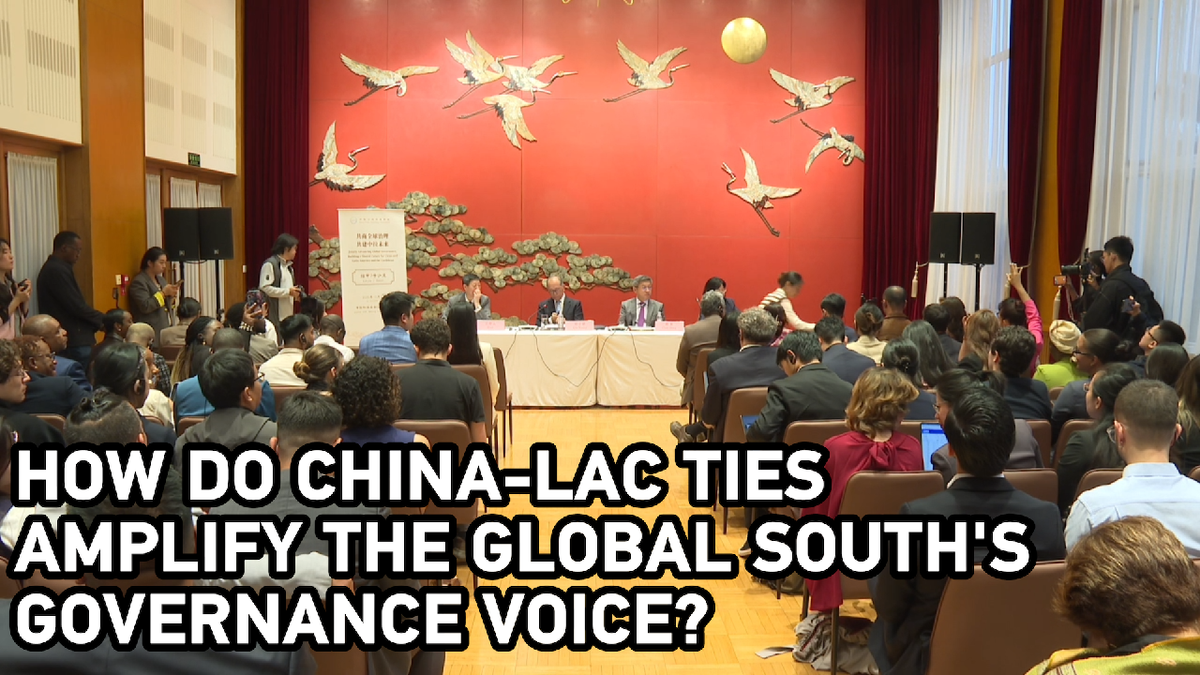
In early October 2026, a delegation of diplomats, scholars, and digital creators converged on Beijing for the first anniversary of China's Global Governance Initiative. The forum centered on deepening ties between China and the Latin America and Caribbean (LAC) region, framing the partnership as a vehicle for a louder Global South voice in multilateral institutions. Participants highlighted new trade accords, joint research hubs, and a series of infrastructure projects slated for completion by 2035. The event was presented as a celebration of “south‑south solidarity,” yet the underlying agreements signal a reshaping of global decision‑making structures.
China views LAC as a source of commodities—copper, lithium, soy, and oil—that feed its manufacturing and clean‑energy ambitions. In return, LAC economies receive financing for ports, railways, and digital networks that promise to cut logistics costs and attract foreign investors. The trade‑off is asymmetrical: Chinese firms often secure preferential contracts, while host governments acquire debt‑laden loans tied to state‑owned enterprises.
For many LAC leaders, aligning with China offers a hedge against U.S. pressure on governance reforms and human‑rights conditions. By showcasing an alternative partnership, they can claim independence while extracting concessions from Washington. Meanwhile, China leverages these relationships to build a voting bloc in the United Nations, the World Trade Organization, and emerging forums such as the Global Governance Initiative. Each supportive vote strengthens Beijing’s claim to a leadership role for the Global South.
The initiative proposes a new “South‑South Council” that would sit alongside the G20, giving member states a formal channel to propose agenda items. The council’s charter, drafted by Chinese diplomats, emphasizes consensus‑building but grants China a rotating chairmanship, effectively allowing it to set discussion priorities. This design mirrors the Belt and Road’s “win‑win” rhetoric while embedding Beijing’s strategic preferences into the governance architecture.
Infrastructure financing is largely delivered through the Asian Infrastructure Investment Bank and bilateral loan agreements. While projects promise job creation, the repayment schedules often exceed the projected revenue streams of the host nations. Debt‑sustainability analyses by independent think tanks warn that several Caribbean islands could face fiscal stress if export growth stalls, creating leverage points for future policy concessions.
Major port expansions in Brazil’s Pará state and Panama’s Pacific coast have already forced indigenous villages to relocate. Residents report inadequate compensation, loss of ancestral lands, and erosion of cultural practices tied to riverine ecosystems. Environmental NGOs estimate that over 120,000 people across the region could be displaced by 2030 if current project pipelines remain unchanged.
Chinese contractors bring their own workforce for high‑skill roles, limiting local employment opportunities. The remaining jobs, often in construction and logistics, are filled by local laborers who face precarious contracts, limited safety training, and wages below national averages. In Colombia, a recent strike by dockworkers highlighted grievances over overtime demands and lack of collective bargaining rights.
Servicing Chinese loans diverts fiscal resources from health, education, and social protection. In Ecuador, a recent budget reallocation reduced spending on rural schools by 15%, a move attributed to the need to meet loan repayment milestones for a new hydroelectric dam. The human impact is felt most acutely by children and the elderly in remote areas.
Chinese officials repeatedly frame the partnership as “mutual development,” sidestepping discussions of geopolitical competition. Press releases omit references to the voting advantages China seeks in multilateral bodies, presenting the initiative as a purely economic venture.
LAC leaders often highlight the projected GDP boost from infrastructure, while glossing over the widening income gap. State media celebrate new highways without reporting on the surge in land prices that push low‑income families out of urban peripheries.
State‑owned enterprises such as China Harbour Engineering Company (CHEC) and China Railway Group report record earnings from LAC contracts, yet transparency about profit-sharing with host governments is scarce. The lack of public audits fuels suspicion that project revenues primarily enrich Chinese shareholders rather than fund local development.
- UN voting patterns: Track whether LAC states increase alignment with China on issues like human rights resolutions and technology standards at the General Assembly.
- Debt renegotiation talks: Upcoming meetings between Caribbean finance ministries and Chinese lenders could reveal concessions that affect sovereignty, such as asset‑lease agreements for ports.
- Domestic protests: Communities affected by land grabs and labor disputes are organizing via social media; any escalation could pressure governments to renegotiate terms.
- Next G20 summit: The agenda will likely feature a proposal to institutionalize the South‑South Council. Observe which countries endorse or resist the move, as this will indicate the durability of the partnership.
- Technology transfer metrics: Monitor the rollout of 5G and AI research hubs in LAC. Genuine capacity‑building would show local ownership of patents and data, whereas exclusive Chinese control would signal a deeper strategic foothold.
By watching these signals, readers can gauge whether the proclaimed “amplification of the Global South’s voice” translates into shared power or merely reshapes the balance in favor of a single rising great power.
The Global Governance Initiative is a Beijing‑led platform that seeks to create a South‑South Council, giving participating countries a formal voice in multilateral decision‑making while allowing China to steer agenda priorities.
Projects often lead to land displacement, limited local job creation, and debt obligations that divert public funds from social services, disproportionately impacting indigenous peoples and low‑income workers.
Yes, as more LAC states align with China on key resolutions, Beijing gains a larger bloc of supportive votes, potentially shifting outcomes on human‑rights and trade issues.
Editor's Note: Analysis based on publicly available statements and independent research; some debt figures are estimates.
Source referenced: CGTN
This brief was synthesized by our Editorial Engine and reviewed by The Ground Narrative team.


