TRENDING

Thursday, 15 October 2026
----------------------
4 Jumada Al-Awwal 1448 AH
Hundreds of Albanian students torched the Ministry of Justice demanding reforms and the resignation of Prime Minister Edi Rama. The unrest exposes deep political fault lines and a mounting human cost.
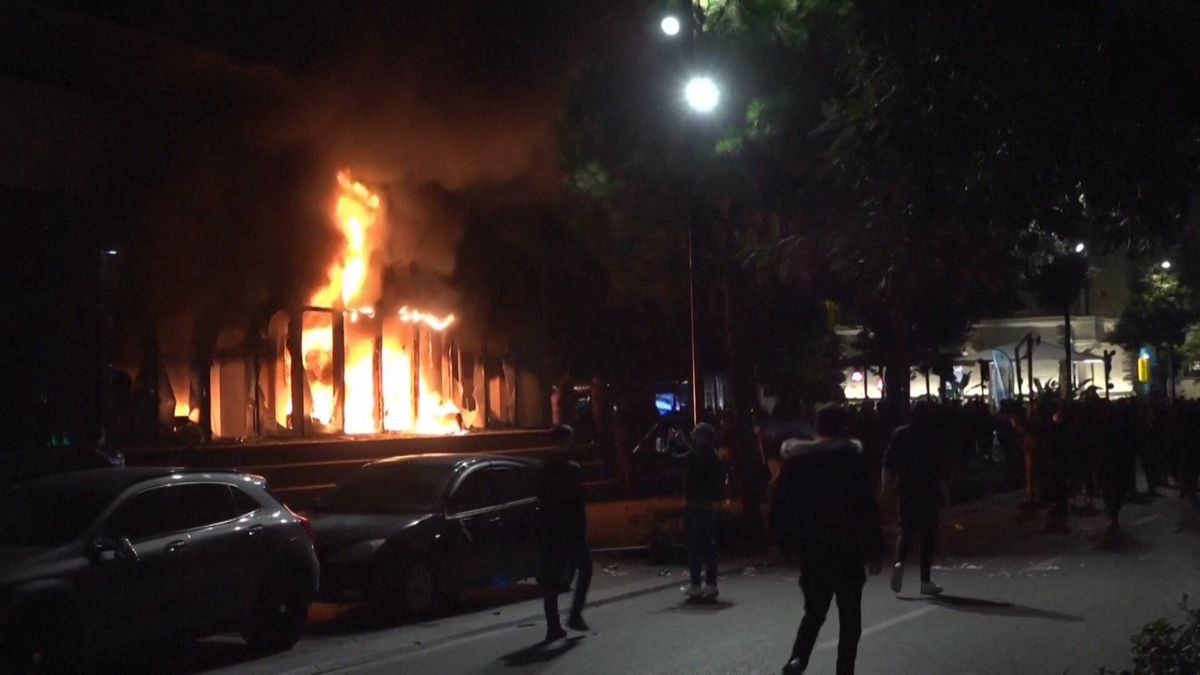
On October 15, 2026, dozens of students stormed Tirana’s Ministry of Justice, igniting parts of the building in a dramatic act of defiance. The protest, part of a broader wave of anti‑government rallies, called for sweeping education reforms and the resignation of Prime Minister Edi Rama. Police clashed with demonstrators, resulting in injuries and arrests, while the blaze drew international media attention.
Albania’s political landscape has been reshaped by Edi Rama’s fourth‑term victory in May 2025, a win secured through a coalition that promised anti‑corruption measures but delivered mixed results. The coastal resort project, touted as a tourism catalyst, has become a flashpoint for accusations of cronyism and misallocated public funds. By diverting resources to high‑profile construction, the government has left the education sector under‑funded, inflaming student grievances.
Within the ruling party, maintaining a parliamentary majority hinges on appeasing regional power brokers who benefit from the resort’s contracts. This creates a feedback loop: the more the government invests in prestige projects, the less it can address systemic issues like teacher salaries, outdated curricula, and overcrowded classrooms. The Ministry of Justice, traditionally a symbol of legal oversight, became a proxy battleground because it houses the anti‑corruption unit that has been probing the resort’s financing.
Internationally, Albania seeks deeper integration with the European Union, a process that requires demonstrable rule‑of‑law reforms. The protests jeopardize that trajectory, giving Brussels a pretext to demand stricter monitoring. At the same time, neighboring Kosovo watches closely, as Albanian political stability influences its own aspirations for EU accession.
The immediate victims are the students themselves—many of whom risk academic penalties, legal charges, and physical harm. Scholarships are suspended for participants, and a wave of disciplinary actions threatens to derail careers for a generation already facing a precarious job market.
Teachers, already earning below EU averages, confront heightened workloads as schools scramble to fill gaps left by protest‑related disruptions. The unrest has also sparked a wave of resignations among senior educators who fear being caught in political crossfire.
Families in Tirana’s peripheral neighborhoods bear the brunt of economic fallout. Public transport routes were halted during the riots, limiting workers’ ability to reach factories and service jobs. Moreover, the government’s focus on elite development projects means fewer subsidies for low‑income students, widening the education gap.
Small vendors operating near the Ministry lost inventory to the fire, and the city’s tourism sector faces short‑term declines as visitors avoid areas perceived as unsafe. The ripple effect threatens livelihoods that depend on daily foot traffic.
Albanian officials have framed the protests as a fringe movement driven by external agitators, downplaying the depth of domestic discontent. State‑run media has minimized coverage of the fire, emphasizing the swift response of emergency services while omitting the underlying grievances about budget cuts.
Behind the scenes, international construction firms linked to the coastal resort have lobbied Albanian legislators to shield the project from scrutiny. These firms benefit from tax breaks and land grants, yet their contracts remain opaque, allowing corruption to persist under the guise of economic development.
EU officials, while publicly urging dialogue, have quietly warned that continued unrest could stall accession talks. However, the EU’s own funding mechanisms for education reform have been delayed, creating a paradox where Albania is pressured to improve a system it cannot financially sustain.
Finally, the justice ministry’s anti‑corruption unit, which was investigating the resort’s financing, has been reassigned to a less influential department. This bureaucratic reshuffle signals an attempt to mute investigative pressure, a move the government portrays as “administrative restructuring” rather than a strategic retreat.
Observers should monitor Prime Minister Edi Rama’s next public address—whether he offers concrete concessions on education funding or doubles down on the resort narrative. The EU’s response, particularly any conditionality attached to upcoming pre‑accession funds, will indicate how much leverage Brussels retains.
In the coming weeks, the Ministry of Justice’s reconstruction plans will reveal whether the state prioritizes symbolic restoration or substantive institutional reform. A surge in arrests of protest leaders could either deter further unrest or fuel a martyr narrative that sustains the movement.
Finally, watch for shifts in regional politics: if Kosovo’s leaders echo Albanian student demands, the issue could spread, reshaping Balkan discourse on youth empowerment and governance.
The trajectory of Albania’s education protests will hinge on the balance between elite interests protecting lucrative projects and a populace demanding transparent, equitable public services.
Students were reacting to chronic under‑funding of education, low teacher wages, and perceived corruption tied to a controversial coastal resort project championed by Prime Minister Edi Rama.
The unrest puts pressure on EU officials to demand concrete rule‑of‑law reforms; continued instability could delay or condition further accession negotiations and funding.
Source referenced: ALJAZEERA
This brief was synthesized by our Editorial Engine and reviewed by The Ground Narrative team.