TRENDING

Thursday, 15 October 2026
----------------------
4 Jumada Al-Awwal 1448 AH
North Korea fired two submarine‑launched cruise missiles off its east coast, claiming they pose no threat to neighbors. The tests expose a push for sea‑based deterrence while ordinary Koreans face heightened security risks.
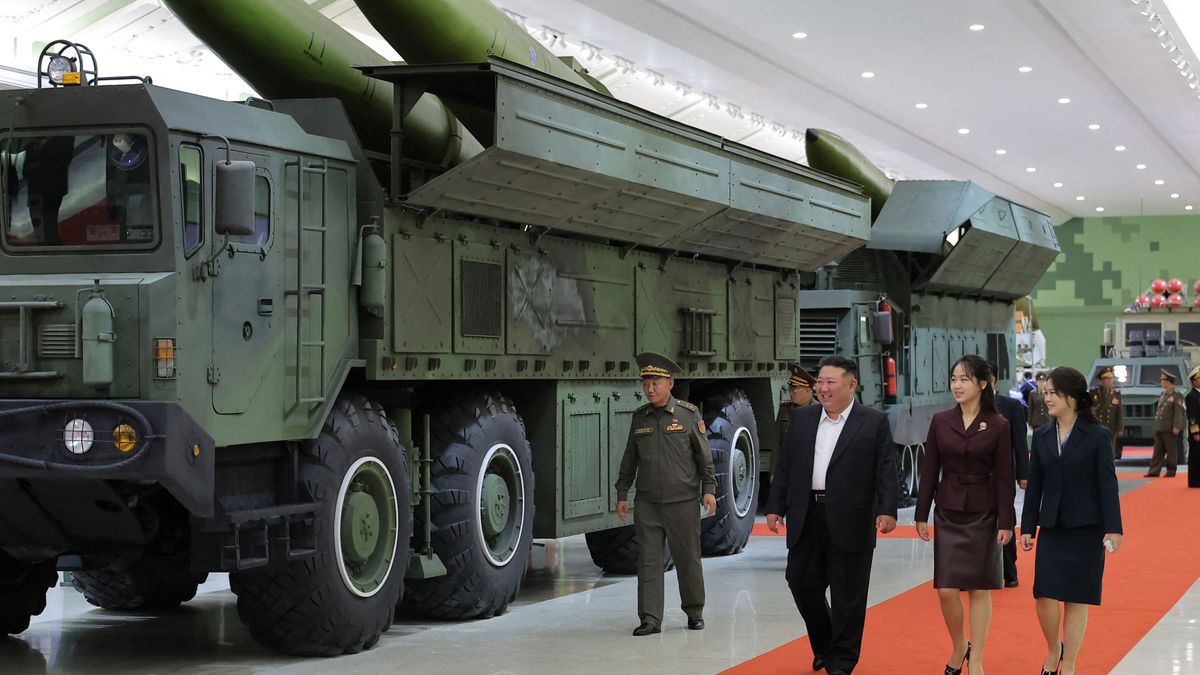
North Korea announced on October 15, 2026 that it had test‑fired two submarine‑launched strategic cruise missiles from waters off its east coast. The missiles, including a Pulhwasal-3-31 model previously demonstrated from land, were observed by senior military officers and state media claimed the exercise posed no security risk to neighboring states.
The drive to field submarine‑launched missiles reflects Kim Jong Un’s long‑term ambition to diversify the regime’s deterrent portfolio. Land‑based ballistic missiles have long been the centerpiece of Pyongyang’s bargaining chip, but a sea‑based leg complicates detection and forces adversaries to allocate anti‑submarine resources that are already stretched thin.
Strategically, the test serves multiple internal and external purposes. Domestically, it reinforces the narrative of a technologically advancing military, bolstering the leader’s legitimacy ahead of the upcoming party congress. Externally, it signals to the U.S.-South Korea alliance that Pyongyang can threaten maritime supply routes and offshore platforms, potentially raising the cost of any pre‑emptive strike calculus.
Economically, the submarine program is a costly endeavor that relies on a network of state‑run shipyards, foreign‑sourced components, and a cadre of engineers who have been redirected from civilian projects. The allocation of scarce resources to a modern missile submarine underscores the regime’s willingness to prioritize military prestige over basic infrastructure improvements.
Residents of the eastern coastal provinces, especially the fishing villages of Gangwon and Hamgyong, now face heightened uncertainty. Increased naval activity raises the risk of accidental engagements, and the presence of test‑range safety zones can restrict traditional fishing grounds, threatening livelihoods that already hover near subsistence levels.
South Korean and Japanese investors watch the Korean Peninsula’s security climate closely because any escalation can ripple through supply chains for semiconductors, automotive parts, and energy. A sudden spike in insurance premiums for shipping lanes in the East Sea (Sea of Japan) would translate into higher consumer prices across East Asia.
Within the hermit kingdom, the diversion of steel, labor, and technical expertise to the submarine program means fewer resources for housing, electricity, and food distribution. The regime’s emphasis on military achievements often coincides with harsher rationing and intensified surveillance of communities deemed “strategic” for defense production.
The Korean Central News Agency (KCNA) framed the test as a routine reliability check, deliberately omitting any reference to the still‑incomplete status of a modern missile‑submarine fleet. By presenting the launch as a mature capability, the regime seeks to project confidence both to its own populace and to foreign intelligence analysts.
While the United States and Japan issued measured statements condemning the test, they stopped short of demanding concrete verification of a functional submarine platform. This restraint is partly tactical: overt pressure could push Pyongyang to accelerate clandestine development, and partly pragmatic, as both capitals juggle multiple security crises from Ukraine to the Indo‑Pacific.
Beijing’s public response has been muted, echoing its long‑standing policy of avoiding direct criticism of Pyongyang while quietly monitoring the balance of power on the peninsula. The silence masks a strategic calculation: a stronger North Korean navy could serve as a counterweight to U.S. carrier groups operating near the Yellow Sea, aligning with China’s broader goal of limiting American naval freedom.
Analysts should track three converging indicators. First, the progress of the missile submarine program itself—satellite imagery of the 8,700‑tonne hull under construction, dockyard activity, and any subsequent sea trials will reveal how close Pyongyang is to fielding an operational platform. Second, the frequency and scope of regional defense drills involving South Korea, Japan, and the United States; expanded anti‑submarine warfare components would signal a response to the emerging threat. Third, any shift in diplomatic overtures—whether Seoul resumes back‑channel talks, Washington adjusts its sanctions calculus, or Beijing offers technical assistance—could reshape the risk calculus for the Korean Peninsula in the months ahead.
North Korea tested two submarine‑launched strategic cruise missiles, including the Pulhwasal‑3‑31, which had previously been fired from land. The launches were described by state media as reliability checks for sea‑based deterrence.
The tests signal Pyongyang’s drive to add a sea‑based leg to its deterrent, complicating detection for South Korea, Japan and the United States. This could spur further arms development and increase the likelihood of naval incidents in the East Sea.
Source referenced: ALJAZEERA
This brief was synthesized by our Editorial Engine and reviewed by The Ground Narrative team.


