TRENDING

Thursday, 15 October 2026
----------------------
4 Jumada Al-Awwal 1448 AH
Taiwan’s president urged the island to build asymmetric combat power, prompting a sharp rebuke from Beijing. The move reshapes regional security and puts ordinary people on both sides of the strait in the line of fire.
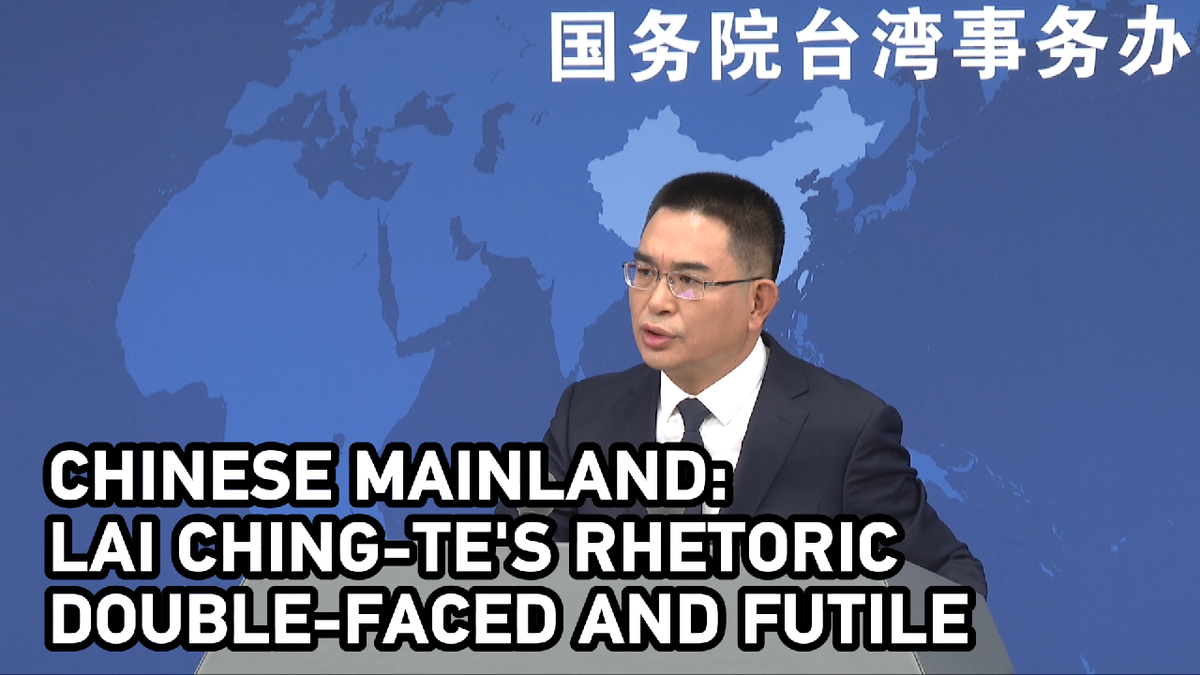
On October 10, 2026, Lai Ching‑te delivered his annual Double Ten address and warned that Taiwan must develop asymmetric combat power to deter war. Within hours, the China Taiwan Affairs Office labeled the remarks a “deceptive, two‑faced tactic,” accusing the island’s leadership of stoking conflict. The exchange quickly spilled onto state‑run media, diplomatic cables, and social platforms, framing the speech as a flashpoint in an already tense cross‑strait relationship.
The call for asymmetric capabilities is not a spontaneous security tweak; it is the product of layered incentives. First, Taiwan’s democratic government faces domestic pressure to show resolve after a series of high‑profile incursions by Chinese aircraft and naval vessels. A credible deterrent, even if limited, offers political mileage for Lai Ching‑te ahead of the 2028 presidential election.
Second, China leverages the narrative of “two‑faced” rhetoric to justify its own military buildup and to rally nationalist sentiment at home. By painting Taiwan’s defense plans as provocative, Beijing can allocate additional budget to the People’s Liberation Army (PLA) while portraying itself as the guardian of peace.
Third, the United States, bound by the Taiwan Relations Act, quietly supplies advanced weaponry that fits an asymmetric doctrine—long‑range missiles, anti‑ship cruise missiles, and cyber tools. This external patronage creates a triangular dependency: Taiwan needs U.S. tech, the U.S. needs a credible deterrent to limit PLA ambitions, and China seeks to undermine that deterrent without triggering a full‑scale war.
Finally, regional allies such as Japan and Australia monitor the development closely, calibrating their own force postures. The ripple effect extends beyond the strait, influencing procurement decisions and alliance calculations across the Indo‑Pacific.
The push for asymmetric weapons translates into higher defense spending, which the Taiwanese government funds through a mix of taxes and debt. Young men face longer service periods and more intensive training, disrupting education and career plans. Communities near military bases experience increased noise, restricted access, and the psychological strain of living under a heightened threat perception.
Taiwan’s export‑driven economy, especially its semiconductor sector, is sensitive to geopolitical risk. Investor confidence dips whenever cross‑strait rhetoric spikes, leading to short‑term capital flight and a modest rise in borrowing costs. Small‑ and medium‑sized enterprises that rely on mainland markets see orders waver, threatening livelihoods in both urban and rural areas.
On the China side, the narrative of a “two‑faced” Taiwan justifies the PLA’s expansion of coastal installations. Construction projects bring temporary jobs but also displace fishing communities and increase pollution in the Taiwan Strait. Moreover, the state‑driven propaganda campaign fuels nationalist fervor, pressuring ordinary citizens to accept higher military taxes and limited civil liberties in the name of security.
Official statements focus on Taiwan’s alleged aggression, yet they omit how the Chinese Communist Party uses the issue to cement internal legitimacy. By casting the island’s defense plans as a direct threat, the Party can rally public support for its broader agenda of economic restructuring and political control, diverting attention from domestic challenges such as slowing growth and demographic decline.
Western coverage often highlights the moral dimension of arms sales, but it downplays the profit motive driving U.S. defense contractors. The sale of precision‑guided munitions and cyber‑defense packages to Taiwan represents billions of dollars in revenue, incentivizing a policy loop that sustains a market for high‑tech weaponry regardless of the diplomatic fallout.
State media in China repeatedly uses the phrase “two‑faced” to delegitimize Taiwan’s security discourse, while Taiwanese outlets emphasize the necessity of self‑defence without fully addressing the economic burden on ordinary citizens. The selective framing creates a polarized information environment where the true cost of escalation remains hidden from the public.
- Military drills: Watch for PLA exercises near the Taiwan Strait in the coming months; increased frequency or scale often signals Beijing’s response to Taipei’s defense announcements.
- U.S. policy shifts: Any amendment to the Taiwan Relations Act or new arms sales packages will signal how Washington balances deterrence with the risk of escalation.
- Taiwanese elections: The 2028 presidential race will test whether Lai’s asymmetric strategy gains popular support or becomes a political liability.
- Economic indicators: Fluctuations in Taiwan’s semiconductor export orders and mainland coastal community protests can serve as early warnings of broader destabilisation.
- Diplomatic overtures: Track any back‑channel talks between Beijing and Taipei, especially those mediated by third parties such as the United Nations or ASEAN, for signs of de‑escalation or further hardening.
Staying alert to these signals will help ordinary citizens understand how high‑level posturing translates into concrete changes in security, economics, and daily life across the strait.
It refers to a defence strategy that focuses on weapons and tactics that can offset a larger opponent's strengths, such as long‑range missiles, cyber tools, and mobile forces, rather than matching conventional force levels.
In Taiwan, higher defence spending can raise taxes and extend military service, while in mainland China, increased PLA activity can disrupt coastal economies and fuel nationalist pressures that limit civil freedoms.
Source referenced: CGTN
This brief was synthesized by our Editorial Engine and reviewed by The Ground Narrative team.


