TRENDING

Monday, 5 October 2026
----------------------
24 Rabi' Al-Thani 1448 AH
Millions of Europeans witnessed a rare solar eclipse, with parts of Iceland and northern Spain experiencing a total eclipse. The event has sparked scientific interest and public fascination, but what does it reveal about Europe's relationship with nature and its priorities? The Ground Narrative explores the power mechanics and human impact behind this celestial event.
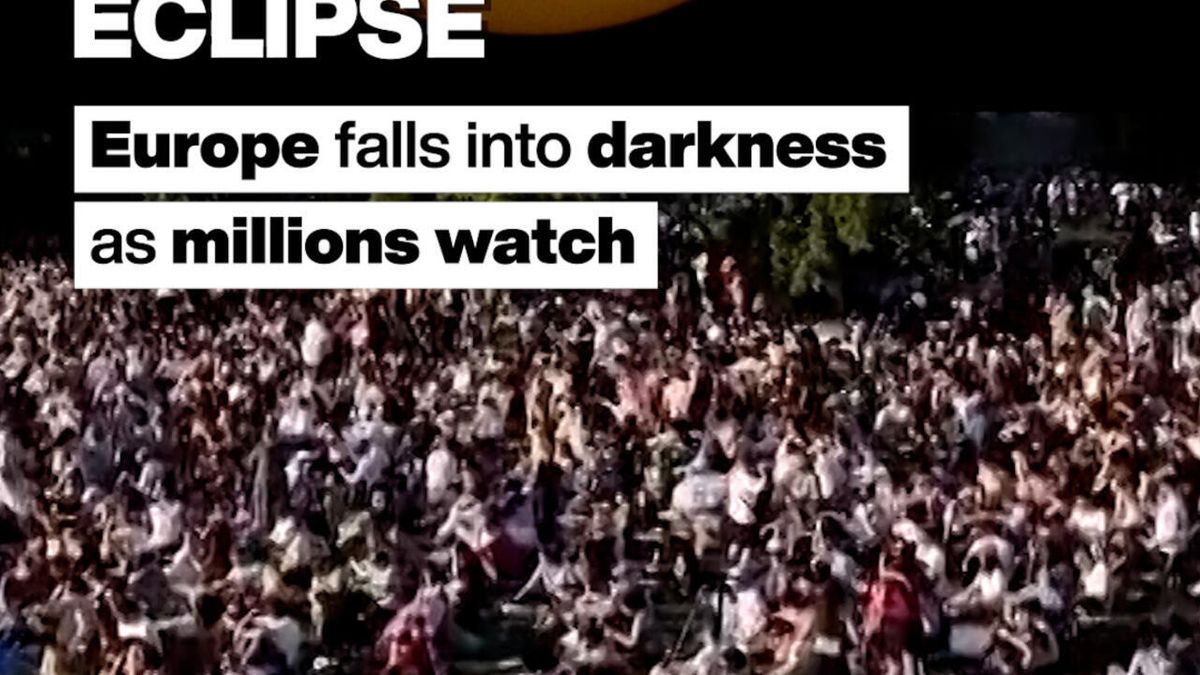
On August 13, 2026, a rare solar eclipse captivated millions of Europeans, with the Moon passing in front of the Sun and casting a shadow on parts of the continent. The eclipse was total in areas of Iceland and northern Spain, while much of Europe, including France and the UK, experienced a spectacular partial eclipse.
The solar eclipse has sparked a mix of scientific curiosity and public fascination. However, beneath the surface of this celestial event lies a complex web of power dynamics. European governments and scientific institutions have invested significant resources in promoting the eclipse as a rare opportunity for scientific discovery and public engagement. This investment reflects a broader effort to rebrand Europe as a hub for scientific innovation and environmental awareness. The European Union's emphasis on climate action and sustainability has created a political landscape where events like the solar eclipse can be leveraged to demonstrate the continent's commitment to environmental protection.
While the solar eclipse has been largely framed as a positive and unifying experience, there are concerns about the economic and social impact of large-scale events on local communities. The influx of tourists and scientists in areas like Iceland and northern Spain can put a strain on local infrastructure and resources. Moreover, the emphasis on scientific discovery and public engagement may overshadow the existing environmental challenges faced by European communities, such as droughts, heatwaves, and pollution.
What is being downplayed in the coverage of the solar eclipse is the disconnect between Europe's scientific ambitions and its environmental realities. While European governments and institutions are keen to promote their commitment to sustainability, the continent still struggles with issues like climate change, pollution, and resource management. The solar eclipse has provided a convenient distraction from these pressing issues, allowing European leaders to present a narrative of environmental stewardship without fully addressing the underlying problems.
As the solar eclipse fades from public attention, readers should watch for how European governments and institutions balance their scientific ambitions with environmental responsibilities. Will the continent's leaders use the eclipse as a catalyst for meaningful action on climate change and sustainability, or will it remain a symbolic gesture? The answer to this question will reveal the true extent of Europe's commitment to environmental protection and its willingness to address the human cost of its actions.
Editor's Note: The analysis is based on publicly available information and may not reflect the full complexity of the issues at play.
Source referenced: FRANCE24
This brief was synthesized by our Editorial Engine and reviewed by The Ground Narrative team.