TRENDING

Sunday, 13 September 2026
----------------------
2 Rabi' Al-Thani 1448 AH
Deadly wildfires rage across Crete, claiming lives and livelihoods as Greece grapples with escalating climate-driven disasters. This analysis uncovers the systemic vulnerabilities and the silent costs borne by ordinary citizens.
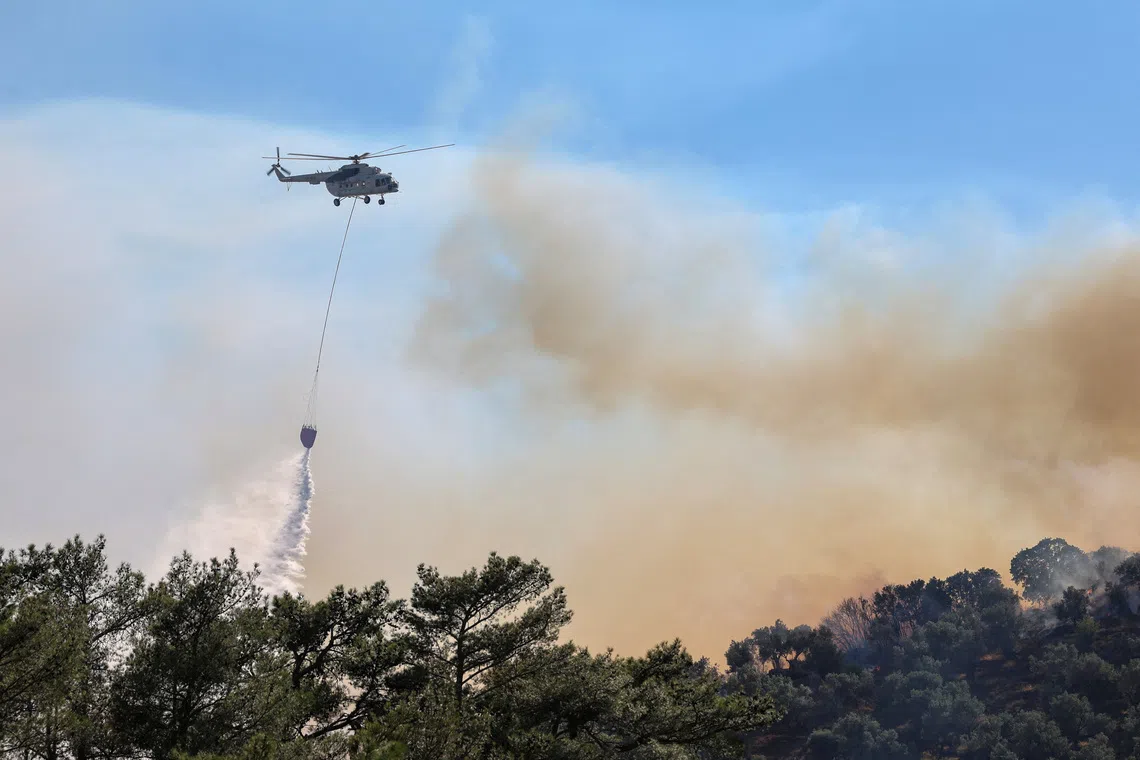
For a second consecutive day, Greek firefighters battled deadly wildfires on the island of Crete, a popular tourist destination now scarred by flames. The blazes, intensified by high winds, have tragically claimed the lives of three firefighters—two on Crete and one on the mainland—and forced the evacuation of hundreds of residents and tourists from villages like Krya Vrysi. Agricultural crops, vital olive groves, and properties have been destroyed, signaling a broader crisis unfolding across Southern Europe, with Spain and France also experiencing devastating fires.
The power dynamics at play extend beyond traditional geopolitical rivalries; they are fundamentally shaped by the escalating force of climate change. Europe, identified as the world's fastest-warming continent, is experiencing a profound shift in its environmental stability. This translates into concrete power challenges: the economic power of tourism and agriculture, cornerstones of regions like Crete, is directly threatened. Governments, heavily reliant on these sectors for national income and local employment, face immense pressure to protect them, yet their capacity to mitigate these increasingly frequent and intense events is strained. The institutional power of emergency services, while dedicated, is being pushed to its limits, as evidenced by firefighter fatalities. Furthermore, the political power to enact meaningful climate adaptation and mitigation policies at both national and EU levels is often hampered by short-term economic interests and complex international negotiations, leaving frontline communities exposed. The EU's emergency response center acknowledging heightened risk underscores a recognition of the problem, but the actionable power to prevent such disasters remains elusive.
The human cost is immediate and profound. It is paid by the firefighters who lost their lives, becoming the ultimate sacrifice in a battle against an increasingly powerful and unpredictable adversary. It is borne by the farmers who watch generations of olive groves and agricultural crops turn to ash, their livelihoods vanishing in a single day. These are not just statistics; they are families facing economic ruin, their traditional way of life upended. Local residents evacuated from their homes, some by sea, experience the trauma of displacement and the uncertainty of return. Even tourists, whose holiday plans are disrupted, witness firsthand the fragility of these picturesque regions, potentially impacting future tourism flows and thus the long-term economic stability of the island. The psychological toll on communities repeatedly facing such threats, coupled with the tangible loss of homes and heritage, is immeasurable.
While official statements focus on immediate response and damage assessment, what is often downplayed or omitted is the systemic vulnerability being entrenched across Southern Europe. Governments and international bodies frequently frame these events as isolated disasters, rather than symptoms of a deeply problematic and accelerating trend. The underlying narrative that is often avoided is the inadequacy of current climate adaptation strategies to match the speed and scale of environmental change. There's also a reluctance to fully address the economic dependency trap: regions like Crete are heavily reliant on tourism and agriculture, sectors highly susceptible to climate impacts. This creates a vicious cycle where the very industries needed for recovery are simultaneously undermined by the crisis. The long-term implications for regional migration patterns and social cohesion as communities face repeated devastation are rarely discussed in public discourse, nor is the potential for these environmental crises to exacerbate existing economic disparities within the EU.
Readers should closely watch for several key developments. Firstly, observe the scale and frequency of future extreme weather events across Southern Europe; these wildfires are not an anomaly but a harbinger. Secondly, monitor the EU's financial and policy response to these escalating disasters. Will there be substantial, long-term investment in climate resilience and adaptation for vulnerable member states, or will aid remain largely reactive? Thirdly, pay attention to local and national political responses in affected countries like Greece. Will these events catalyze a shift towards more sustainable economic models less reliant on climate-vulnerable industries, or will the push for immediate recovery overshadow the need for fundamental change? Finally, watch for any shifts in public opinion and social movements demanding more decisive climate action, as the human cost becomes increasingly undeniable. The unfolding narrative will reveal whether these tragedies become catalysts for systemic change or are merely absorbed as the 'new normal' with devastating regularity.


