TRENDING

Friday, 16 October 2026
----------------------
5 Jumada Al-Awwal 1448 AH
The Democratic Republic of the Congo's Ebola outbreak has reached a critical stage, with 1,873 confirmed cases and 672 deaths reported across five provinces. The situation raises concerns about regional stability, global health security, and the potential for further spread.
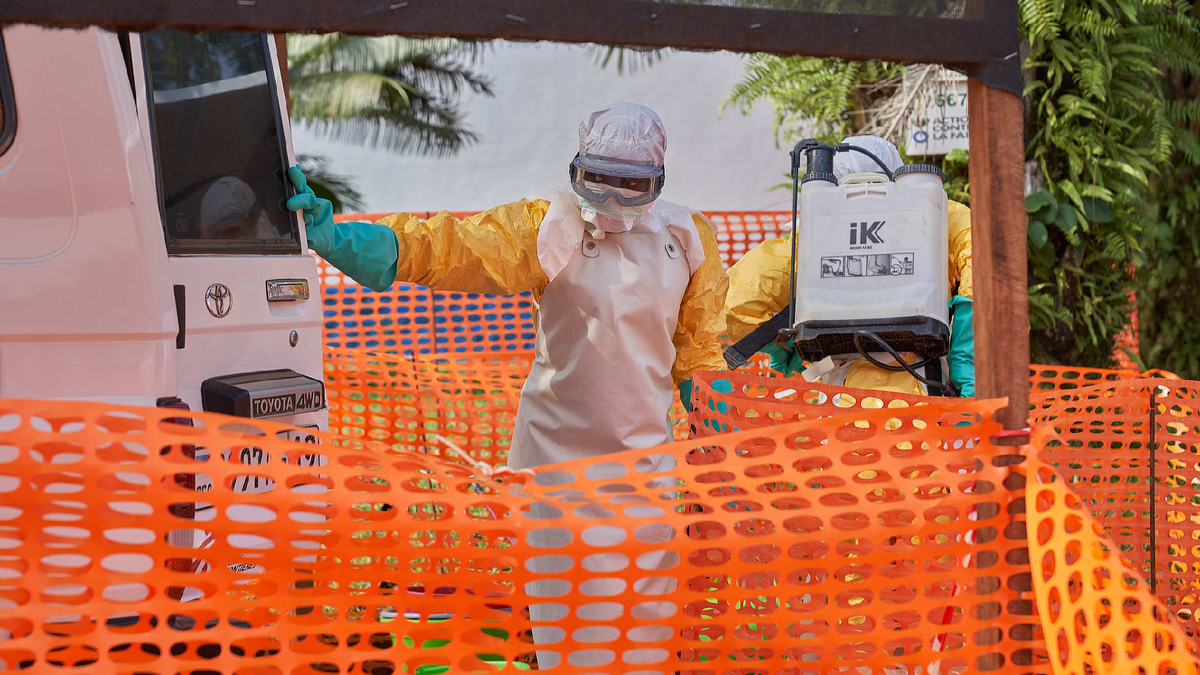
The Democratic Republic of the Congo (DRC) is facing a severe Ebola outbreak, with 1,873 confirmed cases and 672 deaths reported across five provinces. The situation has worsened significantly since the outbreak was declared on May 15, with the number of cases and deaths increasing rapidly.
The Ebola outbreak in the DRC has significant implications for regional stability and global health security. The country's fragile healthcare system, coupled with ongoing conflict and displacement, has created an environment conducive to the spread of the disease. The outbreak also raises concerns about the potential for further spread to neighboring countries, including Uganda, Rwanda, and the Republic of Congo.
The DRC has experienced several Ebola outbreaks in the past, including a major outbreak in 2018 that resulted in over 2,000 cases and 1,700 deaths. The current outbreak is caused by the Bundibugyo ebolavirus, which is a less common strain of the virus. However, its transmission dynamics are similar to those of the more common Zaire ebolavirus, which has caused the majority of Ebola outbreaks in the region.
The Ebola outbreak in the DRC has significant implications for regional stability and security. The country's neighbors, including Uganda, Rwanda, and the Republic of Congo, are on high alert, with health authorities taking measures to prevent the spread of the disease. The outbreak also raises concerns about the potential for further conflict and displacement in the region, particularly in areas where healthcare services are already overstretched.
The Ebola outbreak in the DRC has global implications, particularly in terms of health security. The World Health Organization (WHO) has declared the outbreak a Public Health Emergency of International Concern (PHEIC), highlighting the need for international cooperation and support to contain the outbreak. The outbreak also raises concerns about the potential for further spread to other parts of the world, particularly in areas with weak healthcare systems.
The future consequences of the Ebola outbreak in the DRC are uncertain, but the situation is likely to worsen in the short term. The number of cases and deaths is expected to continue to rise, particularly in areas with limited access to healthcare services. The outbreak also raises concerns about the potential for further conflict and displacement in the region, particularly in areas where healthcare services are already overstretched.
The Ebola outbreak in the DRC is a growing concern, with significant implications for regional stability and global health security. The situation requires international cooperation and support to contain the outbreak and prevent further spread. The WHO and other global health authorities must continue to provide support and guidance to the DRC and its neighbors to mitigate the impact of the outbreak.
* The DRC and its neighbors must continue to work together to contain the outbreak and prevent further spread.
* International cooperation and support are essential to mitigate the impact of the outbreak.
* The WHO and other global health authorities must continue to provide guidance and support to the DRC and its neighbors.
* The global community must remain vigilant and prepared to respond to the outbreak, particularly in areas with weak healthcare systems.
Editor's Note: The analysis is based on available data and information, but the potential for further spread and the impact of the outbreak on regional stability and global health security are significant concerns that require continued monitoring and attention.
Source referenced: CGTN
This brief was synthesized by our Editorial Engine and reviewed by The Ground Narrative team.