TRENDING

Sunday, 4 October 2026
----------------------
23 Rabi' Al-Thani 1448 AH
Colombia has authorized joint military operations with the US to target drug traffickers, expanding Washington's campaign against cartels in Latin America. The move raises concerns about the human cost and the true motives behind the alliance. Colombia's newly elected President Abelardo de la Espriella has promised to crush criminal groups profiting from drug trafficking, but his methods have been criticized by legal experts and rights groups.
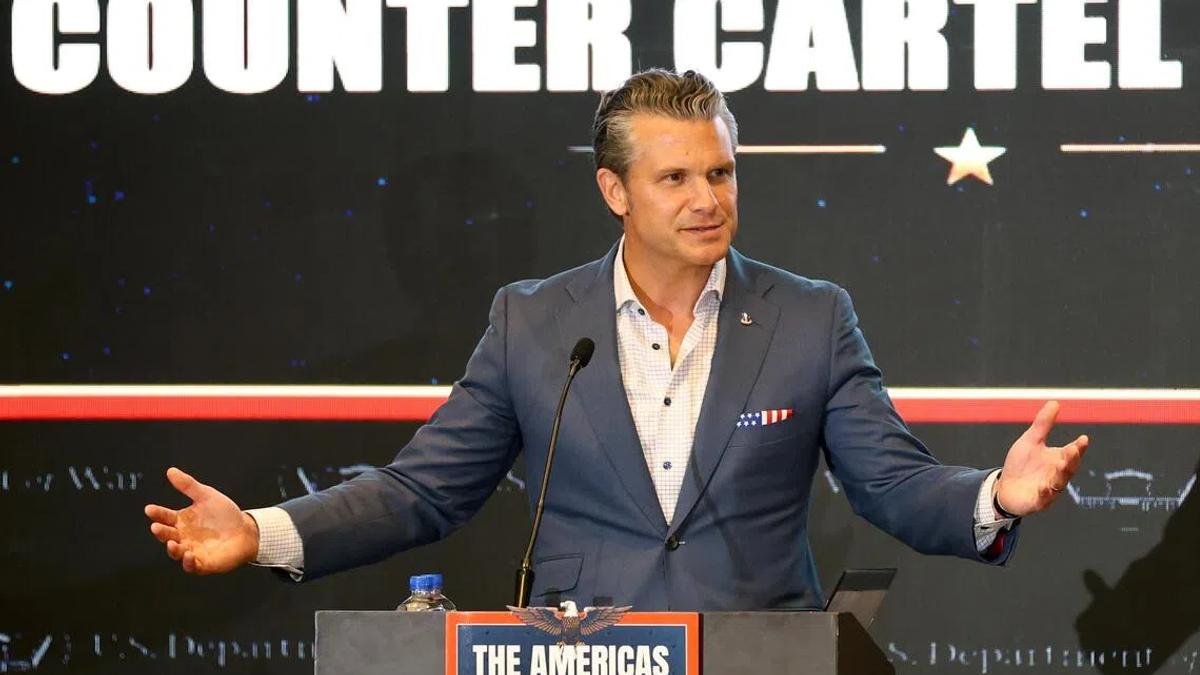
Colombia has given the green light for joint anti-drug operations with the US military, according to US Defence Secretary Pete Hegseth. This move is part of a broader campaign by the US to combat cartels in Latin America. The authorization allows for joint military operations to destroy terrorist and terror networks, as stated by Hegseth during an anti-cartel conference in Panama.
The decision to authorize joint military operations is a significant development in the region's geopolitics. Colombia's newly elected President Abelardo de la Espriella has made it clear that he intends to take a hardline approach against drug traffickers and guerrilla groups. By teaming up with the US, De la Espriella is seeking to leverage Washington's military might to further his own agenda. The move is also seen as a nod to the US's "Shield of the Americas" initiative, an anti-cartel alliance that aims to coordinate efforts across Latin America to combat transnational crime.
The human cost of this alliance is a major concern. The US military's campaign of air strikes targeting alleged drug-smuggling boats in the Caribbean and eastern Pacific Ocean has already resulted in the deaths of at least 215 people. Legal experts and rights groups have criticized the strikes, arguing that they could amount to extrajudicial killings. The fact that the US has not provided definitive evidence that the targeted vessels are involved in drug trafficking raises serious questions about the legitimacy of these operations. As Colombia intensifies its own military campaign against guerrillas and drug traffickers, the risk of civilian casualties and human rights abuses is likely to increase.
What is being downplayed in the official narrative is the potential for this alliance to exacerbate existing social and economic problems in Colombia. The country is already experiencing its worst wave of violence in over a decade, and the escalation of military operations is unlikely to address the root causes of the conflict. Furthermore, the involvement of the US military raises questions about the extent to which Washington is driving the agenda in Colombia, and whether the country's sovereignty is being compromised. The fact that De la Espriella has openly admired Trump and El Salvador's Nayib Bukele, and has offered to host US troops on Colombian soil, suggests that the country's new government is willing to compromise its independence in exchange for military support.
As the situation unfolds, it is essential to keep a close eye on the human cost of the joint military operations. The international community should be vigilant in monitoring the actions of the US and Colombian militaries, and holding them accountable for any human rights abuses. Additionally, the role of the US in driving the agenda in Colombia should be scrutinized, and the country's sovereignty should be respected. The "Shield of the Americas" initiative should also be examined critically, as it has the potential to create a new framework for US military intervention in the region.
Editor's Note: The analysis is based on publicly available information and may not reflect the full complexity of the situation on the ground.
Source referenced: STRAITSTIMES
This brief was synthesized by our Editorial Engine and reviewed by The Ground Narrative team.


