TRENDING

Monday, 5 October 2026
----------------------
24 Rabi' Al-Thani 1448 AH
Japan's Komeito party, a former long-time junior coalition partner, has named Mitsunari Okamoto as its new leader, following the dissolution of the Centrist Reform Alliance. This leadership change comes as the party navigates a fractured opposition landscape ahead of a crucial Diet session.
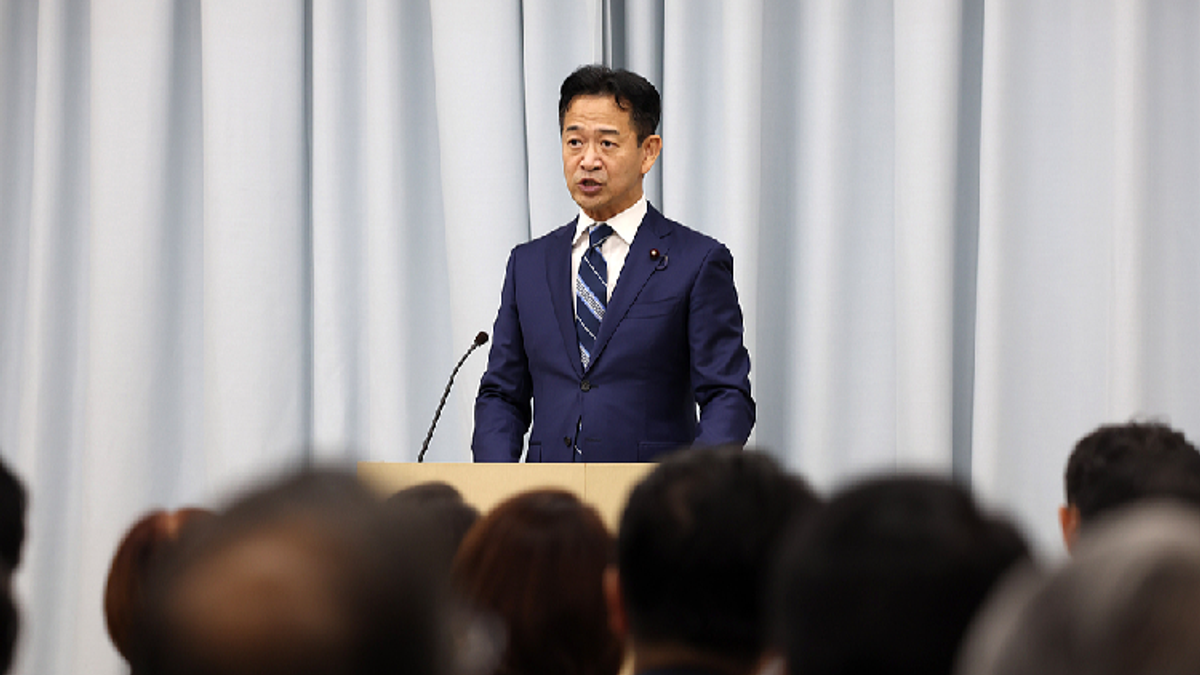
Japan's Komeito party, a political entity with a history of serving as a junior partner in ruling coalitions, has announced a significant leadership transition. On October 3, 2026, Mitsunari Okamoto, a seasoned House of Representatives lawmaker, was formally selected as the party's new leader. He succeeds Toshiko Takeya, who had led Komeito since January of the same year. This change follows a period of strategic realignment for Komeito, which saw it briefly join the opposition Centrist Reform Alliance earlier in the year, an alliance that subsequently fractured in September. The new leadership takes the helm just as an extraordinary session of the Japanese Diet is set to commence.
Komeito's leadership change and its shifting alliances are not merely internal party matters; they ripple through the entire fabric of Japanese politics, fundamentally altering the balance of power. For decades, Komeito has played a unique and often understated role as the Liberal Democratic Party's (LDP) junior coalition partner, providing a stable bloc of votes primarily drawn from its base, the Soka Gakkai Buddhist lay movement. This partnership allowed the LDP to secure majorities and Komeito to exert a moderating influence on policy, particularly on issues of social welfare and defense.
Komeito's brief foray into the opposition Centrist Reform Alliance earlier this year was a significant strategic gamble. It represented an attempt to broaden its appeal beyond its traditional base and perhaps to gain greater leverage in a political landscape where the LDP's dominance, while strong, faces occasional challenges. The subsequent collapse of this alliance in September, however, underscores the inherent difficulties in forging a cohesive opposition in Japan. Opposition parties often struggle with ideological differences, leadership rivalries, and a lack of a unified vision capable of truly challenging the LDP's entrenched power.
With Mitsunari Okamoto at the helm, Komeito faces the immediate challenge of redefining its identity and strategy. Is it an opposition party committed to challenging the LDP, or is it merely recalibrating for a potential future return to coalition governance? The answer will dictate its approach in the upcoming Diet session and beyond. A fragmented opposition, which the collapse of the Centrist Reform Alliance effectively ensures, invariably strengthens the hand of the ruling LDP. It allows the LDP to pursue its legislative agenda with less resistance, making it harder for alternative policy proposals to gain traction. Okamoto's task is to navigate this complex terrain, attempting to carve out a distinct space for Komeito while maintaining its electoral viability, a task made harder by the recent political turbulence.
The machinations within Japan's political parties, while seemingly abstract, directly impact the lives of ordinary citizens. When the opposition is fragmented and in flux, the human cost manifests in several critical ways.
For the Japanese electorate, the constant shifting of alliances and leadership changes within opposition parties can lead to profound disillusionment. Many voters, particularly those seeking a genuine alternative to the long-dominant LDP, may feel that their voices are not being adequately represented. The collapse of the Centrist Reform Alliance extinguishes, at least temporarily, the hope for a consolidated opposition front that could offer a clear, coherent policy platform. This can result in lower voter turnout, a sense of political apathy, and a feeling that the democratic process is not effectively serving their interests. When viable alternatives are scarce, citizens may feel trapped, unable to effect meaningful change through the ballot box.
Komeito's traditional role as a junior coalition partner was often to temper some of the LDP's more conservative impulses, particularly concerning social welfare and defense policy. Its base, the Soka Gakkai, generally favors pacifism and robust social safety nets. If Komeito is now firmly in opposition, or if its influence is diminished due to internal instability, the LDP may feel less pressure to compromise on these issues. This could lead to a faster pace of defense spending increases, potentially impacting social programs as resources are reallocated. It could also accelerate discussions around constitutional revision, particularly Article 9, which enshrines Japan's pacifist stance. Any shift in these areas has direct consequences for citizens, from changes in healthcare and pension provisions to the country's role in regional security and the associated economic burdens.
The Soka Gakkai provides Komeito with its bedrock of support, a highly organized and disciplined voting bloc. However, the party's recent political maneuvers—joining an opposition alliance only for it to split, and now a leadership change—can create internal tensions within the religious organization itself. Members might question the party's strategic direction, its effectiveness, and its ability to uphold the values that are central to the Soka Gakkai's mission. This internal questioning, if widespread, could potentially erode the very foundation of Komeito's electoral strength, making it harder for the party to mobilize its base and further destabilizing the political landscape.
Beyond the immediate headlines of a leadership change, several deeper narratives remain largely unaddressed by official statements and mainstream political commentary. These are the subtle power plays and underlying currents that truly shape Japan's political future.
What governments and ruling parties often downplay, or simply omit, is their indirect role in the fragmentation of the opposition. The LDP, having been in power for most of the post-war era, is a master of political strategy. A strong, unified opposition poses the greatest threat to its hegemony. The collapse of the Centrist Reform Alliance is, from the LDP's perspective, a highly favorable development. While the LDP did not directly cause the split, its consistent electoral strength and the inherent difficulties of uniting disparate opposition factions likely contributed to the alliance's fragility. The LDP can now continue to govern with a relatively free hand, facing a divided and less effective opposition. This narrative of a
Mitsunari Okamoto has been selected as the new leader of Japan's Komeito party, succeeding Toshiko Takeya. He is a House of Representatives lawmaker and assumed leadership on October 3, 2026.
The leadership change comes after Komeito's brief participation in, and subsequent split from, the Centrist Reform Alliance, an opposition bloc. This shift redefines Komeito's political strategy and impacts the balance of power in the Japanese Diet, potentially strengthening the ruling LDP due to a fragmented opposition.
A fragmented opposition can lead to voter disillusionment and a lack of clear policy alternatives. If Komeito's moderating influence on the LDP diminishes, policies related to defense spending, social welfare, and constitutional revision could shift, directly impacting citizens' lives and national priorities.
Source referenced: CGTN
This brief was synthesized by our Editorial Engine and reviewed by The Ground Narrative team.