TRENDING

Friday, 18 September 2026
----------------------
7 Rabi' Al-Thani 1448 AH
China Media Group’s exclusive invitation to the Arab Media Summit in Dubai signals a deepening media partnership, but the real stakes lie in influence, economics, and the voices left out of the conversation.
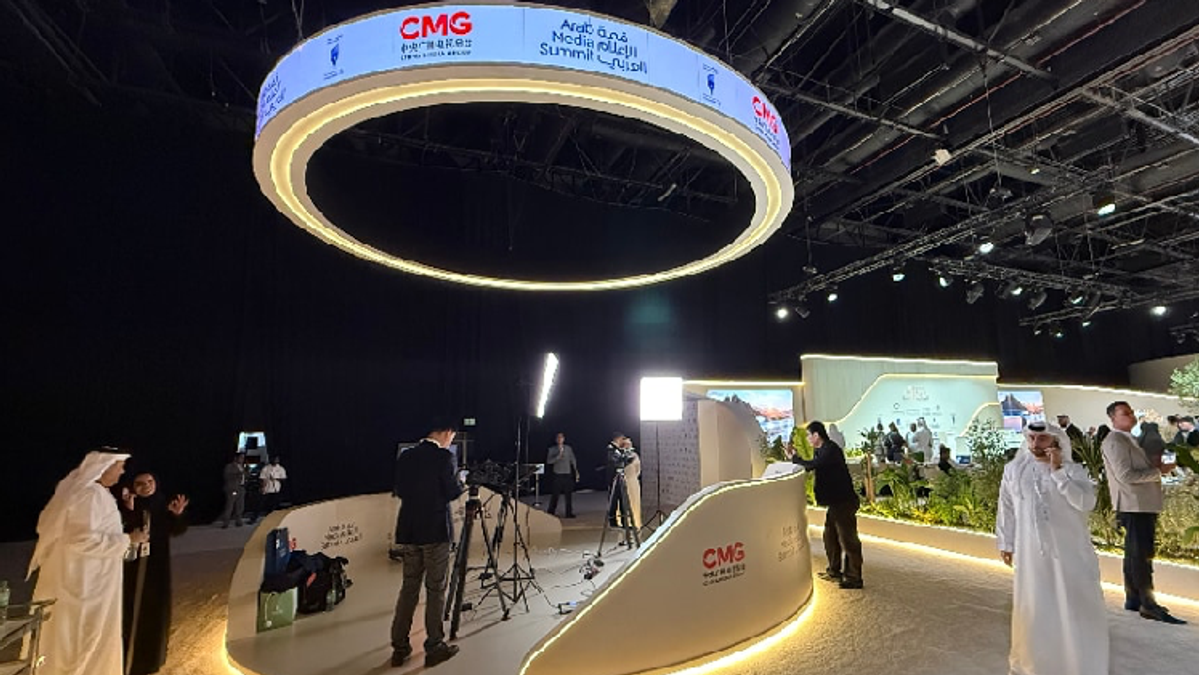
The 2026 Arab Media Summit convened in Dubai from September 15‑17, drawing 250 media outlets from 23 nations. China Media Group (CMG) was the only Chinese outlet formally invited, joining panels on media transformation, the creative economy, and AI in journalism. CMG’s reporters conducted interviews with regional media leaders, notably UAE Journalists Association chairman Mohammed Al Hammadi, who highlighted China’s growing sway in the Arab world.
State‑driven media diplomacy – CMG operates under the direct oversight of China’s propaganda apparatus, making its overseas presence a tool of soft power. By positioning itself at a high‑profile Arab forum, Beijing seeks to shape narratives about its Belt‑and‑Road projects, technology exports, and political positions without overt diplomatic overtures.
Economic incentives – The Arab region is a key market for Chinese infrastructure contracts, energy imports, and digital platforms. Media cooperation can smooth the path for Chinese firms by framing projects as mutually beneficial development rather than debt‑laden ventures. Simultaneously, Gulf media groups gain access to Chinese content libraries and technology, diversifying revenue streams in a market increasingly pressured by streaming giants.
Alliance calculus – The United Arab Emirates has cultivated a pragmatic partnership with Beijing, balancing ties to the United States with economic reliance on Chinese capital. Hosting CMG reinforces the UAE’s image as a neutral hub where great powers can engage, bolstering its own diplomatic leverage.
Information architecture – By participating in panel discussions on AI and journalism, CMG gathers insights into regional media regulation, potentially informing Beijing’s own censorship technologies and exportable surveillance tools.
While executives and officials exchanged handshakes, ordinary journalists across the Arab world face tightening press freedoms. Reporters covering labor rights, minority issues, or anti‑corruption stories risk censorship or legal repercussions, especially when content aligns with state‑approved narratives.
Workers on Chinese‑funded construction sites in the Gulf—often migrants from South Asia—bear the physical toll of the projects that media narratives celebrate. Their wages, safety standards, and living conditions remain largely invisible in the summit’s glossy presentations.
Small‑scale content creators, who rely on independent platforms to reach local audiences, encounter algorithmic biases that favor state‑aligned outlets. The push for AI‑driven journalism may marginalize these voices further, consolidating audience share with large, state‑backed players like CMG.
Official statements stress “mutual understanding” and “creative cooperation,” yet they sidestep the strategic intent to embed Chinese narratives within Arab public discourse. The summit’s agenda omits any discussion of how Chinese media practices—such as coordinated messaging and digital surveillance—might be exported to partner states.
Equally absent is a conversation about the financial terms behind media exchanges. Licensing deals for Chinese film and television content often come bundled with technology transfer agreements that include data‑collection capabilities, a detail rarely disclosed in public briefings.
Finally, the summit’s focus on AI glosses over ethical concerns. The technology touted for efficiency can also be repurposed for content filtering, a capability that aligns with both Chinese and Gulf authorities’ interest in controlling dissent.
Watch for follow‑up agreements signed in the weeks after the summit, especially those linking Chinese tech firms with Arab broadcasters. Any joint venture that includes data‑analytics or cloud services will likely extend Beijing’s informational reach.
Monitor legislative moves in the UAE and Saudi Arabia concerning foreign media ownership and digital regulation; subtle shifts could signal a formalization of the soft‑power partnership.
Finally, keep an eye on grassroots media collectives in the region. Their ability to produce independent content under increasing pressure will be a barometer for how far the narrative alignment can go before dissent is squeezed out of the public sphere.
Source referenced: CGTN
This brief was synthesized by our Editorial Engine and reviewed by The Ground Narrative team.