TRENDING

Friday, 16 October 2026
----------------------
5 Jumada Al-Awwal 1448 AH
China's top diplomat Wang Yi emphasizes the importance of a comprehensive and lasting ceasefire through political and diplomatic means to resolve regional tensions in the Middle East.
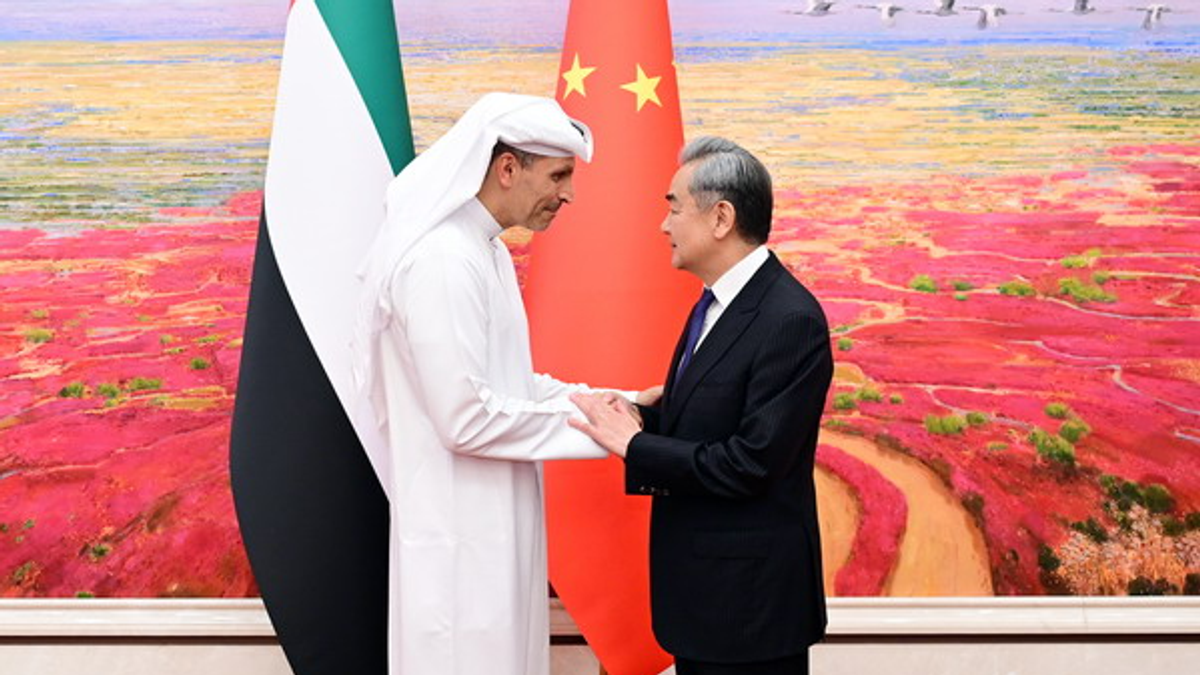
China's top diplomat Wang Yi recently emphasized the importance of a comprehensive and lasting ceasefire through political and diplomatic means to resolve regional tensions in the Middle East. This statement comes at a critical juncture in the region, where the ongoing conflict between Iran and the United States has raised concerns about the stability of the Strait of Hormuz, a vital waterway for global oil trade.
China's diplomatic efforts in the Middle East have been gaining momentum in recent years, with Wang Yi playing a key role in promoting peace and de-escalation in the region. The visit of Abu Dhabi Crown Prince Sheikh Khaled bin Mohamed bin Zayed Al Nahyan to China, accompanied by Khaldoon Khalifa Al Mubarak, special envoy of the president of the United Arab Emirates (UAE) to China, is a significant development in this context.
Wang Yi's statement highlights China's commitment to promoting peace and stability in the Middle East, which is in line with its broader strategic objectives in the region. By emphasizing the importance of a comprehensive and lasting ceasefire, China is signaling its willingness to engage in diplomatic efforts to resolve the conflict, rather than resorting to military action.
The Middle East is a critical region for China's energy security, and any disruption to the flow of oil through the Strait of Hormuz would have significant implications for the global economy. China's diplomatic efforts in the region are therefore crucial in maintaining stability and ensuring the continued flow of oil.
Wang Yi made the statement during talks with Khaldoon Khalifa Al Mubarak in Beijing, China, on April 13, 2026.
China's diplomatic efforts in the Middle East are significant because they reflect the country's growing influence in the region. By engaging in diplomatic efforts to resolve the conflict, China is demonstrating its commitment to promoting peace and stability, which is in line with its broader strategic objectives.
China's diplomatic efforts in the Middle East have the potential to impact the region in several ways. By promoting peace and stability, China can help to reduce tensions and prevent further conflict, which would have significant implications for the global economy. Additionally, China's engagement in the region can help to promote economic cooperation and development, which would benefit both China and the countries in the region.
While China's diplomatic efforts in the Middle East are significant, there are also emerging concerns about the country's intentions in the region. Some analysts have raised concerns about China's growing influence in the region, which could potentially lead to a shift in the regional balance of power. However, it is too early to say whether these concerns are justified, and further analysis is needed to understand the implications of China's diplomatic efforts in the Middle East.
China's diplomatic efforts in the Middle East are significant because they reflect the country's growing influence in the region. By engaging in diplomatic efforts to resolve the conflict, China is demonstrating its commitment to promoting peace and stability, which is in line with its broader strategic objectives. However, there are also emerging concerns about China's intentions in the region, which need to be carefully considered in the context of the country's growing influence in the region.
Editor's Note: While China's diplomatic efforts in the Middle East are significant, there are also emerging concerns about the country's intentions in the region, which need to be carefully considered in the context of the country's growing influence in the region.
Source referenced: CGTN
This brief was synthesized by our Editorial Engine and reviewed by The Ground Narrative team.