TRENDING

Friday, 18 September 2026
----------------------
7 Rabi' Al-Thani 1448 AH
China's Xiangshan Forum pushes a 'multipolar' security vision, challenging existing global frameworks. This analysis unpacks Beijing's strategy to reshape international order and its real-world implications.
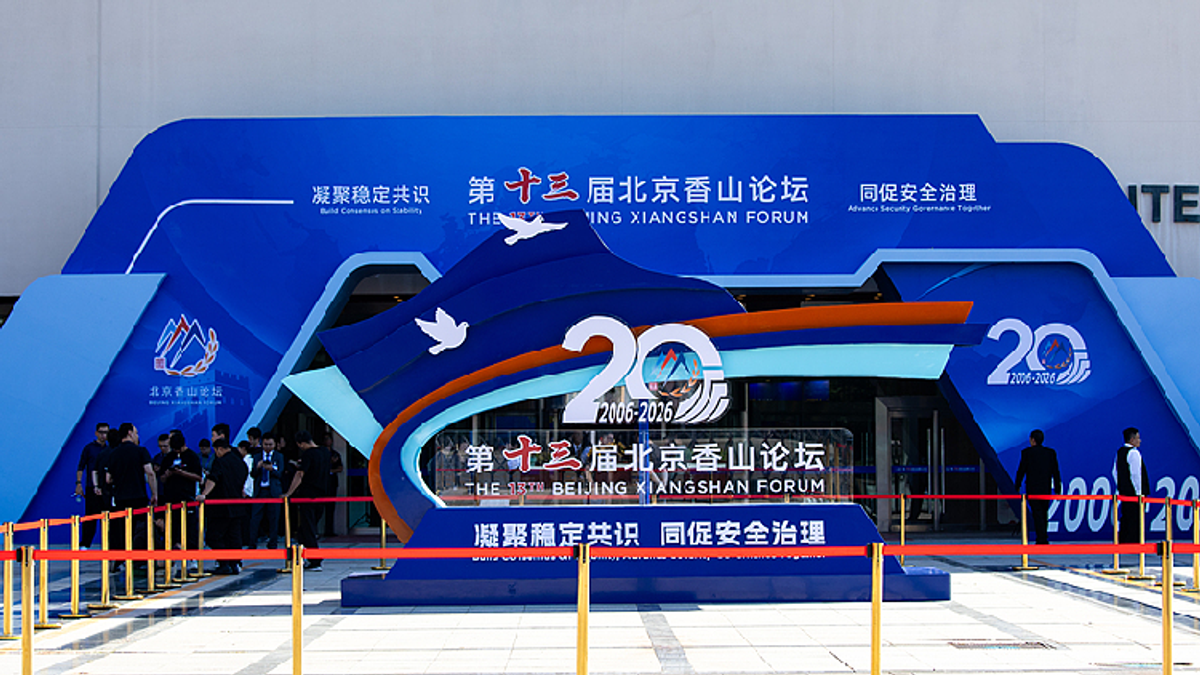
The 13th Beijing Xiangshan Forum recently concluded, with Chinese Minister of National Defense Dong Jun advocating for collective efforts to address global security challenges. The forum, marking its 20th anniversary, hosted nearly 2,000 representatives from over 100 countries and organizations. Discussions centered on multilateralism, the trend toward a multipolar world, and China's Global Governance Initiative (GGI) and Global Security Initiative (GSI).
China is actively constructing an alternative framework for global security and governance, directly challenging the Western-led "rules-based international order." The Xiangshan Forum, initially a "track-two" dialogue, has evolved into a significant platform for Beijing to project its vision. By hosting defense officials from nations like the Democratic People's Republic of Korea, Mauritania, Gabon, and Somalia, China signals its intent to build influence beyond traditional Western alliances. The GGI and GSI are more than rhetorical; they are conceptual tools designed to legitimize a multipolar world where China plays a central, rather than subordinate, role. This strategy aims to dilute the power of existing institutions dominated by the US and its allies, offering developing nations a narrative of "equal footing" and "consensus-building" that resonates with their own desires for greater agency. It's a play for normative power, seeking to define what "security" and "governance" mean on a global scale, aligning these definitions with Beijing's strategic interests.
While calls for "joint efforts" and "shared security" sound appealing, the shift in global security architecture carries tangible human costs. For ordinary citizens, particularly in smaller nations, a fragmented international order can mean increased instability. When major powers compete to define security norms, it can lead to proxy conflicts, economic coercion, and a weakening of universal human rights standards as each bloc prioritizes its own version of "stability." Nations caught between these competing visions might face difficult choices, potentially sacrificing economic opportunities or political autonomy for security assurances from one side or the other. The "people-centered approach" advocated by China's GGI often translates to state-centric stability, which may not always align with the individual freedoms and protections that ordinary people seek. The real cost is borne by those whose lives are disrupted by friction, whose governments are pressured to align, and whose voices are often unheard in the grand debates over global order.
What is often downplayed by China, and perhaps overlooked by some Western analyses, is the strategic depth of Beijing's initiatives. While presented as benevolent "international public security goods," the GGI and GSI are fundamentally instruments of state power projection. China seeks to establish itself as a responsible global leader, but one that redefines "responsibility" to fit its own model of governance and its ambitions. The emphasis on "sovereign equality" and "non-interference" subtly critiques Western interventionism while simultaneously creating space for China to expand its influence without direct challenge to its internal affairs. Western powers, in turn, often dismiss these forums as mere propaganda, thereby missing the genuine appeal China's narrative has for nations seeking alternatives to the existing order. The "equal dialogue" touted by the forum might mask an underlying power dynamic where China, as host and architect of the initiatives, ultimately sets the agenda and frames the consensus.
The immediate future will reveal whether China's rhetorical push for a new security order translates into concrete actions and lasting alliances. Watch for the practical implementation of projects under the GSI, particularly in regions where China has significant economic and strategic interests, such as Africa and Southeast Asia. Observe how developing nations navigate these competing visions of global order – will they align fully with China's framework, or will they seek to maintain neutrality and benefit from both sides? Pay attention to the reactions of traditional Western security alliances (like NATO or AUKUS) and how they adapt their strategies to counter China's growing influence in the normative space. The true test will be whether China's "consensus-building" can genuinely resolve complex security challenges, or if it primarily serves to legitimize a new hierarchy.
Source referenced: CGTN
This brief was synthesized by our Editorial Engine and reviewed by The Ground Narrative team.