TRENDING

Saturday, 26 September 2026
----------------------
15 Rabi' Al-Thani 1448 AH
A Chinese envoy recently utilized the UN Human Rights Council to urge Japan to address historical issues, particularly the 'comfort women' system, framing it as a grave crime against humanity. This diplomatic move underscores the persistent role of historical grievances in Sino-Japanese relations and their broader geopolitical implications in East Asia.
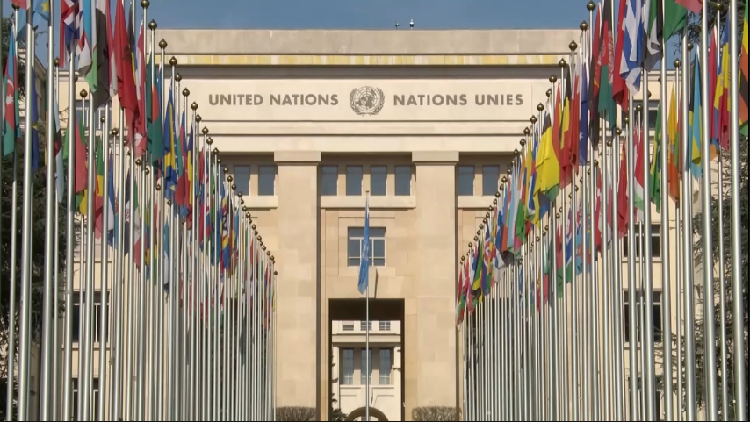
In a significant diplomatic maneuver, Li Xiaomei, the deputy head of the Chinese delegation to the United Nations in Geneva, recently called upon Japan to "properly and with sincerity" address its wartime history. The remarks, delivered during the 62nd session of the UN Human Rights Council's annual discussion on women's rights, specifically highlighted the "forced recruitment of 'comfort women'" as a "grave crime against humanity committed by Japanese militarism against women." This intervention, occurring in late June 2026, coincided with the 80th anniversary of the opening of the Tokyo Trial, a detail emphasized by the Chinese envoy to underscore the historical context and the perceived need for deeper reflection from Japan.
China's consistent invocation of historical issues, particularly those stemming from Japan's actions during World War II, serves as a potent and recurring element in its foreign policy towards Tokyo. The "comfort women" issue, referring to women forced into sexual slavery by the Imperial Japanese Army, remains a deeply sensitive and unresolved matter for many in China, South Korea, and other Asian nations. By raising this issue at a prominent international forum like the UN Human Rights Council, Beijing aims to achieve several strategic objectives.
Firstly, it seeks to maintain international pressure on Japan, preventing the issue from fading from global consciousness. Framing it as a "crime against humanity" elevates the discussion beyond bilateral disputes to a matter of universal human rights, potentially garnering broader international sympathy and support. This approach also serves to challenge Japan's efforts to project itself as a responsible and forward-looking global power, particularly in multilateral settings where human rights are a central theme.
Secondly, the timing of the statement, coinciding with the 80th anniversary of the Tokyo Trial, is strategically chosen. The Tokyo Trial, which prosecuted Japanese war criminals, is a foundational event in the post-war narrative of accountability. By linking the "comfort women" issue to this anniversary, China reinforces the argument that Japan has not fully atoned for its wartime past, thereby undermining Japan's claims of having adequately addressed these historical grievances through past apologies and compensation efforts.
This diplomatic offensive is not merely about historical justice; it is deeply intertwined with the broader geopolitical competition in East Asia. Sino-Japanese relations are characterized by a complex interplay of economic interdependence, territorial disputes (such as over the Senkaku/Diaoyu islands), and regional power rivalry. China's repeated demands for Japan to confront its history serve as a consistent point of leverage, allowing Beijing to exert diplomatic pressure and shape regional narratives.
From a geopolitical perspective, keeping historical grievances alive can complicate Japan's efforts to forge stronger alliances and partnerships in the Indo-Pacific, particularly with nations that also suffered under Japanese occupation. While Japan has made efforts to reconcile with its neighbors, China's persistent reminders of wartime atrocities can sow distrust and hinder the development of a unified regional front, especially in the context of growing concerns over China's own assertive regional posture.
Furthermore, by utilizing a UN platform, China internationalizes a bilateral issue, potentially forcing Japan to respond on a global stage and diverting attention from any criticisms China might face regarding its own human rights record. This tactic allows China to project an image of advocating for justice and human rights, even as it faces scrutiny over issues such as Xinjiang, Hong Kong, and Tibet.
Japan's response to these recurring demands has historically been a delicate balancing act. While successive Japanese governments have issued apologies and established funds for victims, these actions have often been deemed insufficient by China and South Korea, who argue for more profound and unequivocal acknowledgments of state responsibility. The challenge for Japan lies in satisfying these demands without appearing to concede to politically motivated pressure, particularly when domestic nationalist sentiments also play a role.
The ongoing nature of these historical disputes ensures that they will continue to be a significant factor in East Asian geopolitics. China's latest move at the UN Human Rights Council underscores that historical memory remains a powerful tool in international relations, capable of shaping diplomatic discourse, influencing regional alliances, and reflecting the deeper power dynamics at play between two of Asia's most influential nations. The call for "sincerity" from Japan suggests that China seeks not just acknowledgment, but a fundamental shift in Japan's approach to its past, a demand that will likely continue to fuel tensions and complicate efforts towards genuine reconciliation in the region.