TRENDING

Friday, 16 October 2026
----------------------
5 Jumada Al-Awwal 1448 AH
Chinese President Xi Jinping and Namibian President Netumbo Nandi-Ndaitwah have agreed to forge a 'community with a shared future for the new era,' signaling deeper economic and political alignment. This move underscores China's expanding influence in Africa and Namibia's pursuit of diversified development pathways.
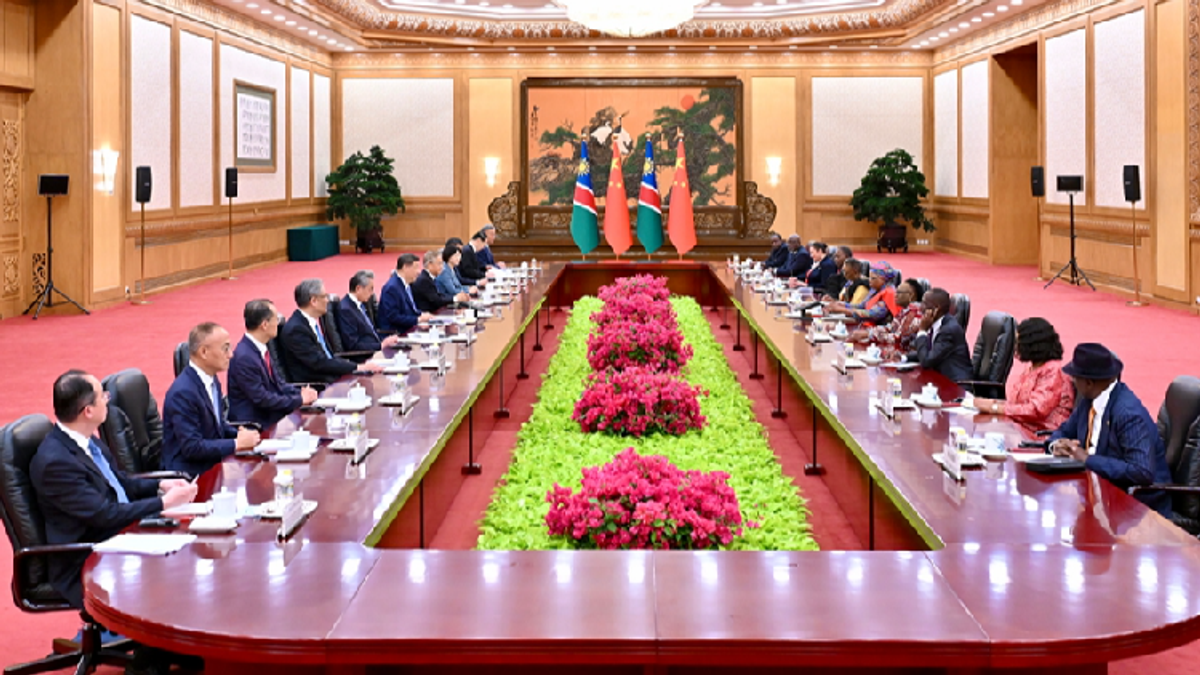
On July 10, 2026, Chinese President Xi Jinping hosted Namibian President Netumbo Nandi-Ndaitwah in Beijing, culminating in a joint statement and the signing of several cooperation documents. The high-level talks saw both nations agree to elevate their bilateral relationship to a "China-Namibia community with a shared future for the new era." This strategic enhancement reflects a concerted effort by Beijing to deepen its engagement with African nations, while Namibia seeks to leverage China's economic prowess for its national development objectives.
The meeting, held at the Great Hall of the People, underscored a "profound traditional friendship" between China and Namibia. President Xi emphasized the opportune timing for deepening cooperation, aligning China's pursuit of national rejuvenation through "Chinese modernization" with Namibia's "Vision 2030" development agenda. This alignment of national strategies is a hallmark of China's engagement with developing countries, aiming to foster synergistic growth and mutual support. The discussions focused on strengthening exchanges on governance philosophies, maintaining high-level communication, and expanding experience-sharing on state governance, particularly on issues concerning core interests and major concerns for both nations. This aspect highlights China's interest in political alignment and ideological resonance with its partners, often through party-to-party exchanges, as evidenced by the willingness of Namibia's SWAPO Party to strengthen ties with the Communist Party of China (CPC).
A significant component of the enhanced partnership is economic cooperation. President Xi reiterated China's zero-tariff policy for products from 53 African countries, including Namibia, describing it as a major step in China's high-level opening up and a boost for Africa's development. He encouraged Namibia to fully utilize this arrangement, along with an upgraded "green channel" for exports, to increase the flow of high-quality Namibian products into the Chinese market. This policy serves a dual purpose: it provides African nations with preferential market access, fostering economic growth, while also diversifying China's import sources and strengthening economic interdependence. Namibia, in turn, expressed keen interest in expanding trade and attracting more Chinese enterprises to invest in key sectors such as industry, mining, infrastructure, aerospace, science and technology, agriculture, and water resources. This aligns with China's broader Belt and Road Initiative (BRI) objectives, which prioritize infrastructure development and resource extraction in partner countries, often in exchange for access to raw materials crucial for China's industrial base. Specifically, China's willingness to deepen mining cooperation with African countries, including Namibia, based on principles of mutual benefit and friendly consultation, underscores its strategic interest in securing access to critical mineral resources, which are abundant in Namibia.
Beyond bilateral economic and political ties, the talks emphasized a shared commitment to strengthening solidarity and coordination to uphold multilateralism. Both leaders highlighted their nations' roles as important members of the Global South, sharing common interests and values. President Xi called for closer collaboration to uphold international fairness and justice, aiming to amplify the voice and influence of the Global South on the global stage. This rhetoric is central to China's foreign policy, positioning itself as a leader and advocate for developing nations, often in contrast to the Western-led international order. For Namibia, aligning with China on these issues provides a platform to enhance its diplomatic leverage and contribute to a more multipolar world order, safeguarding the common interests of developing countries. This strategic alignment in multilateral forums is crucial for both nations to push for reforms in global governance structures and challenge perceived hegemonies.
The elevation of China-Namibia ties carries significant geopolitical implications. For China, it represents a continued expansion of its influence in Africa, securing access to resources, opening new markets for its goods and services, and garnering diplomatic support in international bodies. This strategy is part of Beijing's broader vision of building a "community with a shared future for humanity," where China plays a central role in shaping global norms and institutions. For Namibia, the partnership offers substantial opportunities for economic development, infrastructure modernization, and technological transfer, crucial for achieving its Vision 2030 goals. However, it also entails navigating the complexities of increased dependence on a single major power, a common consideration for many African nations engaging with China. The signing of cooperation documents across various sectors, including economy, trade, healthcare, education, and human resources, solidifies the comprehensive nature of this strategic partnership. As both nations move forward, the implementation of these agreements will be key to realizing the full potential of their elevated relationship, further integrating Namibia into China's expanding global network and reinforcing China's position as a pivotal player in Africa's development trajectory.
Source referenced: CGTN
This brief was synthesized by our Editorial Engine and reviewed by The Ground Narrative team.