TRENDING

Saturday, 17 October 2026
----------------------
6 Jumada Al-Awwal 1448 AH
Months after President Paul Biya’s return, Cameroon still lacks a new cabinet and a vice president, leaving citizens uneasy and investors wary. The stalled appointments expose power calculations and deepen the human toll of political inertia.
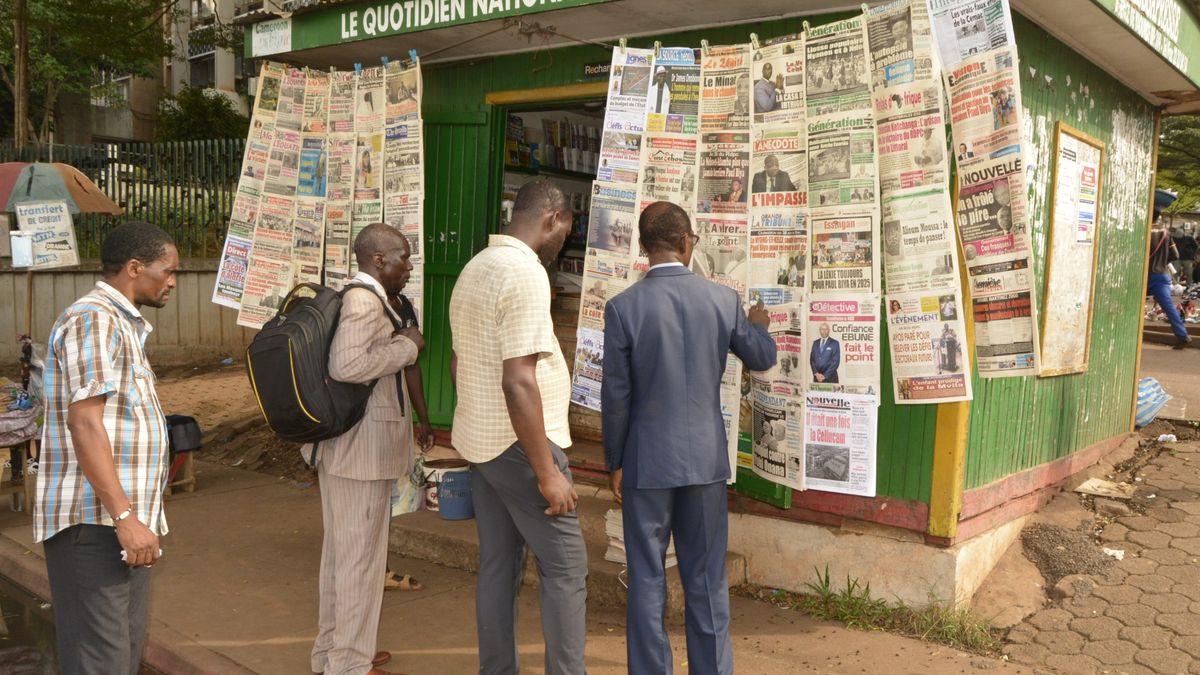
Cameroon’s 93‑year‑old president, Paul Biya, landed back in Yaoundé on August 20 after a ten‑week trip abroad, sparking hopes for a reshaped government. In his December 31, 2025 New Year’s address, Biya promised a new cabinet “in the coming days,” yet by early October 2026 no new ministers or vice president had been named. The vice presidency, resurrected by an April constitutional amendment, remains vacant, and a mysterious sealed decree claiming to appoint a vice president was dismissed as procedurally flawed. Ordinary Cameroonians, like 39‑year‑old Elvis Mbi, tune daily to the state radio’s 5 p.m. bulletin, waiting for an announcement that never arrives.
Cameroon’s political architecture blends a formal constitution with Biya’s entrenched personal rule. The April 14, 2026 amendment (Law No. 2026/002) re‑established the vice presidency, ostensibly to create a clear succession line. Yet the law grants the president sole authority to appoint and dismiss the vice president, with no deadline for filling the role. This gives Biya a strategic lever: by holding the appointment, he can negotiate loyalty, test rival factions, or simply prolong his own relevance.
The Cameroon People’s Democratic Movement (CPDM) is a coalition of regional elites, military officers, and business magnates. A new cabinet reshuffle would reshuffle patronage networks, affecting oil‑linked revenue streams, construction contracts, and security appointments in the Anglophone and Boko‑Haram‑affected zones. Delaying appointments lets Biya keep potential successors in a state of uncertainty, preventing any single faction from consolidating power.
Cameroon’s macro‑economy depends on foreign direct investment in hydro‑electric projects, port expansions, and agricultural processing. BMI analyst Jason Healy warns that prolonged political limbo erodes confidence, especially for long‑term infrastructure financing that requires stable policy environments. The absence of a vice president also signals to investors that constitutional safeguards against a sudden power vacuum are weak, raising risk premiums.
The country juggles two armed conflicts: the Anglophone separatist insurgency in the Northwest and Southwest, and Boko‑Haram‑linked militancy around Lake Chad. A clear chain of command is crucial for coordinated security operations. By postponing the vice‑presidential appointment, Biya retains direct control over military directives, avoiding the risk that a new deputy might pursue a divergent peace strategy or negotiate with rebel leaders.
In the English‑speaking regions, the lack of political renewal deepens mistrust. Residents already contend with road blockades, school closures, and arbitrary arrests. The stalled reshuffle means no fresh ministerial mandate to address grievances, prolonging economic stagnation and limiting access to basic services.
Cameroonian farmers and small‑scale traders depend on predictable tax policies and infrastructure projects. Uncertainty deters banks from extending credit, and delayed port upgrades keep export costs high. As a result, household incomes in the Far North and Adamawa hover below subsistence levels, increasing food insecurity.
Civil servants, many of whom rely on patronage for promotions, face stalled career advancement. NGOs report that funding cycles for health and education programs are being renegotiated, leaving clinics understaffed and schools without learning materials. The daily ritual of listening to the 5 p.m. bulletin, as described by Elvis Mbi, has become a source of collective anxiety rather than information.
Official spokespeople, like Communication Minister Rene Emmanuel Sadi, frame the delay as a normal exercise of presidential prerogative, emphasizing “the right to take time” when entrusting high office. This rhetoric downplays the political bargaining occurring behind closed doors and masks the strategic advantage Biya gains by controlling the timing of any change.
The July 1 claim of a vice‑presidential decree, later dismissed as procedurally invalid, hints at internal power plays. Some analysts suspect the envelope was a test of loyalty among security services or an attempt by a faction to force Biya into a decision. The government’s swift detention of the courier and vague investigation narrative serve to contain speculation while signaling that any unauthorized maneuver will be quashed.
Western donors and multilateral banks have not publicly pressured Biya for a swift appointment, preferring to maintain aid flows that support counter‑terrorism and health programs. Their silence allows the president to navigate domestic politics without external accountability, even as the same donors warn investors about heightened risk.
- Appointment timing: Any announcement of a vice president or cabinet reshuffle in the next two months will reveal which faction within the CPDM holds sway and whether Biya is preparing a succession plan.
- Security policy shifts: A new deputy with a security background could signal a change in tactics against Anglophone rebels or Boko‑Haram, affecting civilian displacement patterns.
- Investor response: Watch for shifts in bond yields, project financing commitments, and statements from major firms operating in the hydro‑electric and port sectors; a clear political signal could revive stalled investments.
- Civil society mobilization: Increased protests or strikes around the radio bulletin times may pressure the presidency, especially if opposition parties like the Cameroon Party for National Reconciliation amplify calls for a transparent succession.
- International diplomatic cues: Visits from EU or African Union envoys, and any public remarks about governance standards, could pressure Biya to act before the next electoral cycle.
The coming weeks will test whether Cameroon’s long‑standing political equilibrium can adapt to the pressures of succession, security, and economic necessity, or whether the nation will remain caught in a waiting game that costs ordinary citizens their livelihoods and investors their confidence.
Biya retains the power to choose the timing and composition of appointments, using the delay to negotiate loyalty among factions, maintain control over security policy, and manage patronage networks.
Uncertainty raises risk premiums, deterring long‑term infrastructure financing and causing investors to pause projects, which in turn slows economic growth and job creation.
Source referenced: ALJAZEERA
This brief was synthesized by our Editorial Engine and reviewed by The Ground Narrative team.