TRENDING

Saturday, 17 October 2026
----------------------
6 Jumada Al-Awwal 1448 AH
Cuba accuses the US of pressuring nations ahead of a UN vote on the decades-long US embargo. This annual non-binding resolution highlights a persistent international dispute over Washington's unilateral economic policy.
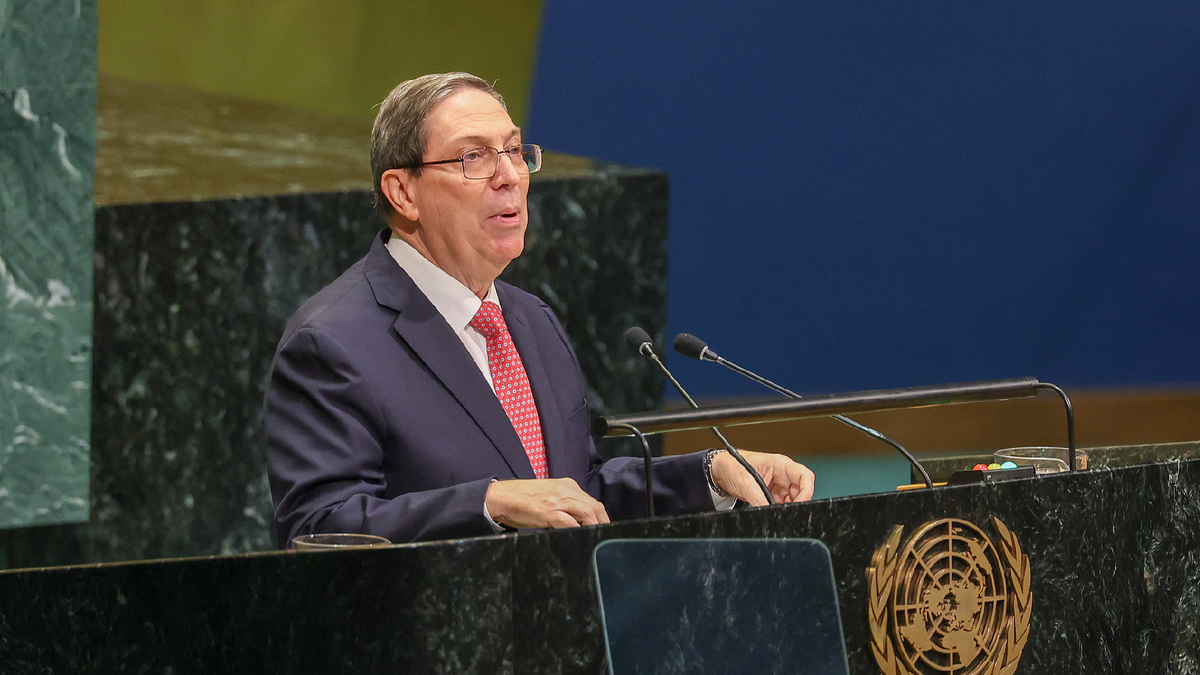
Cuba recently accused the United States of actively pressuring member states to vote against a resolution at the upcoming United Nations General Assembly (UNGA). This resolution calls for an end to the decades-long economic, commercial, and financial embargo imposed by Washington on the island nation. According to Cuban Foreign Minister Bruno Rodriguez, US Secretary of State Marco Rubio is "nervous and anxious" about another defeat and is "pressuring and blackmailing heads of state and government" to alter their votes. The US State Department confirmed that Rubio had spoken with Salvadoran President Nayib Bukele, urging him to "advance shared priorities at the United Nations," a statement Cuba interprets as direct interference. The UNGA has historically voted overwhelmingly in favor of lifting the non-binding embargo, with the 2025 resolution garnering 165 votes in favor, seven against, and 12 abstentions.
The annual UNGA vote on the US embargo against Cuba is less about immediate policy change and more about a persistent, decades-long struggle for international legitimacy and influence. For the United States, the embargo is a legacy policy, deeply entrenched in its political fabric since the early 1960s. Initially conceived to isolate the communist regime of Fidel Castro and prevent the spread of Soviet influence in the Western Hemisphere, it has evolved into a complex instrument of foreign policy driven by a mix of ideology, domestic politics, and a desire to exert leverage.
The primary incentive for the US in maintaining the embargo is the belief that it can pressure Cuba's government towards democratic reforms and improved human rights. This stance is heavily influenced by powerful Cuban-American lobbying groups, particularly in Florida, a critical swing state in US elections. For many politicians, supporting the embargo is a non-negotiable position to secure this influential voting bloc. Beyond domestic considerations, the US views the embargo as a demonstration of its capacity to impose costs on adversaries and to deter other nations from adopting similar socialist or anti-US postures. The act of openly lobbying against the UN resolution, even if non-binding, serves to remind smaller nations of Washington's reach and the potential consequences of aligning too closely with its declared adversaries. It’s a subtle but clear signal that while the world might disagree, the US remains committed to its policy and expects a certain level of deference from its allies and partners.
For Cuba, the embargo is a powerful narrative tool. It allows the government to externalize blame for its economic woes, rallying nationalistic sentiment and deflecting criticism of its own governance. The annual UNGA vote provides a global platform for Havana to highlight its perceived victimhood and to garner international solidarity against what it frames as an unjust, unilateral act of aggression by a superpower. The overwhelming support for lifting the embargo in the UN, year after year, serves as a significant diplomatic victory for Cuba, even if it doesn't translate into immediate economic relief. It chips away at the US's moral authority on the global stage and demonstrates the limits of its unilateral power, particularly in the Global South.
Most nations vote against the embargo not necessarily out of ideological alignment with Cuba, but out of a principled opposition to extraterritorial sanctions and a belief in national sovereignty. Many countries view the embargo as a violation of international law and a hindrance to free trade. For developing nations, it represents a precedent where a powerful state can dictate the economic policies of others, a scenario they wish to avoid for themselves. Furthermore, the embargo limits their own economic opportunities with Cuba, a nation with a strategic location and potential for trade and tourism. While many countries might privately disagree with Cuba's political system, their public stance at the UN reflects a broader commitment to multilateralism and a rejection of economic coercion as a tool of foreign policy. The few countries that vote with the US typically do so due to strong bilateral ties, direct economic dependence, or shared ideological opposition to Cuba's government.
The US embargo on Cuba, enduring for over six decades, has inflicted a profound and pervasive human cost on the island's 11 million citizens. While the Cuban government often points to the embargo as the sole cause of all its problems, its impact is undeniably severe, exacerbating existing challenges and limiting opportunities for ordinary people.
The most immediate and tangible impact is on the daily lives of Cubans. The embargo restricts access to essential goods, from food and medicine to spare parts for infrastructure and technology. This leads to chronic shortages, inflated prices on the black market, and a constant struggle for families to meet basic needs. For instance, the lack of access to certain medical supplies and equipment, even if produced by non-US companies but containing US components, directly affects the quality of healthcare. Similarly, restrictions on financial transactions and banking services make international trade incredibly difficult, hindering the import of vital foodstuffs and consumer goods. The embargo actively discourages foreign investment, limiting job creation and economic diversification, trapping the economy in a cycle of stagnation and dependence on a few key sectors like tourism and remittances, which are also vulnerable to US policy shifts.
The economic hardship fueled by the embargo contributes significantly to a "brain drain" phenomenon. Many of Cuba's brightest minds, from doctors and engineers to artists and entrepreneurs, seek opportunities abroad where they can earn a living wage and access resources unavailable on the island. This exodus depletes Cuba's human capital, further hindering its development prospects. For those who remain, the lack of economic opportunity and the difficulty of accessing information and technology can stifle innovation and limit personal and professional growth. The internet, for example, while increasingly available, remains expensive and often slow, partly due to the challenges of connecting to global infrastructure under embargo conditions.
While the focus is often on Cuba, the embargo also imposes costs on US citizens and businesses. American companies are denied access to a nearby market of 11 million consumers and potential investment opportunities, particularly in sectors like tourism, agriculture, and renewable energy. Farmers in the US, for example, could potentially export agricultural products to Cuba, a natural market given geographical proximity. US citizens face restrictions on travel to Cuba, limiting cultural exchange and the ability for families to visit relatives freely. This policy effectively isolates both populations from each other, perpetuating misunderstandings and hindering the potential for people-to-people diplomacy.
Behind the diplomatic rhetoric and the annual UN spectacle lies a more nuanced reality, where powerful actors strategically frame the narrative to suit their objectives, often downplaying inconvenient truths or omitting critical context.
The United States consistently frames the embargo as a tool to promote democracy and human rights in Cuba. While these are stated goals, the actual impact on the ground, particularly the humanitarian cost, is often downplayed or attributed solely to the Cuban government's policies. Washington rarely acknowledges the significant international consensus against its embargo, dismissing the overwhelming UNGA votes as mere symbolism rather than a broad rejection of its unilateral approach. The domestic political drivers of the embargo – specifically the influence of the Cuban-American lobby in Florida – are also rarely discussed openly by US officials, who prefer to emphasize the policy's moral and strategic justifications. This omission allows the US to maintain a narrative of principled action, rather than one of political expediency. Furthermore, the US often overlooks how the embargo can paradoxically strengthen the Cuban government's narrative, allowing it to blame external forces for internal failures, thus diverting popular discontent. The "shared priorities" language used by Secretary Rubio in his call with President Bukele is a classic example of diplomatic euphemism. It masks the underlying pressure and potential quid pro quos involved in securing a vote, transforming a request for alignment into a collaborative effort, even when the power dynamic is heavily skewed.
On the other side, the Cuban government adeptly uses the embargo as a convenient scapegoat for nearly all of the island's economic and social problems. While the embargo's impact is severe, it is not the sole factor in Cuba's struggles. Decades of centralized economic planning, bureaucratic inefficiencies, lack of market reforms, and limited political freedoms have also significantly contributed to the country's economic stagnation and the hardship faced by its citizens. The government rarely acknowledges its own role in these issues, instead consistently pointing to the "blockade" as the root cause. This narrative allows the regime to maintain control, suppress dissent, and avoid accountability for internal policy failures. By focusing exclusively on the external pressure, Havana avoids a deeper examination of its own governance model and its impact on the Cuban people.
Many nations in the Global South vote against the embargo out of principle, but also out of a quiet calculation of their own interests. While they may publicly condemn the embargo, few are willing to openly defy the United States in a way that would jeopardize their own economic or security ties with Washington. The UNGA vote is non-binding, offering a safe space for countries to express dissent without fear of direct retaliation. The true "untold story" here is the delicate balance many smaller nations must strike: publicly supporting multilateralism and sovereignty while privately ensuring they do not cross the US on issues that truly matter to Washington. The pressure tactics described by Cuba highlight this reality – that even in a global forum, the shadow of a superpower's influence can loom large, shaping outcomes far beyond the merits of the resolution itself.
The upcoming UN General Assembly vote will be a key indicator, not just of international sentiment towards the US embargo on Cuba, but also of the shifting dynamics of global power and influence. While the resolution remains non-binding, the margin of victory, and particularly any significant shifts in the "against" or "abstention" columns, will reveal the effectiveness of Washington's lobbying efforts.
Observe whether the United States manages to peel off more votes from its traditional opponents, or if the overwhelming international consensus against the embargo holds firm. Any notable increase in the number of countries voting "no" or abstaining would signal a significant diplomatic victory for the US and a potential weakening of the global anti-embargo front. Conversely, if the numbers remain largely consistent, it will underscore the enduring international disapproval of the embargo, despite US pressure.
Beyond the vote itself, pay attention to the rhetoric from both Washington and Havana. Will the US double down on its justifications, or will there be any subtle shifts in tone that might hint at future policy adjustments? For Cuba, watch for how the government leverages the outcome of the vote to reinforce its narrative internally and externally. Also, monitor any new economic measures or reforms announced by Havana, and how these interact with the ongoing embargo. The long-term trajectory of Cuba's economy, and the daily struggles of its citizens, will continue to be the most critical human story behind this enduring geopolitical standoff. Finally, observe how other major powers, particularly China and Russia, position themselves in relation to Cuba and the embargo, as their growing influence could offer Havana alternative avenues for economic and political support, further complicating Washington's long-standing policy.
The US embargo against Cuba is a comprehensive set of economic, commercial, and financial sanctions imposed by the United States on Cuba since the early 1960s. Its stated goal is to pressure the Cuban government towards democratic reforms and improved human rights.
The UN General Assembly votes annually on a resolution calling for an end to the US embargo, largely due to the principle of national sovereignty and opposition to extraterritorial sanctions. While the resolution is non-binding, it serves as a global expression of disapproval for the US policy.
The primary human cost of the US embargo is borne by the Cuban people, who face chronic shortages of essential goods like food, medicine, and technology. It also limits economic opportunities for both Cuban and American businesses and citizens.
Source referenced: CGTN
This brief was synthesized by our Editorial Engine and reviewed by The Ground Narrative team.