TRENDING

Saturday, 17 October 2026
----------------------
6 Jumada Al-Awwal 1448 AH
Student-led protests are intensifying across Albania, with thousands demanding the resignation of Prime Minister Edi Rama over corruption and poor university conditions. Rama dismisses the unrest as the work of "foreign hands," even as the demonstrations turn violent and spread nationwide.
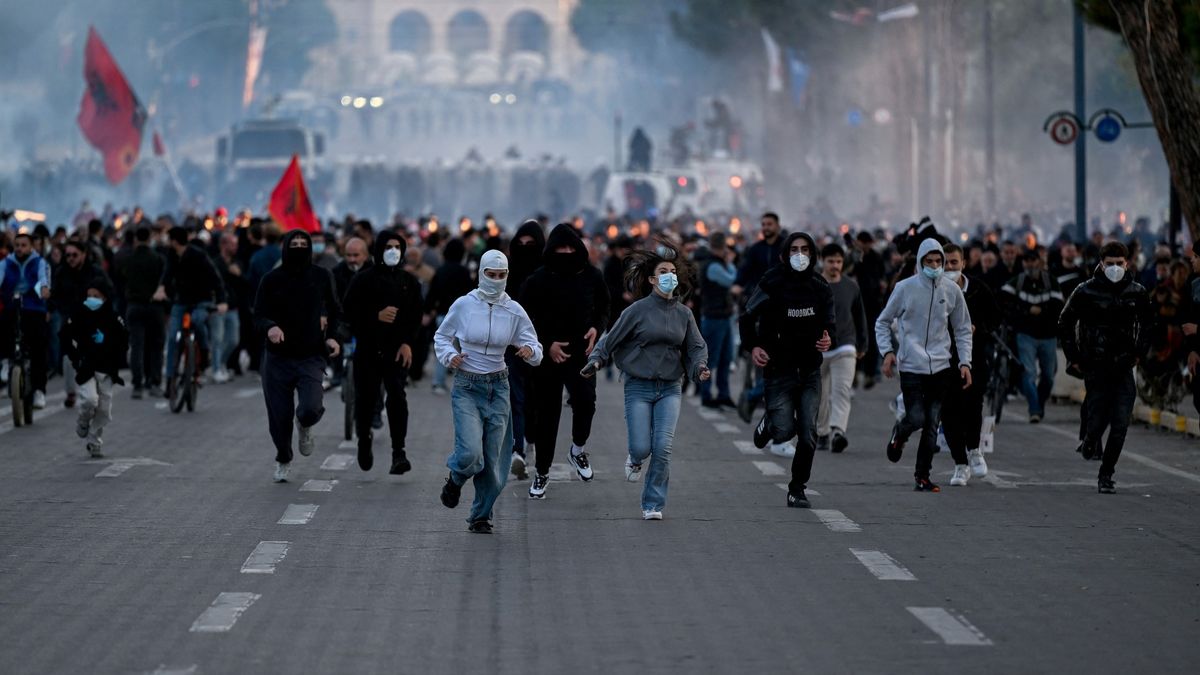
For days, Albania's capital, Tirana, has been a focal point of escalating student-led protests, now spreading to cities like Elbasan, Shkodra, and Korca. Thousands of young Albanians are demanding the resignation of Prime Minister Edi Rama, citing deep-seated government corruption and dire university conditions. Initially peaceful, the demonstrations have turned violent, with protesters clashing with riot police, hurling rocks, and setting fires to government buildings and banks. In response, Prime Minister Rama has vehemently denied allegations of corruption, dismissing the unrest as orchestrated by "foreign hands" intent on destabilizing the nation, while simultaneously rejecting calls for his resignation and asserting his mandate to pursue European Union membership.
The immediate spark for the widespread anger was the controversial sale of a section of Albania's coastline for a luxury resort development, reportedly linked to Jared Kushner, former US President Donald Trump's son-in-law. This incident, following months of simmering discontent over education costs and perceived elite impunity, ignited a broader movement challenging the very legitimacy of the current government and its governance model.
The current unrest in Albania is a stark illustration of how political survival, economic incentives, and the allure of international integration intertwine to shape domestic power dynamics. Prime Minister Edi Rama, now in his fourth term, has skillfully leveraged the promise of European Union membership as a central pillar of his political platform. This aspiration, widely shared by the Albanian populace, grants him a powerful narrative to justify his actions and deflect criticism, framing his continued leadership as indispensable for achieving the nation's EU dream.
Albania's path to EU accession is contingent on significant reforms, particularly in combating corruption and strengthening the rule of law. This creates a complex dynamic: while the EU exerts pressure for reforms, Rama can simultaneously use the EU goal as a shield, arguing that his removal would derail the process. His assertion that his dismissal would be a "betrayal of the Albanians who gave me a strong mandate to complete negotiations on European Union membership" directly links his personal political fate to a national aspiration. This strategy aims to rally support by presenting dissent as a threat to the country's collective future.
The controversial sale of coastline to a luxury resort development, reportedly involving Jared Kushner, highlights another critical power dynamic: the intersection of foreign capital with domestic elite interests. For a developing nation like Albania, attracting foreign investment is often presented as a key to economic growth. However, when such deals are perceived as opaque, benefiting a select few, and involving valuable national assets, they fuel public resentment. This particular deal symbolizes a broader pattern where powerful individuals, both domestic and international, can influence policy and acquire assets, often with minimal public oversight or accountability. The perception that national wealth is being privatized for elite gain, rather than collective benefit, is a potent driver of public anger.
The student body, often the most vocal and least compromised segment of society, represents a significant counter-power. Their grievances—poor university conditions, high education costs, and limited job prospects—are not isolated issues but symptoms of a broader economic and governance malaise. When a government fails to provide a viable future for its youth, it risks mobilizing a powerful, energized opposition. The shift from peaceful demonstrations to violent clashes underscores a growing frustration with the perceived unresponsiveness of the state. The students' collective action, spreading across multiple cities, demonstrates a capacity to challenge state authority and disrupt the political status quo, forcing the government to acknowledge, even if dismissively, their demands.
The government's response—deploying riot police, using water cannon and tear gas, and making numerous arrests—is a classic exercise of state power to maintain order and suppress dissent. Simultaneously, Prime Minister Rama's narrative of "foreign hands" is a powerful tool for delegitimization. By attributing the protests to external manipulation, he attempts to strip the movement of its domestic legitimacy, portraying it as an unpatriotic act rather than a genuine expression of public discontent. This tactic aims to divide public opinion, rally nationalist sentiment, and justify a forceful crackdown, thereby consolidating his own power by discrediting his opponents.
The escalating unrest in Albania carries a profound human cost, disproportionately borne by the very citizens the government claims to serve. While political elites navigate the intricacies of power, ordinary Albanians face the immediate and long-term consequences of instability, economic hardship, and eroding trust.
At the heart of the protests are Albania's students and young people, who are paying the most direct price. They are the ones facing riot police, enduring tear gas, and risking arrest, with over 160 detentions reported. Beyond the physical dangers, their future prospects are dimming. Poor university conditions mean a substandard education, while high costs burden families already struggling. With limited job opportunities in a system perceived as corrupt, many young Albanians see little hope for advancement within their own country. This disillusionment is a silent human cost, manifested in a growing desire to emigrate, leading to a significant brain drain that saps the nation of its most dynamic human capital.
For the broader Albanian populace, the protests and the government's response erode public trust in institutions. When a prime minister dismisses widespread domestic grievances as the work of "foreign hands," it undermines the very idea of legitimate dissent and democratic participation. This narrative fosters a climate of suspicion, where citizens may fear expressing their views, leading to a chilling effect on free speech and assembly. The use of force against protesters, coupled with accusations of external meddling, signals a potential backsliding from democratic norms, making it harder for citizens to hold their leaders accountable and participate meaningfully in their country's governance.
The violence and instability also carry an economic toll. Damage to government buildings and private property, including banks, represents a direct financial cost. More broadly, prolonged unrest can deter foreign investment, disrupt tourism—a vital sector for Albania—and create an atmosphere of uncertainty that stifles local businesses. For ordinary families, this means fewer jobs, less economic security, and a harder struggle to make ends meet. Daily life is disrupted by protests, road closures, and the pervasive tension, adding an emotional and practical burden to an already challenging existence.
At its core, the human cost is rooted in the pervasive corruption that the students are protesting. Corruption diverts public funds from essential services like education and healthcare, meaning that citizens receive less for their taxes. It creates an uneven playing field, where connections and illicit payments, rather than merit, determine success. This systemic injustice fuels a deep sense of unfairness and hopelessness, particularly among the youth who see their opportunities curtailed by a system rigged against them. The human cost of corruption is not just financial; it is the erosion of dignity, opportunity, and faith in a just society.
Behind the headlines of clashes and political accusations lies a deeper narrative, often obscured or deliberately downplayed by powerful actors. This untold story reveals the true stakes of Albania's unrest and the systemic issues at play.
Prime Minister Rama's immediate pivot to blaming "foreign hands" is a classic political maneuver designed to deflect attention from domestic failures. The untold story here is not *who* these foreign hands might be, but *what* this accusation serves to obscure. By externalizing the problem, the government avoids confronting the deep-seated grievances of its own citizens: rampant corruption, economic inequality, and a perceived lack of future for the youth. This narrative attempts to delegitimize genuine popular discontent, framing it as manipulated rather than organic. It allows the government to avoid introspection, accountability, and meaningful reform, instead opting for a simpler, more nationalistic explanation that can be used to justify repression and consolidate power. The irony is that the Kushner deal itself represents a form of foreign influence, albeit economic, that directly contributed to the current anger, highlighting the selective application of the "foreign hands" accusation.
The European Union has a stated commitment to promoting democracy, rule of law, and anti-corruption in candidate countries like Albania. However, the untold story is the EU's inherent dilemma: balancing these ideals with geopolitical stability. The Western Balkans are a region of strategic importance, and the EU often prioritizes maintaining a semblance of stability, even if it means tolerating imperfect democratic practices or slow progress on corruption. The EU's public statements often emphasize the need for reforms, but its practical leverage can be limited, especially if applying too much pressure risks destabilizing a pro-EU government. The untold story is how the EU's desire for a stable, pro-Western Albania might, at times, lead it to downplay or overlook the very corruption and governance issues that fuel public discontent, creating a gap between its stated values and its pragmatic geopolitical interests.
While the protests are visible and loud, a more silent, yet equally devastating, untold story is the ongoing brain drain from Albania. Years of corruption, limited economic opportunities, and a lack of faith in the future have driven countless young, educated Albanians to seek lives abroad. This exodus represents a profound systemic failure. Governments and official statements rarely highlight this loss, as it underscores their inability to retain their most valuable human capital. The protests themselves are a desperate cry from those who remain, a last attempt to reclaim a future within their homeland. If these protests fail to bring meaningful change, the untold story will continue to be the quiet departure of the nation's brightest, further entrenching the power of those who remain and deepening the country's long-term challenges.
The Kushner deal, while a specific trigger, points to a broader, untold story of how global capital and local elites often operate in concert, creating a web of interconnected interests that can circumvent public accountability. These deals are rarely isolated incidents; they are part of a pattern where valuable national assets—coastlines, natural resources, public services—are privatized or developed in ways that primarily benefit a select few, often with international partners. The lack of transparency, the speed of such deals, and the perceived impunity of those involved are critical elements of this untold story, demonstrating how power can be wielded outside of democratic scrutiny, leaving the public to bear the costs.
As Albania grapples with this escalating unrest, several key dynamics will determine the trajectory of the nation and the future of its citizens.
First, observe the Albanian government's immediate response. Will Prime Minister Rama continue to dismiss the protests as foreign-orchestrated, or will he offer any genuine concessions beyond discussing education costs? A sustained hardline approach, coupled with increased repression, could further radicalize the movement and deepen the country's political crisis. Conversely, any attempt at meaningful dialogue or concrete reforms, however small, could de-escalate tensions.
Second, pay close attention to the European Union's reaction. Given Albania's EU accession ambitions, the EU's stance on the government's handling of the protests and its commitment to anti-corruption will be crucial. Will the EU issue strong condemnations of any human rights abuses or corruption, or will it prioritize stability, potentially signaling a tacit acceptance of the status quo? The nature of the EU's engagement will significantly impact both the government's behavior and the protesters' resolve.
Third, monitor the sustainability and evolution of the student movement. Can the various protest groups maintain unity and momentum, especially in the face of government pressure and potential fatigue? The ability of the movement to articulate clear, achievable demands and to garner broader societal support beyond the student population will be vital for its long-term impact. Watch for whether the protests evolve into a more organized political force or dissipate under pressure.
Finally, observe the broader economic indicators and public sentiment. Continued instability could deter investment and tourism, further exacerbating economic hardship and fueling emigration. The level of public tolerance for ongoing unrest versus the desire for stability will be a critical factor. The long-term implications for Albania's democratic health and its ability to retain its youth will hinge on how these immediate challenges are navigated. The outcome will reveal whether the voices of the youth can truly shift the mechanics of power, or if the current system will simply reassert itself.
Students are protesting against government corruption, poor university conditions, and high education costs. The unrest was further fueled by a controversial land deal involving a luxury resort development linked to Jared Kushner.
Prime Minister Edi Rama has blamed "foreign hands" for instigating the protests, denying corruption allegations and rejecting calls for his resignation. He asserts his mandate is to secure Albania's entry into the European Union.
The protests and the underlying corruption allegations complicate Albania's efforts to join the EU, as the bloc requires significant reforms in rule of law and anti-corruption. Continued instability could further delay or jeopardize accession talks.
Editor's Note: The 'foreign hands' accusation is a political tactic by the PM, not a confirmed external state actor. Analysis focuses on its function as a deflection.
Source referenced: ALJAZEERA
This brief was synthesized by our Editorial Engine and reviewed by The Ground Narrative team.