TRENDING

Saturday, 17 October 2026
----------------------
6 Jumada Al-Awwal 1448 AH
The 2026 Nobel prize for economics honored Michael Woodford and Robert Hall, whose theories now drive the rules of central banks worldwide. Their work reshapes everything from mortgage rates to emerging‑market debt, with ordinary people feeling the impact.
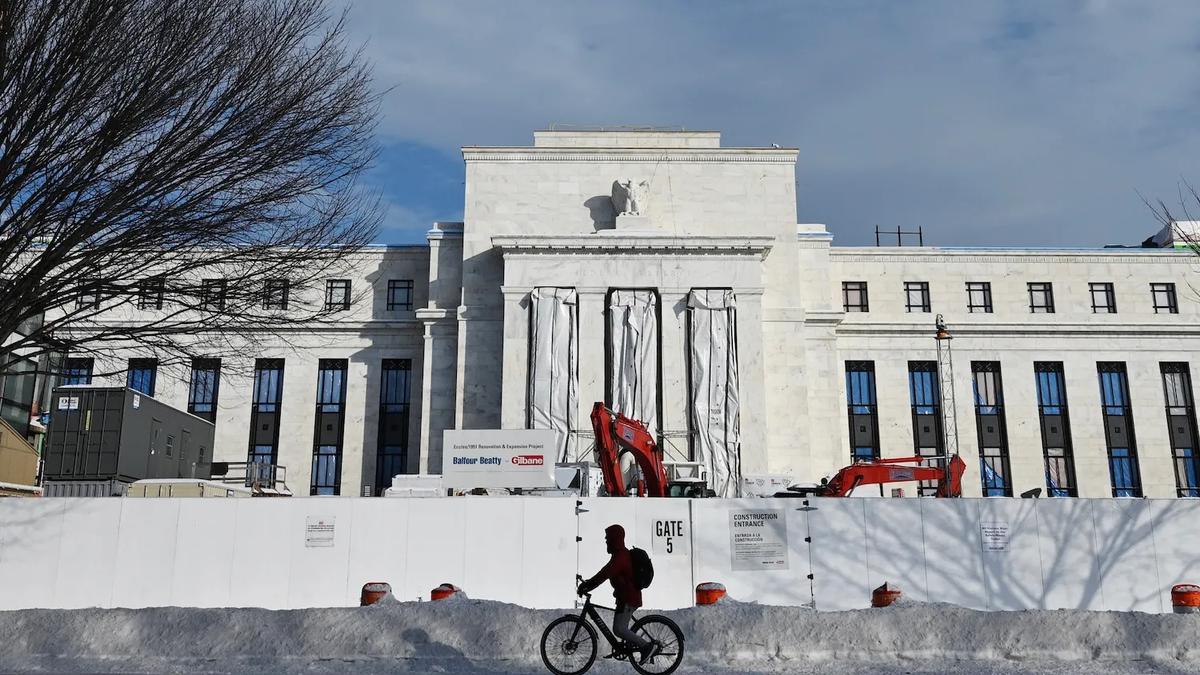
In October 2026 the Nobel Memorial Prize in Economic Sciences was awarded jointly to Michael Woodford of Columbia University and Robert Hall of Stanford University. The committee praised their contributions to the micro‑foundations of macroeconomic stabilization, a set of models that now underpins the policy playbooks of central banks across the globe. Their theories, especially around expectations‑driven inflation targeting, have become the default lens through which monetary authorities set interest rates.
Woodford’s 2003 book offered a mathematically rigorous justification for using a single policy rule – the so‑called Taylor rule – to steer inflation and output. Hall’s earlier work on rational expectations showed that households form consumption plans based on their forecasts of future income and prices. When these ideas were combined, they gave policymakers a tidy way to claim that controlling expectations was as important as controlling current variables.
The Federal Reserve adopted the framework in the early 2000s, positioning itself as a technocratic guardian of price stability. By anchoring policy to a transparent rule, the Fed could argue that it was insulated from partisan pressure, a narrative that helped chairmen survive electoral cycles and congressional scrutiny. The rule also gave the Fed a powerful bargaining chip in negotiations with the Treasury, allowing it to demand fiscal restraint in exchange for low‑interest rates.
Because the U.S. dollar is the world’s reserve currency, other central banks – from the European Central Bank to the Bank of England and the People’s Bank of China – have mirrored the same expectations‑anchoring approach. The model creates a feedback loop: when the Fed tightens, emerging‑market currencies depreciate, forcing those banks to raise rates to defend their own price stability mandates. In effect, the Nobel‑winning theory becomes a lever of U.S. financial influence abroad.
When central banks raise rates to curb inflation, the immediate impact lands on households with variable‑rate mortgages. In the United States, a 0.5 percentage‑point hike can add hundreds of dollars to a monthly payment for a typical family, eroding disposable income and pushing some into delinquency. The same logic applies to renters whose leases are indexed to inflation.
In countries that peg their currencies to the dollar or adopt inflation‑targeting regimes, a Fed tightening episode often forces local banks to hike rates sharply. Small‑business owners face higher loan costs, while wage growth stalls. The burden falls disproportionately on low‑income earners who cannot absorb higher borrowing costs.
Central banks justify low‑rate environments by citing the need to protect employment, but the resulting asset‑price inflation benefits investors and large corporations more than ordinary citizens. When bubbles burst – as seen in the 2008 housing crisis – the fiscal fallout is shouldered by taxpayers through bailouts and higher public debt.
While Woodford and Hall are celebrated as scholars, their ideas have been championed by a network of financial institutions that profit from predictable, low‑rate environments. Banks, asset managers, and rating agencies have funded research centers that promote expectations‑anchored frameworks, subtly shaping the policy discourse.
Official statements emphasize central bank independence, yet the rule‑based system makes monetary policy a tool for managing sovereign debt levels. By keeping rates low, governments can defer painful fiscal adjustments, effectively shifting the burden of adjustment onto future generations.
The Nobel citation highlights “stabilization” without addressing distributional effects. By focusing on aggregate price stability, the models sideline questions of who gains when asset prices rise and who loses when credit tightens. This omission allows policymakers to present a neutral, technocratic image while the underlying outcomes are anything but.
The next Fed meeting will test whether the new chair, Kevin Warsh, will adhere to Woodford’s rule or deviate in response to political pressure. Keep an eye on: 1) any language shift away from explicit inflation targeting; 2) emerging‑market central banks’ reaction to U.S. rate moves; and 3) lobbying disclosures that link financial firms to research on expectations‑anchored policy. These signals will reveal whether the Nobel‑shaped framework remains a neutral tool or continues to serve the interests of powerful financial actors.
Their models link inflation expectations to policy rates, so when central banks adjust rates to manage expectations, mortgage and loan rates for households move in tandem.
Many emerging economies peg their currencies to the dollar or adopt similar inflation‑targeting rules, so a Fed rate change forces them to raise local rates to protect their own price stability, raising borrowing costs for businesses and consumers.
Editor's Note: Analysis draws on publicly available statements and academic literature; precise lobbying links remain under‑reported.
Source referenced: FOREIGNPOLICY
This brief was synthesized by our Editorial Engine and reviewed by The Ground Narrative team.