TRENDING

Saturday, 17 October 2026
----------------------
6 Jumada Al-Awwal 1448 AH
A quiet conflict beneath the waves is threatening the arteries of global communication. Nations and shadow fleets are cutting cables, while ordinary people bear the fallout.
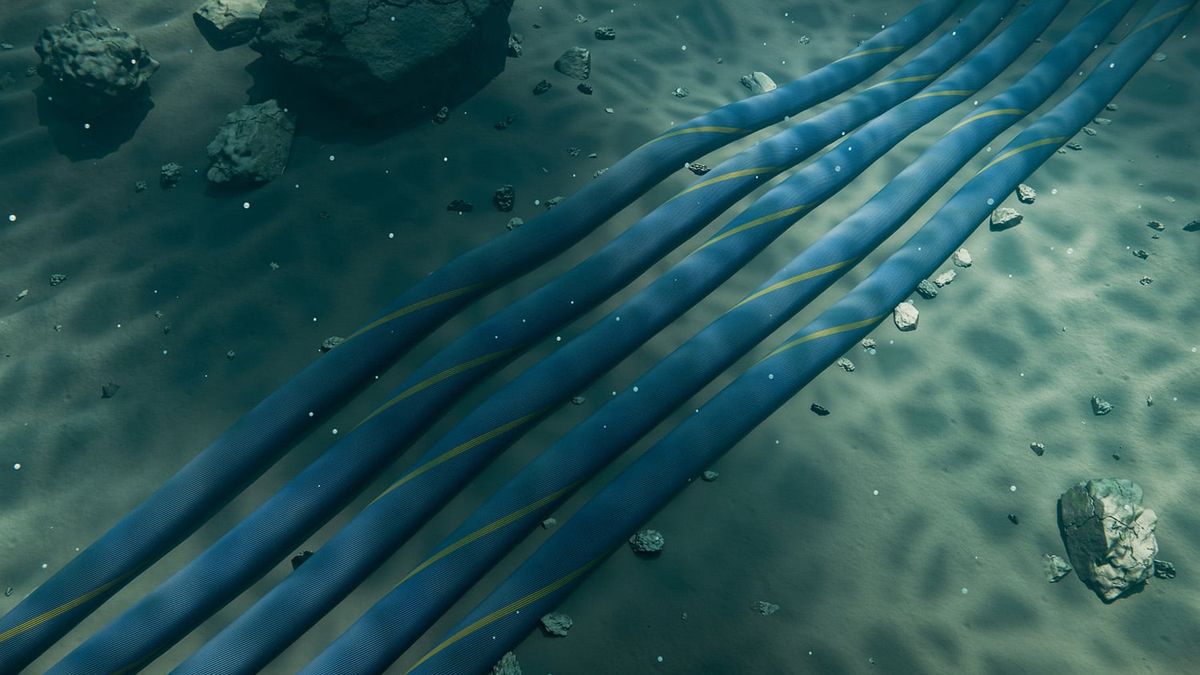
In late 2025 a British defense official publicly disclosed a confrontation between a Royal Navy vessel and the Russian submarine Yantar in the Baltic Sea. Since then, a pattern of undersea incidents—cable cuts, pipeline scrapes, and mysterious signal interference—has emerged across all oceans. Security analyst Elisabeth Braw documents these events in her new book, tracing attacks from the Red Sea to the Pacific, and highlighting how the once‑stable undersea network is now a contested battlefield.
The drive to control undersea infrastructure is rooted in three intersecting incentives. First, strategic leverage: nations that can disrupt or monitor data flows gain bargaining chips without firing a shot. Second, economic gain: the shadow fleet of roughly 600 vessels—many flagged to tiny states like Guinea‑Bissau or the Cook Islands—carries sanctioned oil while also serving as platforms for cable‑cutting operations, blurring the line between illicit trade and warfare. Third, technological asymmetry: modern navies rely on GPS and satellite communications, yet the physical cables that carry 95‑99% of internet traffic remain largely unprotected, creating a low‑cost, high‑impact vulnerability.
The gray‑zone tactics employed—denial of GPS, use of paper navigation, and deployment of civilian‑marked ships—allow aggressors to stay below the threshold that would trigger a formal declaration of war. NATO’s traditional collective defence framework struggles to respond because most incidents occur in international waters, beyond any single nation’s jurisdiction. As a result, power is exercised through a combination of covert naval maneuvers, legal loopholes, and the exploitation of the global supply chain for rare‑earth minerals needed in deep‑sea mining, a sector the Trump administration has actively promoted.
When a cable serving Taiwan’s Matsu Islands snapped in February 2023, 13,000 residents were cut off from digital payments, online education, and emergency services for weeks. The delay in repair highlighted how remote populations depend on a single strand of fiber for modern life, and how quickly that lifeline can be severed.
Financial firms, cloud providers, and e‑commerce platforms route the bulk of their traffic through a handful of undersea routes. A single cut can trigger latency spikes, data loss, and costly rerouting, eroding consumer trust and inflating insurance premiums. Small‑scale entrepreneurs in developing nations, who already face limited bandwidth, are disproportionately harmed when a regional cable is damaged.
The push for deep‑sea mining to fund naval operations introduces ecological risks—sediment plumes, habitat destruction, and potential interference with existing cable routes. Fishermen and coastal communities fear loss of marine biodiversity, while workers on flagged‑convenience vessels often operate under unsafe conditions, lacking proper oversight.
Official statements from European defense ministries frequently frame cable incidents as “technical failures” or “natural accidents,” sidestepping the strategic dimension. By minimizing public awareness, they reduce pressure for costly defensive investments and preserve the secrecy of intelligence‑gathering methods.
Major telecom operators rarely disclose the exact locations of their cables, citing security concerns. This opacity hampers coordinated international response and allows state actors to map critical nodes without civilian scrutiny. The industry’s reluctance to publicize risk assessments also shields them from shareholder backlash.
Beyond a nation’s 12‑nautical‑mile territorial sea, the United Nations Convention on the Law of the Sea offers limited enforcement mechanisms for civilian infrastructure. Consequently, the shadow fleet operates with near‑impunity, exploiting the jurisdictional gap to conduct sabotage while plausible‑deniability remains plausible.
Watch for three emerging signals. First, increased naval patrols and the deployment of anti‑submarine drones in the Baltic and South China Sea, indicating a shift from covert to overt deterrence. Second, legislative moves in the United States and the European Union to classify undersea cable sabotage as an act of war, which would reshape rules of engagement and insurance markets. Third, the rise of private‑sector “cable‑watch” alliances that use satellite‑based acoustic monitoring to detect disturbances on the seabed; their data could become the new early‑warning system for a conflict that most citizens never see.
Staying informed about these developments is essential because the next cut may not just slow your video call—it could trigger a cascade of economic shocks, diplomatic crises, and a redefinition of what peace looks like beneath the waves.
Cables carry the vast majority of global internet traffic, so disrupting them can cripple communications, finance, and military command without a traditional kinetic attack.
Diversifying connectivity—using satellite internet, local mesh networks, and supporting resilient infrastructure policies—can reduce dependence on a single undersea route.
Source referenced: FOREIGNPOLICY
This brief was synthesized by our Editorial Engine and reviewed by The Ground Narrative team.