TRENDING

Saturday, 17 October 2026
----------------------
6 Jumada Al-Awwal 1448 AH
Dozens of masked settlers stormed eight West Bank villages, setting olive trees ablaze and injuring civilians and journalists. The assault reveals how settlement policy, election politics, and military control converge on a simple act of farming.
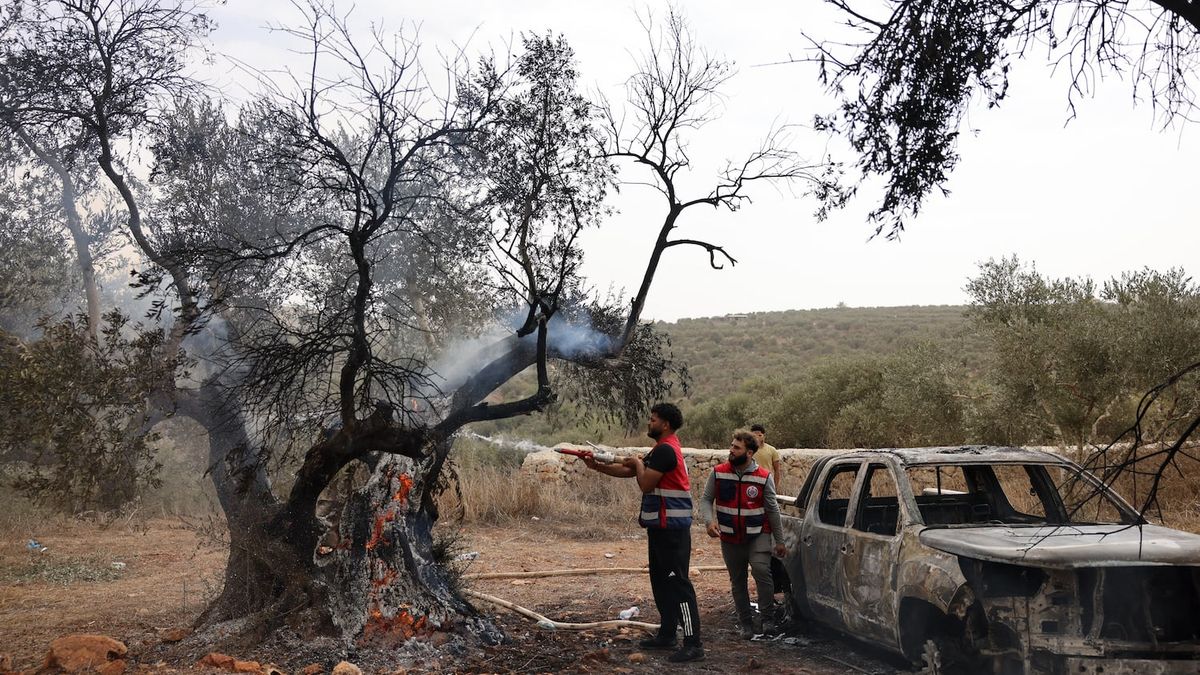
Dozens of masked Israeli settlers launched a coordinated assault on Palestinian olive harvesters in eight West Bank villages on October 16, 2026. At least 20 people were injured, several olive groves were torched, and Washington Post photographer Heidi Levine was badly hurt while covering the scene. Israeli Prime Minister Benjamin Netanyahu announced an investigation but stopped short of condemning the settlers.
- Settlement expansion as a political lever – Since the 2022 elections, right‑wing factions in the coalition have pushed for new outposts in Area C, the part of the West Bank under full Israeli military control. Expanding settlements feeds a lucrative construction industry, creates jobs for Israeli contractors, and signals to the electorate that the government is defending “historic” claims.
- Election calculus – The next parliamentary election is slated for early 2027. Netanyahu’s party relies on settler voters and religious parties that view any criticism of settlement activity as a betrayal. By framing settler violence as a “spontaneous” clash rather than a policy failure, the government preserves its core base while avoiding alienating moderate voters.
- Military bureaucracy and land permits – Israeli authorities have tightened permits for Palestinian farmers in Area C, effectively criminalizing the harvest. The new restriction forces Palestinians to seek military approval for each tree, a process that can be delayed indefinitely. This bureaucratic chokehold creates a power vacuum that settlers fill with intimidation.
- International law vs. on‑the‑ground reality – The United Nations and the International Court of Justice deem the settlements illegal, but Israel’s diplomatic apparatus prioritizes strategic alliances over compliance. The lack of a decisive international response emboldens settler groups, who calculate that the cost of retaliation is low compared to the political gains.
The fall olive harvest accounts for roughly 30 % of household income for many West Bank families. When trees are set alight, the loss reverberates through the season, reducing cash flow for school fees, medical expenses, and basic sustenance. For a typical family of five, a single burnt grove can mean a shortfall of several thousand dollars.
Heidi Levine’s injuries underscore a growing pattern: at least 35 journalists have faced assault in the occupied territories this year alone. When the press is silenced, the narrative of violence remains unchallenged, allowing the perpetrators to operate with impunity.
Repeated attacks erode social cohesion. Residents of villages like Turmus Ayya report heightened anxiety, children skipping school to avoid fields, and a surge in internal displacement as families seek safety in larger towns. The psychological toll—nightmares, chronic stress, and a sense of powerlessness—adds a hidden layer to the economic damage.
- Governmental downplaying – Netanyahu’s office framed the incident as a clash between “200 Arabs and far‑left activists” and “40 Israeli youths,” shifting blame away from settlement policy. By avoiding the term “settler violence,” the administration sidesteps responsibility and keeps diplomatic channels with the United States and Europe less strained.
- U.S. silence and strategic calculus – Washington has expressed concern over settler attacks but has not linked aid or diplomatic pressure to concrete reforms. The broader U.S. focus on Iran, Ukraine, and domestic politics dilutes its willingness to confront Israel over settlement‑related human rights violations.
- Media framing – International coverage often highlights the injury to a Western journalist while giving less space to the Palestinian victims’ stories. This asymmetry shapes public perception, making the violence appear as an isolated incident rather than part of a systematic campaign.
- Economic incentives hidden – Construction firms linked to settlement expansion receive government contracts worth billions. The article does not expose how the destruction of Palestinian agriculture clears land for future housing projects, a profit motive that remains largely invisible to the public.
- Election dynamics – As parties jockey for votes, any shift in the settler vote share will signal whether hard‑line settlement policies remain politically viable. Polls showing a decline could pressure the government to temper settler aggression.
- International legal actions – The International Criminal Court’s pending investigations into settlement activity may gain traction if documented attacks like the October 16 raid are linked to broader patterns of war crimes.
- Aid conditionality – Watch for statements from the EU and United Nations about tying financial assistance to settlement freeze or protection of civilian agriculture. Such moves could force a policy recalibration.
- Grassroots resistance – Palestinian NGOs are organizing rapid‑response teams to protect olive trees and document attacks. Their ability to garner global media attention could shift the narrative and increase pressure on Israeli authorities.
- U.S. congressional debates – Upcoming hearings on foreign aid to Israel may bring settler violence into the spotlight, especially if bipartisan members cite the recent attacks as evidence of policy failure.
By tracing the chain from political incentives to the burnt olive groves, the analysis reveals how a seemingly local act of violence is tethered to national power games, international law, and the everyday survival of Palestinian families.
Olive trees are a primary source of income for Palestinian families and a symbol of their connection to the land. Destroying them weakens economic resilience and clears space for potential settlement expansion.
Prime Minister Netanyahu announced an investigation but stopped short of condemning the settlers, framing the incident as a clash between Palestinians and Israeli youths rather than a policy‑driven act.
Right‑wing parties rely on settler support, so they are likely to double down on expansion and resist restrictions. A shift in voter sentiment could pressure the coalition to curb settler violence.
Source referenced: FOREIGNPOLICY
This brief was synthesized by our Editorial Engine and reviewed by The Ground Narrative team.