TRENDING

Saturday, 17 October 2026
----------------------
6 Jumada Al-Awwal 1448 AH
In October 2026, China’s foreign minister Wang Yi and Turkey’s Hakan Fidan met in Baku, signaling a push to deepen economic ties and coordinate on security. The dialogue reveals shifting power balances that will ripple through regional markets and communities.
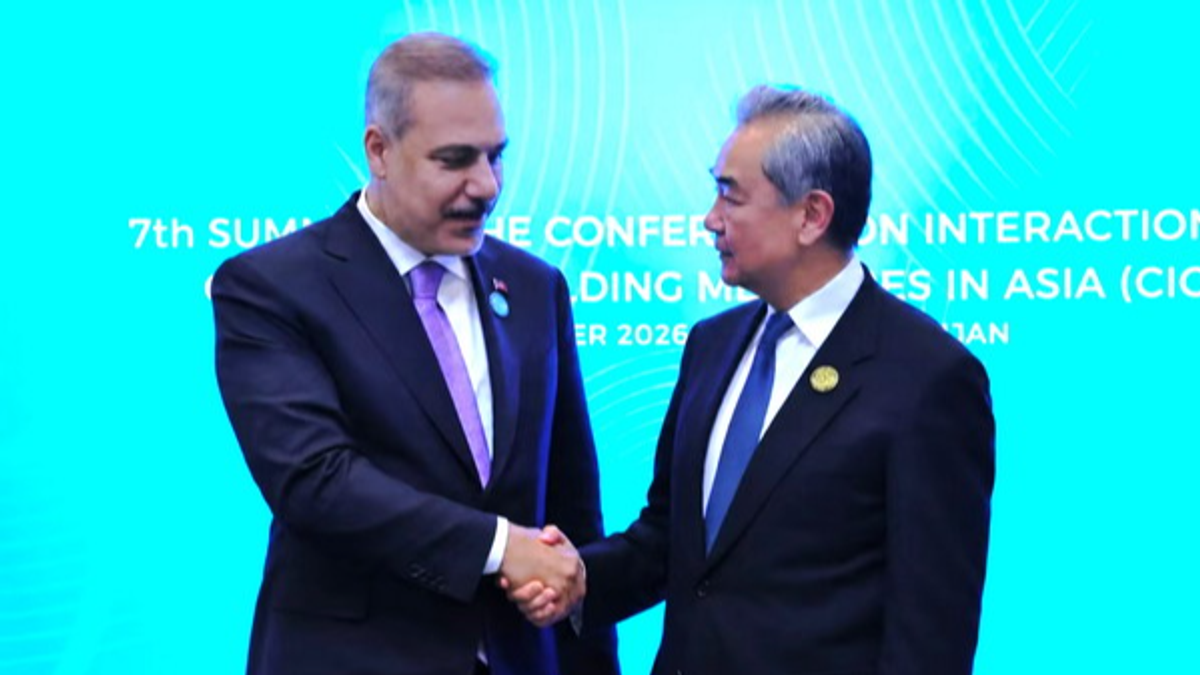
Chinese Foreign Minister Wang Yi and Turkish Foreign Minister Hakan Fidan met on the sidelines of the Seventh Summit of the Conference on Interaction and Confidence Building Measures in Asia, held in Baku on October 15, 2026. Both officials framed the encounter as a celebration of the 55th anniversary of diplomatic relations, pledging to expand strategic cooperation, boost two‑way investment, and align positions on security and climate issues. The joint statement highlighted mutual support on China’s core interests, Turkey’s role in the Belt and Road Initiative, and cooperation on the upcoming COP31 in Turkey.
The meeting was less about ceremonial friendship than about cementing a logistical corridor that bypasses NATO‑controlled routes. China’s Belt and Road Initiative (BRI) has long sought a “Middle Corridor” through Central Asia, the Caucasus, and the Turkish Straits to transport goods from western China to European markets. By courting Ankara, Beijing hopes to secure a reliable partner that can smooth customs, provide security guarantees, and offer port access in Istanbul and Izmir. For Turkey, the corridor promises a revival of its historic role as a bridge between East and West, potentially offsetting recent economic slowdown and attracting Chinese construction contracts.
Both capitals are eyeing energy interdependence. Turkey imports a sizable share of its natural gas from Russia and Azerbaijan, but Beijing is positioning itself as a future supplier of liquefied natural gas (LNG) and renewable‑energy technology. The BRI’s focus on pipelines and rail links could channel Central Asian oil and gas through Turkish territory, giving Ankara leverage over European energy markets while providing China with a diversified export route that reduces reliance on the Strait of Malacca.
The handshake also signals a subtle shift in the broader China‑Turkey relationship away from a purely transactional partnership toward a quasi‑strategic alignment. Ankara remains a NATO member, yet it has grown increasingly comfortable hosting Chinese firms and echoing Beijing’s stance on issues like the Uyghur situation and the one‑China principle. For China, cultivating a partner that can blunt U.S. influence in the Eastern Mediterranean and the Black Sea is valuable, especially as Washington tightens sanctions on Chinese tech and infrastructure projects.
If the Middle Corridor materializes, thousands of Turkish laborers will be hired for rail‑building, highway upgrades, and port expansions. While the promise of jobs is politically appealing, many of these positions are expected to be low‑paid, temporary, and tied to Chinese contractors who often bring their own workforce. Past BRI projects in the region have been criticized for limited skill transfer and for sidelining local unions, leaving communities with short‑term income spikes but little lasting economic uplift.
An influx of Chinese engineers, managers, and service staff could strain housing markets in cities like Baku, Istanbul, and Tbilisi. Local residents have previously expressed resentment toward foreign workers who are perceived to receive preferential treatment, higher wages, and better living conditions. Such friction can erupt into xenophobic incidents, as seen in earlier BRI‑linked projects across Central Asia.
Redirecting Central Asian gas through Turkey may lower transit fees, but it also exposes Turkish households to price swings tied to Chinese demand. If Beijing ramps up imports to fuel its own industrial expansion, domestic Turkish gas prices could rise, hitting low‑income families hardest. Moreover, the environmental impact of new pipelines—crossing ecologically sensitive mountain ranges—poses health risks for nearby rural populations.
Wang Yi repeatedly praised Turkey’s “efforts in curbing terrorist acts that endanger China’s national security.” The statement glosses over the fact that Turkey hosts a sizable Uyghur diaspora, many of whom are vocal critics of Beijing’s policies in Xinjiang. By emphasizing Turkish cooperation, China is signaling that any dissent from the Uyghur community could be met with diplomatic pressure, a nuance absent from the public communiqué.
Turkey’s public endorsement of the one‑China principle and its promise not to allow its territory to be used against Chinese security interests clash with NATO’s growing wariness of China’s maritime ambitions. The joint statement omits any reference to how Ankara will reconcile these competing obligations, leaving NATO allies uncertain about Turkey’s future alignment.
Chinese investment often arrives as concessional loans tied to project contracts. While the press release highlights “win‑win” outcomes, it sidesteps the possibility that Turkey could accrue unsustainable debt, mirroring the debt‑traps observed in other BRI nations. Local economists warn that without transparent accounting, the financial burden may fall on Turkish taxpayers.
- COP31 outcomes – Turkey’s role as host will test the depth of Sino‑Turkish climate cooperation and may reveal whether green financing follows the diplomatic handshake.
- Middle Corridor progress – Track the signing of any memoranda of understanding for rail and pipeline construction; delays or cancellations will indicate the resilience of the partnership.
- NATO‑China interactions – Monitor statements from the U.S. and European allies regarding Turkey’s growing ties with Beijing, especially in the context of the Ukraine war and Black Sea security.
- Local protests – Watch for civil society movements in Turkey and the Caucasus that oppose land expropriation, labor exploitation, or environmental degradation linked to new BRI projects.
- Uyghur activism – Any crackdown on Uyghur groups in Turkey following the meeting would signal the human‑rights cost of the diplomatic overture.
By keeping an eye on these threads, ordinary citizens can gauge whether the Baku handshake translates into tangible benefits or merely reshapes the balance of power at their expense.
The leaders pledged to deepen trade, coordinate on security, advance the Belt and Road’s Middle Corridor, and cooperate on climate initiatives ahead of Turkey’s COP31.
It could bring infrastructure projects and short‑term jobs, but also raise concerns about debt, limited skill transfer, and price volatility for energy consumers.
Source referenced: CGTN
This brief was synthesized by our Editorial Engine and reviewed by The Ground Narrative team.