TRENDING

Friday, 16 October 2026
----------------------
5 Jumada Al-Awwal 1448 AH
France's Bastille Day parade on July 14, 2026, transformed into a powerful display of European solidarity with Ukraine, featuring multinational military participation and high-level diplomatic attendance. The event served as a strategic message to both Moscow and Washington regarding Europe's commitment to collective security and its growing strategic autonomy.
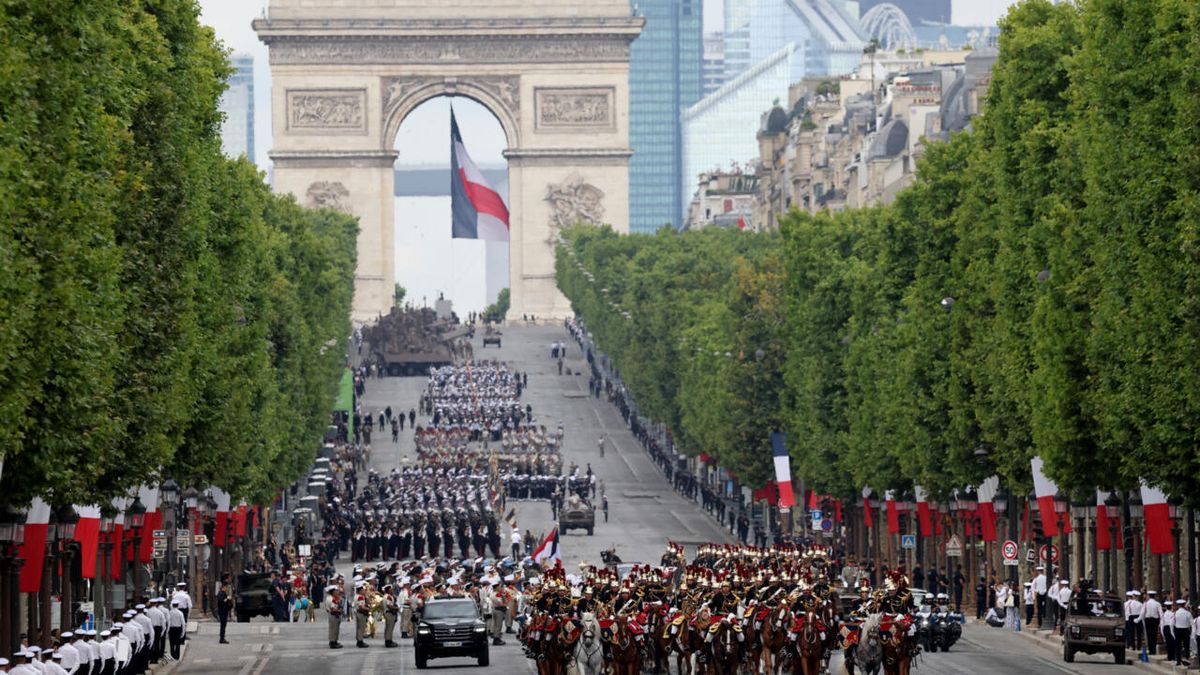
France's annual Bastille Day military parade, traditionally a celebration of national pride, transcended its conventional role on July 14, 2026, to become a significant geopolitical statement. Held in Paris, along the historic Champs-Élysées and beneath the Arc de Triomphe, the event showcased an unprecedented level of European military cooperation and diplomatic unity, primarily aimed at reinforcing support for Ukraine and projecting a message of collective strength to key international actors.
The parade, hosted by French President Emmanuel Macron in what marks his final Bastille Day in office, featured a substantial international contingent. Aircraft from 11 European nations, including Germany, the United Kingdom, Poland, and Spain, participated in the aerial display. On the ground, approximately 500 troops from the "Coalition of the Willing" – a grouping of countries committed to Ukraine's post-war security – marched alongside French forces. This year's parade set a record with 6,800 troops participating, underscoring the scale of the demonstration.
A central element of this year's parade was the prominent inclusion of Ukraine. Ukrainian President Volodymyr Zelensky joined President Macron and around 30 other heads of state or government in the special viewing area, symbolizing the high-level political commitment to Kyiv. Furthermore, Ukrainian troops marched in the parade, and Ukrainian co-pilots, trained in France, flew two Mirage 2000B fighter jets alongside their French counterparts. This direct participation underscored not only symbolic solidarity but also practical military cooperation and investment in Ukraine's defense capabilities.
President Macron articulated the strategic intent behind this inclusive approach, stating it was a "great honour" to welcome "all the partners in the coalition of the willing and our Ukrainian friends who will march with us and illustrate its strategic reawakening and our unity." This statement highlights a deliberate effort to frame the event as a demonstration of renewed European resolve and cohesion in the face of ongoing regional instability.
The geopolitical significance of the 2026 Bastille Day parade extends beyond mere support for Ukraine. The event was meticulously orchestrated to convey a dual message to two critical global players: Russian President Vladimir Putin and former (or potentially future) US President Donald Trump. To Moscow, the multinational display of military hardware and personnel, coupled with the explicit commitment to Ukraine's security, served as a clear signal of European unity and determination to resist Russian aggression and uphold the continent's security architecture. It aimed to demonstrate that European nations are prepared to defend their interests collectively and are actively enhancing their defense capabilities.
Simultaneously, the parade sent a pointed message across the Atlantic. With concerns about potential shifts in US foreign policy and a possible re-evaluation of transatlantic alliances, particularly under a future Trump administration, European leaders sought to demonstrate their capacity and willingness to "step up" and assume greater responsibility for their own defense. This aligns with a broader European push for strategic autonomy, reducing reliance on external security guarantees and fostering a more robust, integrated European defense posture. The presence of a broad coalition underscored that European security is a shared responsibility, not solely dependent on any single external power.
The 2026 Bastille Day parade represents a significant moment in the evolution of European security and diplomacy. It reinforces the narrative of a "strategic reawakening" within Europe, driven by the imperative to respond to geopolitical challenges independently and collectively. The formation and public display of the "Coalition of the Willing" for Ukraine's post-war security signals a concrete mechanism for future cooperation, potentially laying groundwork for deeper military integration and burden-sharing among European states.
While the immediate impact is symbolic, the long-term implications could include accelerated investment in European defense capabilities, enhanced interoperability among national forces, and a more unified diplomatic front on critical security issues. The event also serves to bolster France's position as a leading proponent of European strategic autonomy and a key player in shaping the continent's security future. The display of unity and resolve, however, will need to be consistently translated into sustained policy, resource allocation, and political will to effectively address the complex security landscape of the 21st century.
It is worth noting that the celebrations occurred amidst challenging domestic conditions, with raging forest fires and a red-alert heatwave forcing the cancellation of traditional fireworks and firefighters' balls in some regions, including Paris. Despite these internal challenges, the external message of European strength and unity remained the dominant theme of the day.
Source referenced: FRANCE24
This brief was synthesized by our Editorial Engine and reviewed by The Ground Narrative team.