TRENDING

Friday, 9 October 2026
----------------------
28 Rabi' Al-Thani 1448 AH
Afghanistan's emerald mining sector is experiencing a significant boom, providing crucial revenue for the Taliban and employment for thousands. Yet, this rush for precious stones comes with severe human and environmental costs, largely borne by the miners themselves.
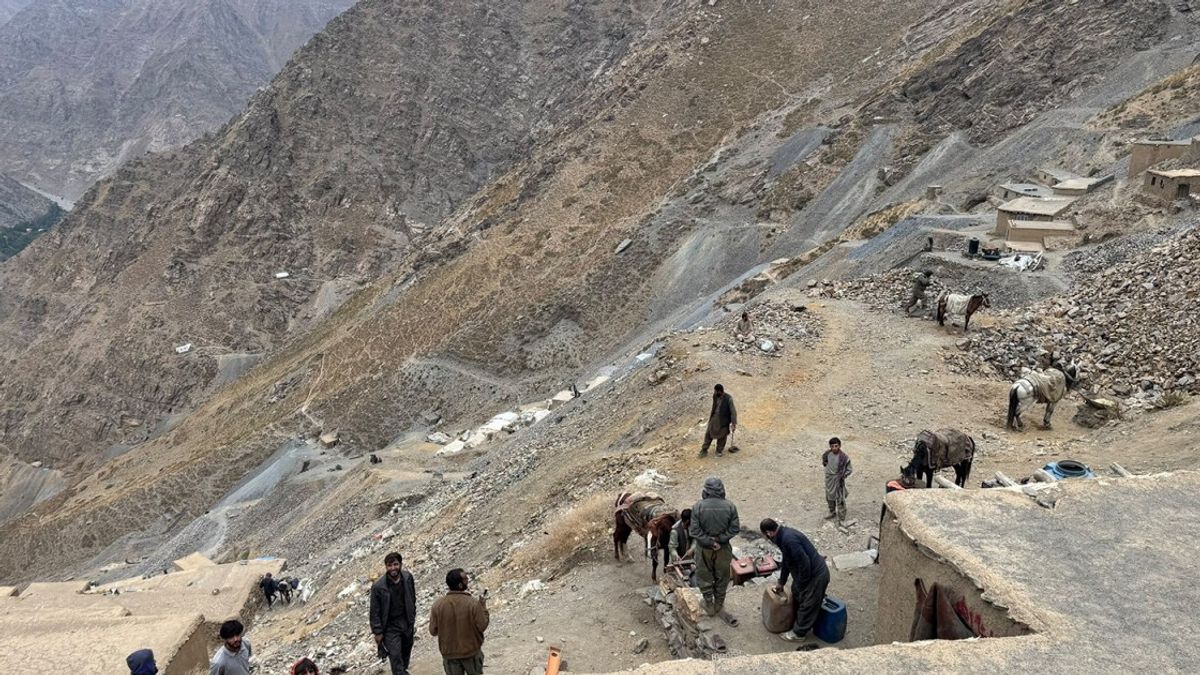
Afghanistan's Panjshir valley, long known for its high-quality emeralds, is experiencing a significant boom in its mining sector. Recent auctions have seen nearly 3,000 carats of precious stones sold, with the total value of emeralds sold this year estimated at over $6 million, a substantial increase from the previous year. This surge in trade provides crucial revenue for the Taliban government, which has been under international sanctions, and offers employment to over 15,000 people in a region with scarce economic alternatives.
The current emerald rush in Afghanistan illuminates a complex web of power dynamics, driven by the Taliban's desperate need for revenue, the global demand for precious stones, and the strategic maneuvering of nations seeking influence in a resource-rich but isolated state. For the Taliban, mineral wealth represents a critical lifeline. Since their return to power in 2021, the regime has faced severe international sanctions, freezing assets and limiting access to global financial systems. In this context, the extraction and sale of minerals, including emeralds, gold, and rare earth elements, have become a primary means to generate state revenue, fund governance, and maintain control. The reported 22 percent year-on-year rise in state revenues, boosted by mining auctions, underscores this reliance.
The Taliban has actively courted investment, particularly from non-Western powers. Deals with Chinese, Russian, and Iranian investors for various mineral projects are not merely economic transactions; they are strategic alliances. These nations, often at odds with Western foreign policy, see an opportunity to access valuable resources and expand their geopolitical footprint in Central Asia, unburdened by Western ethical or political constraints. For China, securing raw materials for its vast industrial base is a priority, and Afghanistan's estimated $1 trillion in untapped mineral wealth is a tempting prospect. Russia and Iran also seek to bolster their economic ties and influence in a neighboring country, creating a new axis of cooperation that bypasses Western-led international norms. This dynamic allows the Taliban to circumvent its pariah status, leveraging its natural resources to gain pragmatic global alliances, even without formal international recognition.
However, the power dynamics are not solely about state-level actors. The structure of the mining industry itself plays a crucial role. The prevalence of small, artisanal mining operations, employing thousands, creates a decentralized network that is difficult to fully regulate or control. While this provides immediate employment, it also limits the Taliban's ability to capture the full value chain. Without modern processing facilities and standardized export mechanisms, much of the raw material is sold at lower prices, and the country misses out on the significant value-added benefits of cutting, polishing, and certification. The competitive bidding at auctions, driven by global buyers from Kabul and overseas, highlights the strong international demand for Panjshir emeralds due to their
The increase in Afghanistan's emerald mining is driven by the Taliban government's need for revenue amidst international sanctions and high global demand for the high-quality Panjshir emeralds. It also provides significant employment in an impoverished region.
While the Taliban government gains crucial revenue and 15,000 people find employment, the highest profits are often captured by foreign buyers and intermediaries who process the raw stones abroad. Foreign investors from China, Russia, and Iran also gain access to valuable resources.
Afghan emerald miners face perilous conditions due to the use of basic tools in unstable environments, making them vulnerable to landslides, avalanches, flooding, and falling rocks. They also suffer from respiratory illnesses, injuries, and chronic health issues, often without adequate safety equipment or medical care.
Source referenced: ALJAZEERA
This brief was synthesized by our Editorial Engine and reviewed by The Ground Narrative team.