TRENDING

Saturday, 19 September 2026
----------------------
8 Rabi' Al-Thani 1448 AH
A Russian glide bomb strike on an apartment building in Sumy highlights the escalating human cost as Moscow seeks a 'buffer zone.' Meanwhile, the US approves new air defense aid, and Russia conducts elections in occupied Ukrainian territories.
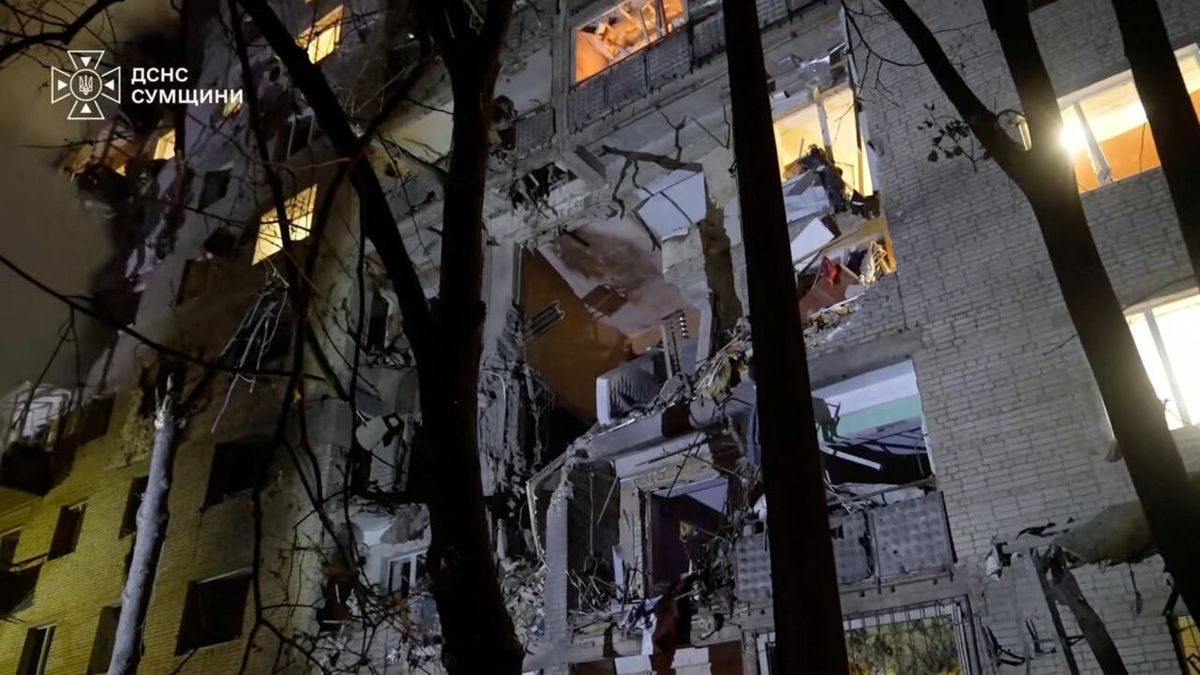
Late Friday, a Russian aerial bomb struck an apartment building in the eastern Ukrainian city of Sumy, killing at least two people and injuring seven. This attack comes as Russia continues to target Ukrainian cities, while simultaneously holding parliamentary elections in illegally annexed Ukrainian regions. Concurrently, the United States approved a potential $2.68 billion sale of air defense equipment to Ukraine, a response to Kyiv's urgent pleas for protection against ongoing Russian assaults, including strikes on Black Sea cargo ships and ports. Poland, a NATO neighbor, initiated preventive military aviation operations to secure its airspace during the heightened Russian activity.
Russia's actions reveal a multi-pronged strategy aimed at consolidating gains and degrading Ukraine's capacity to resist. The strikes on Sumy, a city Moscow explicitly identifies as being within a desired "buffer zone," are not random; they are part of a calculated effort to push Ukrainian forces back and establish a new defensive perimeter, regardless of civilian life. The parliamentary elections in occupied territories are a brazen attempt to normalize annexation and legitimize Moscow's control, a move crucial for President Putin's narrative of a successful, expanding Russia. Cyberattacks on Russia's own voting system, though reportedly repelled, underscore the digital front of this conflict and the vulnerabilities that even powerful states face.
For Ukraine, the struggle is one of survival, heavily reliant on external support. The approval of US air defense systems is critical, yet it highlights the reactive nature of much Western aid – delivered after destruction has occurred. Poland's activation of air defense systems demonstrates NATO's vigilance and the constant fear of spillover, a critical alliance calculation that shapes regional stability. The strategic calculus for all parties centers on attrition, territorial control, and the diplomatic leverage gained or lost through military actions and international condemnations.
The most immediate and devastating cost is borne by the residents of Sumy and other targeted Ukrainian cities. The two killed and seven injured in the apartment building strike are not mere statistics; they are individuals whose lives were abruptly ended or irrevocably altered, their homes and sense of security shattered. This human toll extends beyond immediate casualties to the psychological trauma of living under constant threat, the displacement of families, and the destruction of essential infrastructure that underpins daily life.
In the illegally annexed territories, the human cost takes a different, insidious form. Residents are coerced into participating in Russian elections, stripped of their agency and forced to legitimize an occupation they may not support. This erosion of self-determination, coupled with the imposition of a foreign administrative system, represents a profound loss of identity and freedom. These are the people whose voices are silenced, whose choices are dictated, and whose futures are now inextricably linked to Moscow's political ambitions.
What powerful actors often downplay or omit is the true intent behind terms like "buffer zone." For Russia, it's framed as a defensive necessity, but in practice, it means further territorial seizure and the destruction of Ukrainian towns and cities to create a depopulated or controlled strip. This euphemism masks an aggressive expansionist policy that directly translates into immense human suffering and displacement. Governments also rarely highlight the bureaucratic complexities and delays in aid delivery; while a $2.68 billion package is approved, the time it takes for equipment to reach the front lines and be integrated into Ukraine's defenses means more lives are lost and more infrastructure is destroyed in the interim. The financing mechanisms, involving a mix of European contributions and prior US appropriations, further complicate and potentially slow the process. Furthermore, the long-term societal and psychological scars of living under occupation or constant bombardment are rarely quantified in official statements, yet they represent a profound and lasting human cost that will impact generations.
Readers should closely watch several developments. Firstly, the immediate impact of the newly approved US air defense package on Ukraine's ability to defend against Russian aerial assaults, particularly glide bombs, will be crucial. Will it significantly reduce civilian casualties and protect critical infrastructure? Secondly, observe Russia's post-election actions in the occupied territories and along the frontline. Will the "buffer zone" rhetoric translate into further ground offensives, particularly in areas like Sumy? Thirdly, the international community's response to Russia's elections in annexed territories will be important. While condemnations are expected, will there be concrete actions, such as new sanctions, or will the *de facto* annexation gradually become a grim reality? Finally, the ongoing maritime conflict in the Black Sea will continue to affect global trade and food security, with any escalation having far-reaching economic consequences.
Source referenced: FRANCE24
This brief was synthesized by our Editorial Engine and reviewed by The Ground Narrative team.


