TRENDING

Tuesday, 13 October 2026
----------------------
2 Jumada Al-Awwal 1448 AH
Wenzhou’s private sector has become a laboratory for China’s push into global markets, blending aggressive financing with a culture of risk‑taking. The story reveals how that drive reshapes supply chains while ordinary workers and distant communities shoulder hidden burdens.
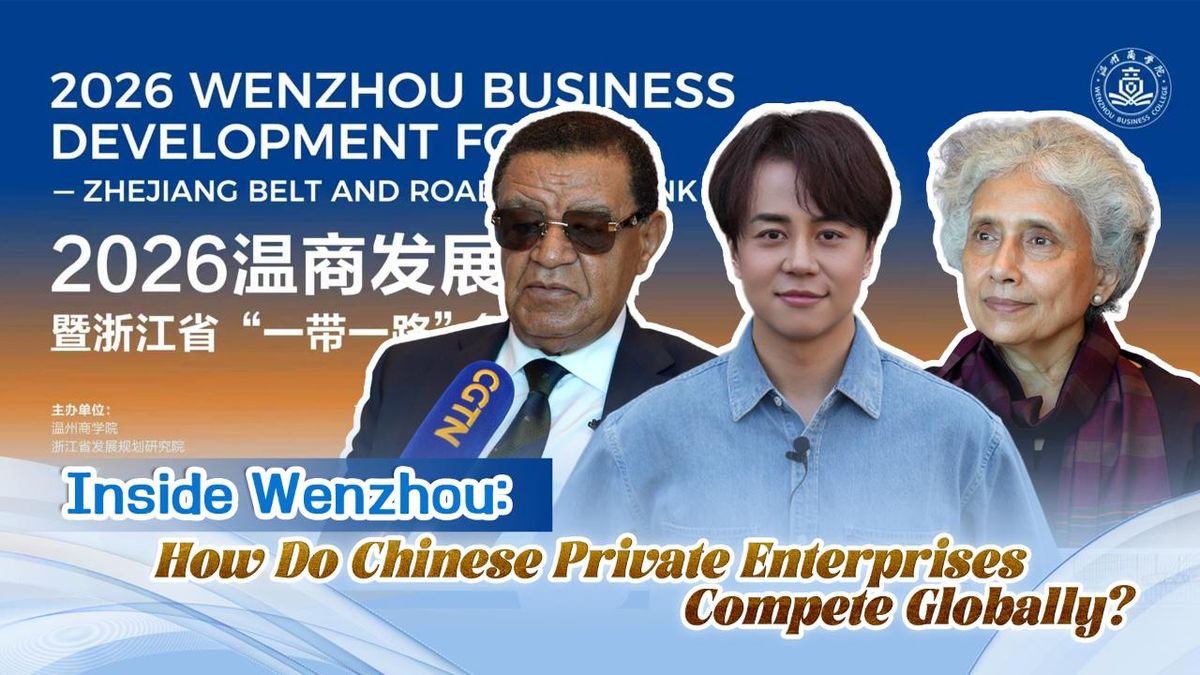
In a CGTN documentary released on October 12, 2026, reporter Wang Tao toured Wenzhou, a coastal city in Zhejiang province famed for its entrepreneurial spirit. The film highlighted how dozens of privately owned firms—ranging from shoe manufacturers to high‑tech component makers—have expanded beyond China’s borders, securing contracts in Europe, Africa and the Americas.
The piece featured former Ethiopian president Mulatu Teshome and political scientist Radhika Desai of the University of Manitoba, who both argued that Wenzhou’s model illustrates a broader shift: Chinese private capital is no longer confined to domestic markets but is actively reshaping global trade patterns.
- Local fiscal incentives
The municipal government of Wenzhou offers reduced corporate tax rates, subsidized industrial parks, and low‑interest loans through state‑backed banks. These incentives lower the cost of scaling production, allowing private firms to undercut competitors in price‑sensitive markets.
- State‑private symbiosis
While the firms are privately owned, they operate under the watchful eye of the Chinese Communist Party. Local party committees coordinate export licensing, resolve trade disputes, and sometimes channel state‑owned logistics assets to private shippers, creating a hybrid model that blends market dynamism with political control.
- Global supply‑chain leverage
Access to cheap credit from policy banks such as the China Development Bank enables rapid acquisition of overseas assets—factories in Vietnam, distribution centers in Kenya, and R&D hubs in Germany. This debt‑financed expansion is a strategic tool for China to embed its firms in critical nodes of the global value chain.
- Geopolitical calculus
As United States and European Union restrictions tighten on high‑tech exports, private firms pivot to lower‑technology sectors—textiles, consumer electronics, and renewable‑energy components—where they can still capture market share without triggering export controls.
- Factory floor realities
Workers in Wenzhou’s sprawling factories often clock 12‑hour shifts for wages barely above the national average. Seasonal migrant laborers from inland provinces endure cramped dormitories, limited healthcare, and a lack of collective bargaining rights.
- Environmental toll
Rapid industrial growth has strained local air and water quality. Communities downstream from metal‑processing zones report higher incidences of respiratory illness, while the city’s waste‑water treatment infrastructure lags behind production volumes.
- Overseas labor shadows
When Wenzhou firms set up plants abroad, they frequently partner with local contractors who employ workers under precarious conditions. In East Africa, for example, laborers on a shoe‑assembly line face irregular pay and limited safety equipment, mirroring the domestic model but far from the public eye.
- State subsidies hidden in plain sight
Official narratives emphasize private entrepreneurship, yet financial statements often omit indirect subsidies—such as guaranteed loan repayments and preferential customs duties—that effectively lower operating costs for these firms.
- Debt vulnerability
The aggressive borrowing strategy that fuels overseas expansion also creates a fragile balance sheet. A slowdown in global demand or a tightening of credit could trigger a cascade of defaults, threatening both local employment and broader financial stability.
- Narrative control
Domestic coverage celebrates the “Wenzhou model” as a triumph of Chinese ingenuity, while downplaying labor disputes, environmental complaints, and the role of party officials in steering corporate strategy. International reporting, meanwhile, often focuses on geopolitical competition, overlooking the lived experiences of workers on both sides of the trade.
- Policy shifts in Beijing
Watch for new guidelines from the People’s Bank of China that could tighten lending to private exporters, especially in sectors deemed non‑strategic. Such moves would test the resilience of Wenzhou firms that rely heavily on cheap financing.
- Supply‑chain diversification
As the United States and European Union push for “friend‑shoring,” monitor how Wenzhou companies adjust—whether by moving production to third‑party nations, investing in automation, or seeking new markets in the Global South.
- Labor activism
Although collective bargaining remains illegal, informal networks of workers are increasingly using digital platforms to share grievances. Any crackdowns or concessions in this arena could signal how much political space remains for labor rights within China’s private sector.
Overall, the rise of Wenzhou’s private enterprises illustrates a nuanced power play: a blend of market freedom, state patronage, and global ambition that reshapes trade while leaving ordinary people to shoulder the hidden costs. Keeping an eye on financing rules, export‑control policies, and grassroots labor dynamics will reveal whether this model sustains its momentum or runs into structural limits.
They rely on low‑interest loans from policy banks, municipal subsidies, and credit guarantees that effectively lower borrowing costs, allowing rapid acquisition of foreign assets.
Workers endure long hours, modest wages, cramped housing, and limited health and safety protections, while environmental degradation adds health risks for nearby communities.
Source referenced: CGTN
This brief was synthesized by our Editorial Engine and reviewed by The Ground Narrative team.