TRENDING

Tuesday, 13 October 2026
----------------------
2 Jumada Al-Awwal 1448 AH
China's top diplomat, Wang Yi, is embarking on a significant tour, attending the CICA summit in Azerbaijan and visiting three European nations. This strategic move highlights Beijing's efforts to expand its influence beyond traditional power blocs and reshape global alignments.
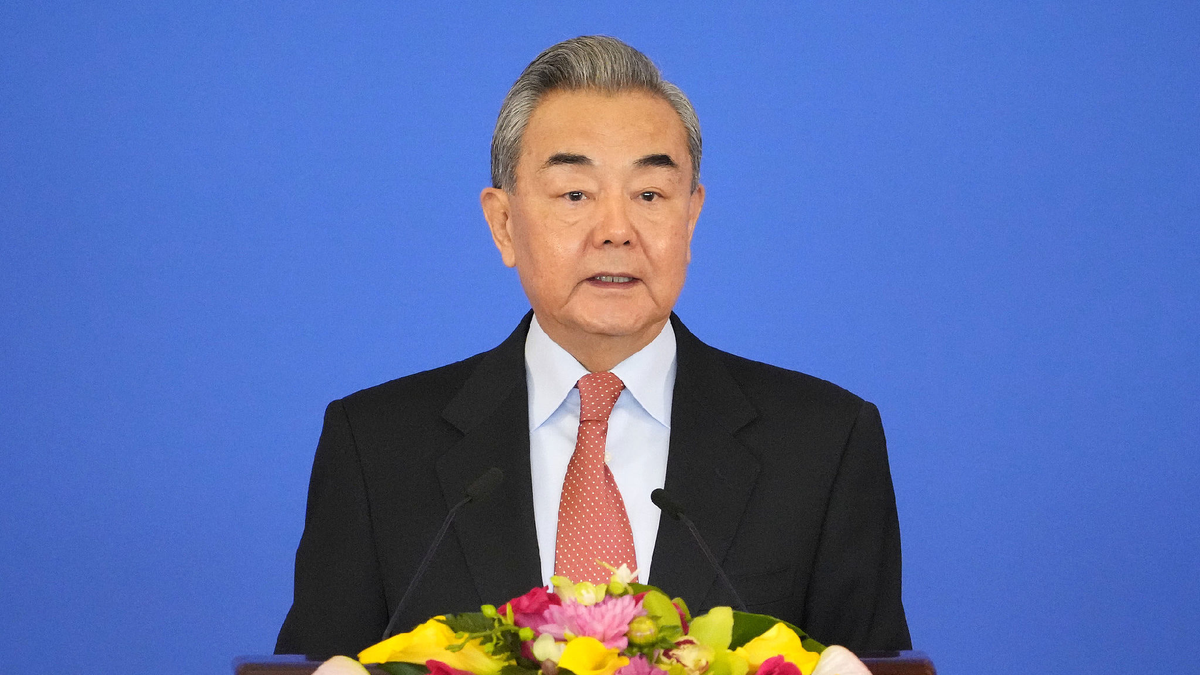
China's top diplomat, Wang Yi, acting as Special Representative for President Xi Jinping, is set to attend the Seventh Summit of the Conference on Interaction and Confidence Building Measures in Asia (CICA) in Baku, Azerbaijan, on October 15. Following the summit, Wang Yi will embark on a week-long diplomatic tour, visiting Azerbaijan, Croatia, Montenegro, and Bulgaria from October 14 to 20. This itinerary signals a concerted effort by Beijing to deepen its engagement across Asia and strategically expand its footprint into parts of Europe often seen as peripheral to the major power blocs.
Beijing's diplomatic marathon, led by Wang Yi, is a carefully orchestrated move reflecting China's evolving strategy to diversify its global influence and challenge established geopolitical alignments. This outreach is fundamentally about power projection, leveraging economic might for political and strategic gains.
The CICA summit in Azerbaijan serves as a crucial platform for China to promote its vision of a multipolar world order, one less dominated by Western institutions. By actively shaping forums like CICA, Beijing positions itself as an influential leader in Asia, advocating its own security and economic frameworks. Azerbaijan, strategically located at the crossroads of Europe and Asia, is a key node in China's Belt and Road Initiative (BRI), making it a vital partner for Beijing's transcontinental ambitions.
The subsequent visits to Croatia, Montenegro, and Bulgaria reveal a more nuanced layer of China's strategy. These nations, EU members (Croatia, Bulgaria) or aspirants (Montenegro), often find themselves on the economic and political margins of the EU's core. China sees a clear opportunity here:
- Economic Leverage: These countries seek infrastructure development and foreign investment, areas where China excels through the BRI. By offering capital and expertise, Beijing creates economic dependencies and goodwill, securing access to markets and strategic assets like ports and transport corridors. The Port of Piraeus in Greece is a potent example.
- Political Influence within the EU: Engaging with EU member states allows China to cultivate allies or neutral voices within the bloc. This can subtly undermine EU cohesion on issues critical to Beijing, such as human rights or trade disputes, making a united EU front harder to achieve.
- Geographic and Strategic Access: Montenegro's Adriatic coast and Croatia and Bulgaria's land routes provide vital connections for China's overland and maritime "Silk Road" routes, facilitating trade and potentially dual-use infrastructure.
- Countering Western Influence: By presenting an alternative development model without Western political conditionalities, China positions itself as a more attractive partner for nations seeking greater autonomy, challenging the long-standing influence of the United States and the European Union.
For the visited nations, the appeal is clear: immediate economic benefits, much-needed infrastructure, and diversification of international partnerships. They seek to avoid over-reliance on any single power bloc, leveraging China's interest to secure better terms and accelerate development. This dynamic creates a complex web where economic necessity often outweighs geopolitical alignment, allowing China to steadily expand its reach into regions traditionally considered Western spheres of influence.
While China's diplomatic overtures promise economic prosperity and infrastructure, the human cost often remains obscured beneath grand narratives of cooperation. For citizens of Azerbaijan, Croatia, Montenegro, and Bulgaria, embracing Chinese investment carries tangible risks impacting their daily lives and national futures.
A significant concern is the potential for debt traps. Chinese loans, while seemingly generous, often come with opaque terms, high interest rates, and collateral clauses that can see strategic national assets—like ports or power grids—fall under Chinese control if repayments falter. Montenegro's experience with the Bar-Boljare highway project, where a substantial Chinese loan pushed the country close to defaulting and potentially ceding land, serves as a stark warning. Such scenarios erode economic sovereignty, leaving citizens vulnerable to foreign creditors rather than their own elected officials.
Large-scale infrastructure projects often proceed with less stringent environmental regulations than those imposed by Western lenders. This can lead to significant ecological damage, including deforestation, water pollution, and habitat destruction, directly impacting local communities reliant on natural resources. Furthermore, these projects frequently bring in Chinese labor, limiting job opportunities for local populations and sometimes leading to cultural clashes or unfair labor practices. The promise of local employment often falls short, leaving communities to bear the environmental burden without reaping full economic benefits.
As these nations deepen ties with China, they risk becoming pawns in larger geopolitical rivalries between Beijing and Western powers. This can lead to increased pressure from the EU and US, potentially impacting their access to Western markets or security cooperation. Internally, such shifts can exacerbate existing political divisions, creating friction between pro-Western and pro-Eastern factions, and leading to social unrest as citizens grapple with the implications of their country's changing allegiances. The human cost, in this context, is not merely economic but also social and political, affecting the very fabric of national identity and stability.
Official narratives surrounding Wang Yi's tour emphasize cooperation and mutual benefit. However, beneath this polished surface lies a more complex, often unstated reality of China's long-term strategic ambitions and the subtle erosion of existing power structures.
Governments often frame Chinese engagement purely as economic development. What is frequently downplayed or omitted is the profound strategic dimension. China's Belt and Road Initiative is not just an economic blueprint; it is a grand geopolitical strategy designed to create a network of influence, secure supply chains, and project Beijing's power globally. Ports, railways, and digital infrastructure built with Chinese capital are not merely commercial assets; they can have dual-use potential, serving military or surveillance purposes, or providing China with critical data access. The seemingly innocuous construction of a highway or port upgrade can, over time, integrate these nations into a broader Chinese sphere of influence, reshaping regional logistics and security dynamics.
For Croatia and Bulgaria, as EU members, and Montenegro, as an EU aspirant, their deepening ties with China present a quiet challenge to European Union unity. While Brussels advocates for a unified EU approach to China, Beijing's strategy of bilateral engagement exploits the economic vulnerabilities and divergent interests of individual member states. By offering attractive deals directly, China can bypass EU-level scrutiny and create internal divisions, making it harder for the bloc to formulate a coherent and strong common foreign policy. This "divide and conquer" approach is rarely acknowledged, yet it subtly weakens the collective strength of the EU.
A crucial part of the untold story is the vacuum created by the United States and the European Union themselves. For years, many smaller European nations have felt neglected or taken for granted by Western powers, particularly concerning infrastructure investment. The stringent conditions, slow bureaucratic processes, and often insufficient funding from Western institutions have left a void that China has been eager to fill. While Western capitals criticize China's practices, they rarely acknowledge their own failure to provide compelling alternatives, thus inadvertently pushing these nations into Beijing's orbit. This self-inflicted strategic gap is a critical, yet unstated, factor enabling China's expanding influence.
As Wang Yi's diplomatic tour concludes, the real work of observing its long-term consequences begins. The implications for Asia, Europe, and the global balance of power will unfold gradually, requiring close scrutiny of several key indicators.
First, closely monitor the debt trajectories of Montenegro, Croatia, and Bulgaria. Any new loan agreements with China should be examined for transparency, interest rates, and collateral clauses. A sudden increase in their debt-to-GDP ratios, particularly with a significant portion owed to Chinese entities, could signal increasing economic vulnerability and potential loss of strategic assets.
Second, observe the EU's internal cohesion and its response. Will Brussels develop a more robust, unified strategy to counter China's bilateral overtures, or will the bloc remain fragmented? Look for new EU-led initiatives for infrastructure investment in the Balkans and Eastern Europe that can offer competitive alternatives to Chinese financing. The absence of such alternatives would only further entrench Beijing's influence.
Third, pay attention to the nature of the infrastructure projects that materialize. Are they purely commercial, or do they have dual-use potential, such as port facilities that could accommodate military vessels or digital networks used for surveillance? Scrutiny of technology providers, particularly in areas like 5G, will be crucial.
Fourth, watch for subtle shifts in the foreign policy alignments of Croatia, Montenegro, and Bulgaria in international forums. Will they increasingly align with Beijing's positions on sensitive issues? Such shifts would indicate the quiet translation of economic leverage into political influence.
Finally, observe the evolution of CICA itself. Will China continue to elevate its role, seeking to transform it into a more robust security and economic architecture that can rival Western-led blocs? The forum's ability to attract new members or deepen existing commitments will be a key indicator of Beijing's success in shaping a new regional order.
The Conference on Interaction and Confidence Building Measures in Asia (CICA) is a multilateral forum focused on enhancing cooperation for peace and stability across Asia. China actively participates to promote its vision of regional security, diversify its diplomatic engagement, and challenge Western-led institutions.
China is strategically engaging these nations to expand its Belt and Road Initiative, gain economic leverage through infrastructure investment, and cultivate political influence within the European Union. These countries offer geographic access and are often eager for development capital, creating opportunities for Beijing to deepen ties.
Recipient countries face potential risks including unsustainable debt burdens, loss of sovereignty over strategic assets due to opaque loan terms, environmental damage from large-scale projects, and limited local employment. There's also a risk of becoming entangled in geopolitical rivalries between major powers.
Editor's Note: The analysis is based on the provided news item and established patterns of Chinese foreign policy and geopolitical dynamics. Specific outcomes of the visits are projected based on these trends.
Source referenced: CGTN
This brief was synthesized by our Editorial Engine and reviewed by The Ground Narrative team.