TRENDING

Tuesday, 13 October 2026
----------------------
2 Jumada Al-Awwal 1448 AH
Drone attacks off Bulgaria's Black Sea coast have hit two commercial vessels, sinking one and damaging another, raising alarms about the expanding conflict. Civilian merchant crews are now on the front lines of an economic war with profound human and global costs.
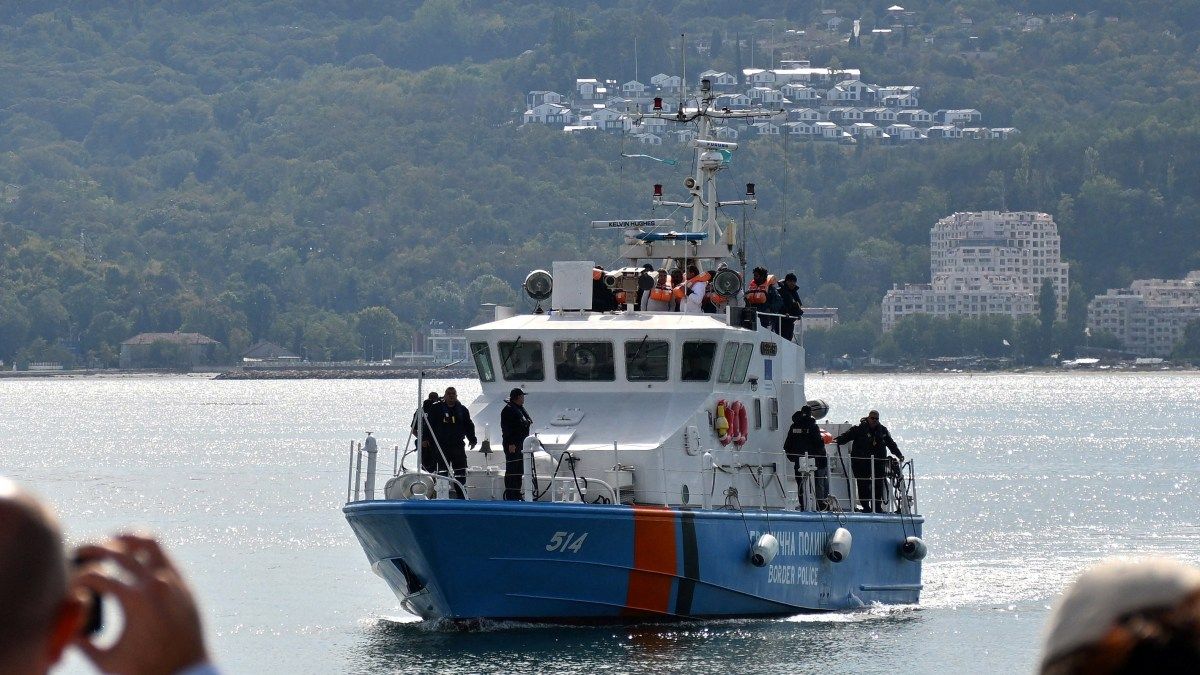
On October 6, 2026, two commercial vessels were struck by drones off the coast of Bulgaria, a NATO member state. One ship, the Ukrainian-owned Chelsea 3 sailing under a Maltese flag, sustained damage after being hit by three drones approximately 18 nautical miles (33km) from Bulgarian shores. Its 15-member crew, comprising Ukrainians and Azerbaijanis, was successfully rescued with five receiving medical attention for minor injuries. A second, unnamed vessel was reportedly sunk in the same incident, with one crew member rescued. This incident follows a similar attack just a week prior, also off the Bulgarian coast, which resulted in another ship sinking and ten crew members remaining unaccounted for.
Bulgarian Prime Minister Rumen Radev condemned the attacks as "absolutely unacceptable" and stated that while there was no clear evidence of the perpetrator, the "outcome benefits" Russia. He announced plans to summon the Russian ambassador and to speak with NATO Secretary-General Mark Rutte. European Commission President Ursula von der Leyen echoed the condemnation, asserting that the Black Sea has become "another front of escalation of the Russian war in Ukraine" and that those responsible should be held accountable.
The Black Sea is not merely a body of water; it is a critical geopolitical arena, a historical flashpoint, and a vital economic artery. For Russia, control or significant influence over the Black Sea is an existential imperative, providing access to the Mediterranean and projecting power globally. For Ukraine, it is the primary conduit for its agricultural and industrial exports, a lifeline to the global economy. For NATO, particularly its members like Bulgaria, Romania, and Turkey, it represents a strategic eastern flank and a direct interface with Russian power.
The drone attacks on commercial shipping near NATO waters represent a calculated escalation within this volatile environment. By targeting merchant vessels, the powerful actors involved can achieve strategic objectives without triggering a direct military confrontation that would risk a wider war. The "outcome benefits" Russia by disrupting Ukrainian trade routes, increasing insurance premiums for all shipping in the region, and creating an atmosphere of insecurity that deters commercial activity. This effectively chokes Ukraine's economic lifelines and pressures NATO allies by demonstrating vulnerability close to their shores. The use of drones and the lack of immediate, undeniable attribution provide plausible deniability, a hallmark of modern hybrid warfare. This allows the aggressor to inflict economic and psychological damage while remaining below the threshold that would necessitate a direct military response from NATO under Article 5, which typically applies to attacks on military assets or territory.
Conversely, Ukraine has also demonstrated its capacity to target Russian naval assets and shipping in the Black Sea, seeking to break Russia's blockade and assert its own maritime presence. The complexity arises when ships under "flags of convenience," like the Maltese flag on the Ukrainian-owned Chelsea 3, become targets. This blurs the lines of ownership, national interest, and potential retaliation, making it harder for international bodies to assign blame and enforce accountability. The attacks highlight a broader strategy of economic warfare, where the disruption of trade and the weaponization of maritime routes become as potent as conventional military engagements. The goal is to impose costs, sow uncertainty, and reshape regional power balances through indirect means.
While headlines often focus on geopolitical maneuvering and state-level declarations, the immediate and most profound impact of these attacks falls squarely on the shoulders of ordinary people: the merchant mariners who navigate these dangerous waters and the communities whose livelihoods depend on unhindered maritime trade. These crews are not soldiers; they are civilians performing essential global commerce, transporting goods from grain to oil. The attacks place them directly on an unseen frontline, where their lives are at grave risk. The rescue of the Chelsea 3 crew is a relief, but the fact that five required medical attention underscores the physical and psychological trauma inflicted. More tragically, the ten crew members still missing from the previous attack remain a stark reminder of the ultimate price paid by those caught in the crossfire of a proxy war. Their families face agonizing uncertainty, a human tragedy often overshadowed by strategic analyses.
For the Ukrainian and Azerbaijani crew members of the Chelsea 3, and countless others like them, every voyage across the Black Sea now carries an unbearable burden of fear. The sea, once a pathway to commerce, has become a minefield of unseen threats. Their daily work, already demanding, is now fraught with the risk of sudden attack, injury, or death. This constant threat affects their mental health, their ability to support their families, and the very fabric of their communities. The global shipping industry relies on these individuals, yet their safety is increasingly compromised by state-level conflicts.
Beyond the immediate human toll on the crews, the disruption of Black Sea shipping routes has far-reaching economic consequences that ultimately impact global consumers. Increased drone attacks lead to soaring insurance premiums for vessels willing to traverse the region. These higher costs are then passed down the supply chain, translating into higher prices for goods like grain, oil, and other commodities that transit the Black Sea. This inflationary pressure disproportionately affects vulnerable populations globally, particularly those in developing nations reliant on affordable food imports. Regional economies, including those of Bulgaria, Romania, and Turkey, which depend heavily on Black Sea trade for their own exports and imports, also suffer from reduced shipping activity and increased operational costs, impacting local businesses and employment. The human cost, therefore, extends beyond the immediate victims of the attacks to millions who feel the pinch of a destabilized global economy.
Governments and official statements, while condemning the attacks, often downplay or omit critical aspects that reveal the deeper mechanics of power and the true nature of the conflict. The most significant omission is the full extent of plausible deniability as a strategic weapon. When Bulgarian Prime Minister Radev states there's "no clear evidence" but the "outcome benefits Russia," he highlights a deliberate ambiguity. This lack of direct, undeniable attribution is not a bug; it's a feature of modern hybrid warfare. It allows powerful actors to conduct damaging operations without crossing the red lines that would trigger a conventional military response from NATO. This strategic ambiguity makes it incredibly difficult for international law or collective defense mechanisms to function effectively, leaving commercial shipping vulnerable.
Another untold story is the inherent tension within NATO's collective defense doctrine when faced with such "grey zone" attacks. While Bulgaria is a NATO member, and the attacks occurred near its territorial waters, the targets were commercial vessels, not military assets. This raises complex questions about the threshold for invoking Article 5. How close to territorial waters must an attack be? How clear must the perpetrator's identity be? And can an attack on a civilian ship, even if state-sponsored, be considered an attack on a NATO member's security in a way that demands a military response? The official statements, while strong in condemnation, carefully avoid committing to specific military actions, reflecting this internal dilemma. The "anything and everything" rhetoric from NATO Secretary-General Mark Rutte (in a related context) contrasts sharply with the cautious response to actual incidents involving non-military targets. This gap between rhetoric and reality is a critical vulnerability that powerful actors exploit.
Furthermore, the narrative often simplifies the maritime conflict in the Black Sea as solely a Russian aggression against all shipping. While Russia clearly benefits from disrupting Ukrainian trade, Ukraine has also actively engaged in naval drone warfare, targeting Russian vessels and infrastructure. The complex web of ownership (Ukrainian-owned ship, Maltese flag) and the broader context of a war where both sides use unconventional tactics mean that the attribution of every incident is not always straightforward, even if the strategic calculus points in a particular direction. The focus on condemning one side, while understandable politically, can obscure the full, multi-faceted nature of the maritime conflict and the desperate measures both sides are taking.
Perhaps the most glaring omission is the muted international outcry regarding the ten crew members still missing from the previous attack. While the sinking of a ship is reported, the human tragedy of those lost at sea, their names and stories, often fade into the background. This silence reflects a broader desensitization to the human cost of prolonged conflict, especially when the victims are not directly linked to a nation's military or political interests. The lives of merchant mariners, often from developing nations and working under flags of convenience, are deemed less newsworthy or politically impactful than the strategic implications of the attacks. This oversight allows powerful actors to continue their dangerous game with less public pressure, effectively rendering these civilian lives expendable in the larger geopolitical chess match.
The Black Sea remains a crucible of geopolitical tension, and these attacks signal a dangerous new phase. The immediate focus will be on NATO's response. Will the discussions between Bulgarian Prime Minister Radev and NATO Secretary-General Rutte lead to concrete actions, such as increased naval patrols, enhanced intelligence sharing, or escort missions for commercial vessels in international waters adjacent to NATO territory? Or will the response remain largely rhetorical, constrained by the complexities of attribution and the desire to avoid direct confrontation?
Watch for changes in shipping insurance premiums for vessels operating in the Black Sea. A significant spike would indicate that the market perceives an unacceptable level of risk, potentially forcing more shipping companies to abandon these routes, further isolating Ukraine and impacting global supply chains. Any new intelligence, or lack thereof, regarding the perpetrators of these attacks will also be crucial. The ability, or inability, of international bodies to definitively attribute responsibility will dictate the potential for accountability and future deterrence. Finally, observe the pattern of escalation: will attacks continue to target commercial shipping, or will they move closer to NATO territorial waters, or even involve military assets, pushing the boundaries of what constitutes an act of war? The fate of the Black Sea's merchant fleets, and the global economy they serve, hangs in the balance.
Two commercial ships were hit by drones, with one sinking and another, the Ukrainian-owned Chelsea 3, sustaining damage. This follows a previous attack a week prior where another ship sank and ten crew members went missing.
Targeting commercial ships is a tactic of economic warfare, aiming to disrupt trade, increase shipping costs, and create insecurity. This benefits powerful actors by pressuring opponents and allies without triggering direct military confrontation.
Merchant mariners, who are civilians, face direct risks of injury or death, with ten crew members still missing from a previous attack. Additionally, global consumers and regional economies suffer from increased shipping costs and supply chain disruptions.
Source referenced: ALJAZEERA
This brief was synthesized by our Editorial Engine and reviewed by The Ground Narrative team.