TRENDING

Monday, 5 October 2026
----------------------
24 Rabi' Al-Thani 1448 AH
The recent earthquakes in Venezuela have resulted in a devastating humanitarian crisis, with over 1,900 deaths, 10,500 injuries, and 43,000 people missing. The international community must respond to the worsening hunger, disease, and overwhelmed healthcare system.
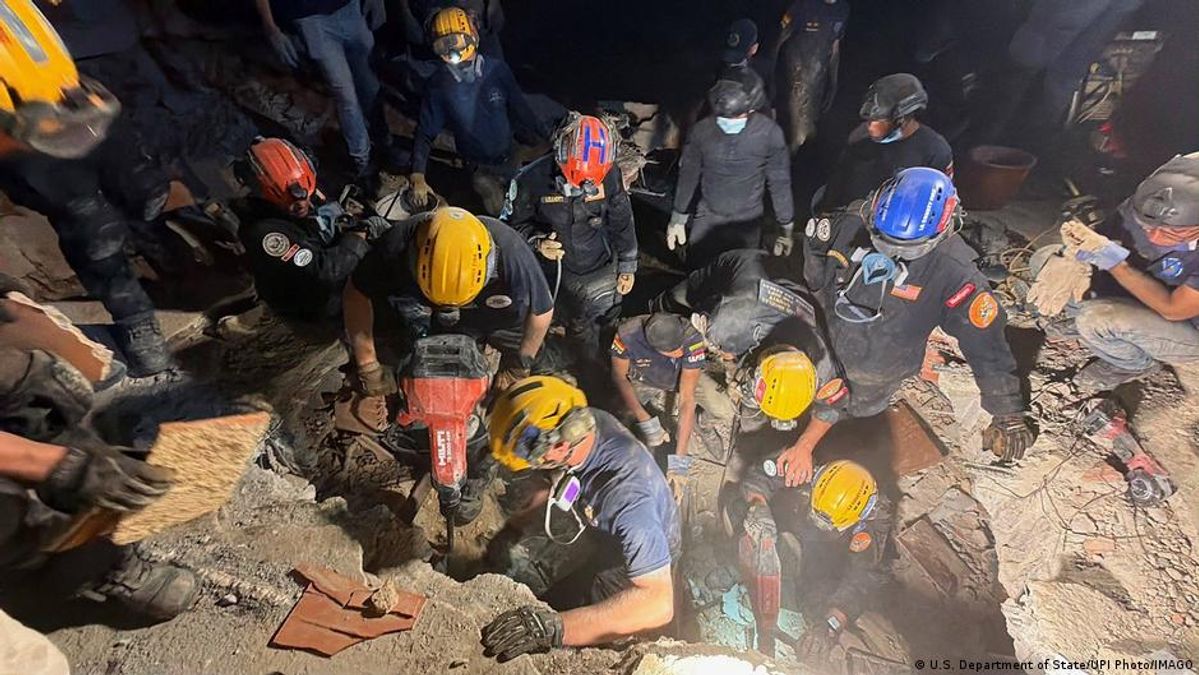
The recent earthquakes in Venezuela have resulted in a devastating humanitarian crisis, with over 1,900 deaths, 10,500 injuries, and 43,000 people missing. The international community must respond to the worsening hunger, disease, and overwhelmed healthcare system.
Venezuela has been facing a severe economic crisis, with hyperinflation, food and medicine shortages, and a collapsing healthcare system. The country's infrastructure is weak, and its emergency response capabilities are limited. The recent earthquakes have exacerbated the situation, leaving thousands of people without access to basic necessities like food, water, and shelter.
The international community has responded to the crisis with aid packages and rescue efforts. The United States, Ecuador, and Jordan have sent rescue teams to assist in the search and rescue operations. The World Food Programme (WFP) has appealed for $50 million to provide emergency food assistance to up to 500,000 people over the next three months. The World Health Organization (WHO) has warned of the strain on Venezuela's healthcare system and the spread of diseases like measles, malaria, yellow fever, and dengue.
The humanitarian crisis in Venezuela has significant geopolitical implications. The country's proximity to the Caribbean and the Americas makes it a critical location for regional stability. The crisis has the potential to destabilize the region, creating a power vacuum that could be exploited by external actors. The international community must respond to the crisis to prevent a humanitarian disaster and maintain regional stability.
The future consequences of the humanitarian crisis in Venezuela are uncertain. If left unaddressed, the crisis could lead to a massive refugee crisis, with thousands of people fleeing the country in search of safety and security. The crisis could also lead to a regional conflict, as external actors vie for influence and control. The international community must work together to address the crisis and prevent a humanitarian disaster.
The recent earthquakes in Venezuela have resulted in a devastating humanitarian crisis. The international community must respond to the worsening hunger, disease, and overwhelmed healthcare system. The crisis has significant geopolitical implications, and the international community must work together to address the crisis and prevent a humanitarian disaster.
Editor's Note: The analysis is based on available data and information, but the future consequences of the crisis are uncertain.
Source referenced: DW
This brief was synthesized by our Editorial Engine and reviewed by The Ground Narrative team.