TRENDING

Monday, 5 October 2026
----------------------
24 Rabi' Al-Thani 1448 AH
The World Health Organization has criticized the Trump administration's push to overhaul US childhood vaccination policy, citing decades of evidence that supports the safety and efficacy of vaccines. The move has sparked concerns about the potential consequences for public health.
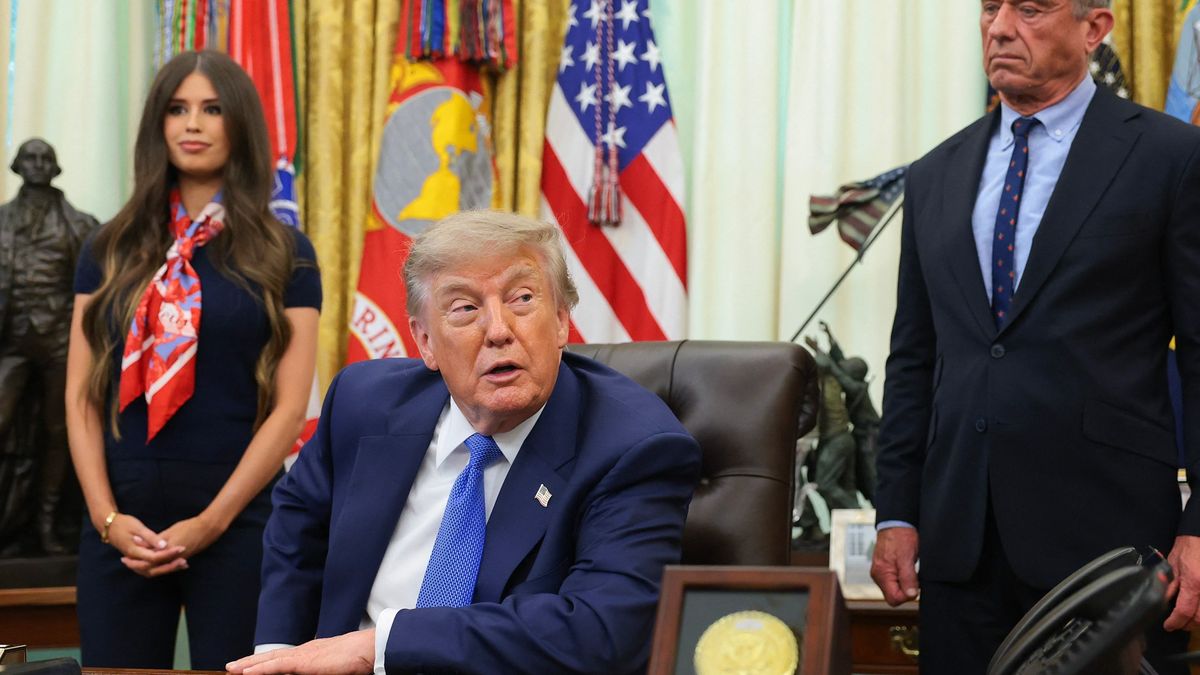
The World Health Organization (WHO) has accused the Trump administration of ignoring decades of evidence with its push to overhaul US childhood vaccination policy. The warning comes after President Trump signed an executive order calling for a rethink of school vaccine mandates and renewed calls for the split of the measles, mumps, and rubella (MMR) vaccine into three separate doses.
At the heart of this controversy is a clash between scientific evidence and political influence. The Trump administration's Health Secretary, Robert F Kennedy Jr, has long promoted a disproven link between the MMR vaccine and autism, despite overwhelming evidence to the contrary. The WHO has emphasized that vaccination policy should be guided by rigorous, independent, and transparent review of the best available science, not by political influence. This is a critical distinction, as it highlights the tension between the administration's political agenda and the scientific consensus on vaccine safety.
The human cost of this controversy is potentially devastating. Delaying vaccines or separating doses unnecessarily can leave children unprotected and vulnerable to preventable diseases. The consequences of this policy shift could be severe, particularly in communities with limited access to healthcare. The WHO has warned that this approach can have serious consequences, including the spread of preventable diseases and the erosion of public trust in vaccination programs.
What is being downplayed in this controversy is the potential long-term damage to public health infrastructure. The Trump administration's actions have sparked concerns about the politicization of science and the erosion of trust in public health institutions. The WHO's criticism of the administration's policy is not just about the science; it's also about the integrity of the public health system. The administration's actions have created a sense of uncertainty and confusion, which can have far-reaching consequences for public health.
As this controversy unfolds, readers should watch for the potential consequences of the Trump administration's policy shift. Will the administration's actions lead to a decline in vaccination rates, and if so, what will be the impact on public health? How will the WHO and other public health organizations respond to the administration's policy, and what will be the implications for global health security? These are critical questions that will shape the future of public health policy and the lives of millions of people around the world.
Editor's Note: The analysis is based on publicly available information and may not reflect the full complexity of the issue.
Source referenced: ALJAZEERA
This brief was synthesized by our Editorial Engine and reviewed by The Ground Narrative team.