TRENDING

Monday, 26 October 2026
----------------------
15 Jumada Al-Awwal 1448 AH
The US military has confirmed strikes on Iranian radar sites and the downing of Iranian drones, marking a significant escalation in direct military confrontation between the two nations in the Persian Gulf region. This development raises serious concerns about regional stability and the security of vital international shipping lanes.
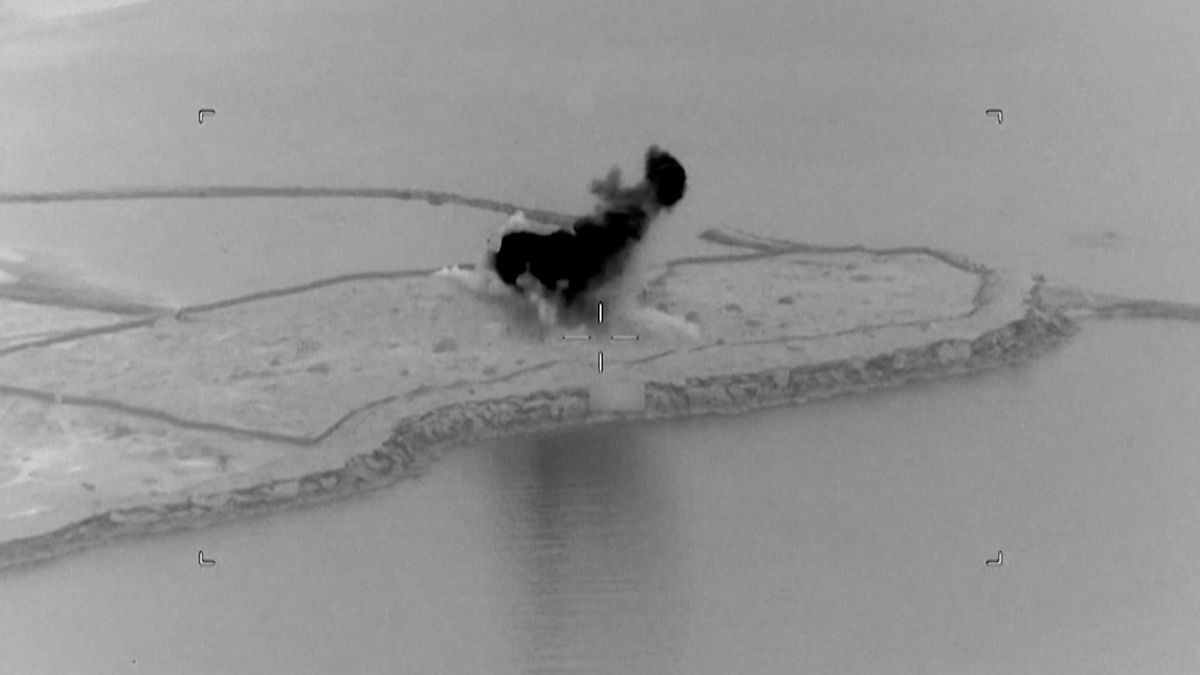
In a significant development underscoring the volatile geopolitical landscape of the Middle East, the United States military has confirmed direct strikes against Iranian radar sites located on Goruk and Qeshm Island. The US Central Command (CENTCOM) also reported the successful interception and downing of four Iranian one-way attack drones. These events, which transpired on a Saturday morning, as reported on June 6, 2026, represent a notable escalation in the long-standing tensions between Washington and Tehran, moving beyond proxy conflicts to direct military engagement.
The targeted Iranian radar sites on Goruk and Qeshm Island are strategically critical. Qeshm Island, in particular, is situated in the Strait of Hormuz, a narrow chokepoint through which approximately one-fifth of the world's oil supply passes daily. Any military action in this vicinity carries profound implications for global energy markets and international maritime security. Radar installations in this area are vital for Iran's surveillance capabilities over the Strait, monitoring both commercial and military vessel traffic. The US strikes on these sites suggest an intent to degrade Iran's ability to track or potentially interfere with shipping, or to respond to prior Iranian actions.
The simultaneous reports of drone interceptions over Kuwait and Bahrain further highlight the regional dimension of this escalation. Both nations host significant US military presence and are key allies in the Gulf. The presence of Iranian drones in their airspace, regardless of their intended target, poses a direct threat to their security and underscores the reach of Iran's unmanned aerial vehicle (UAV) capabilities. The US military's interception of these drones demonstrates its commitment to defending its assets and allies in the region, while also showcasing advanced counter-drone technologies.
This direct military engagement between the United States and Iran marks a dangerous new phase in their adversarial relationship. For years, tensions have simmered, often manifesting through proxy conflicts, cyber warfare, and naval incidents in the Gulf. However, direct US strikes on Iranian soil and the downing of Iranian military assets by US forces constitute a clear and unambiguous act of military confrontation. This move could be interpreted as a calibrated response to previous Iranian provocations, or as a pre-emptive measure to deter future aggression, particularly concerning maritime security or threats to regional allies.
From a geopolitical perspective, the incident risks a broader regional conflagration. Iran's response, if any, will be closely watched. Tehran has historically demonstrated a willingness to retaliate, often through its network of regional proxies or by targeting shipping. The potential for miscalculation or unintended escalation is high, with severe consequences for global economic stability, given the Strait of Hormuz's importance.
Furthermore, the incident underscores the ongoing arms race and technological competition in the region. Iran's development and deployment of one-way attack drones represent a significant asymmetric threat, capable of harassing shipping, targeting infrastructure, and challenging air defenses. The US response, in turn, highlights the critical role of advanced air defense systems and intelligence gathering in maintaining regional security.
The immediate aftermath of these strikes will likely involve heightened military readiness on both sides and increased diplomatic efforts to de-escalate. International actors will undoubtedly call for restraint, fearing a wider conflict that could destabilize the entire Middle East and impact global energy supplies. The incident also puts pressure on any potential diplomatic pathways between Washington and Tehran, making future negotiations significantly more challenging. The precise motivations behind the Iranian drone activity and the US decision to strike remain subject to ongoing analysis, but the immediate consequence is a stark reminder of the fragility of peace in one of the world's most critical geopolitical flashpoints.
Editor's Note: The article provides limited explicit detail on the 'why' behind the US strikes, framing it as a response to Iranian drone activity. The analysis infers strategic motivations based on the location and nature of the targets.
Source referenced: ALJAZEERA
This brief was synthesized by our Editorial Engine and reviewed by The Ground Narrative team.