TRENDING

Thursday, 24 September 2026
----------------------
13 Rabi' Al-Thani 1448 AH
Ukraine has intensified its long-range attacks, targeting a critical Russian weapons manufacturing plant in Volgograd and an oil pumping station supplying Moscow, signaling a strategic shift to degrade Russia's war-fighting capabilities and logistical networks. These strikes, following a major drone assault, underscore Kyiv's evolving asymmetric warfare strategy and its willingness to bring the conflict deeper into Russian territory, prompting retaliatory actions from Moscow.
In a significant escalation of the ongoing conflict, Ukraine launched a series of deep strikes into Russian territory on Saturday, targeting key components of Russia's military-industrial complex and energy infrastructure. These attacks, which followed one of the largest drone assaults of the four-and-a-half-year-old war, represent a calculated effort by Kyiv to degrade Moscow's capacity to sustain its military operations and exert pressure on its logistical and economic systems.
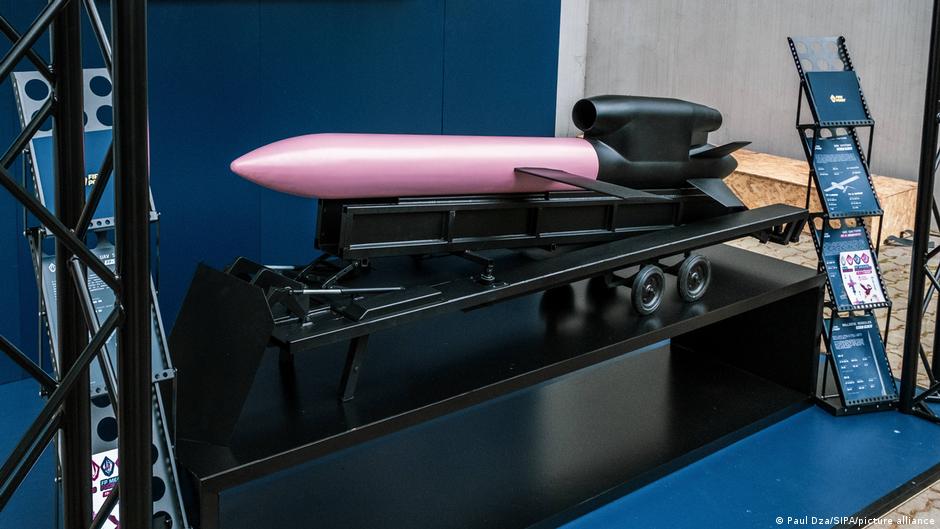
Ukrainian President Volodymyr Zelenskyy confirmed that Ukrainian-made FP-5 Flamingo missiles struck the Titan-Barrikady facility in Volgograd, a major industrial complex in southwestern Russia. Zelenskyy described the plant as a producer of "artillery systems and specialized military equipment, including components for missile launch systems." Ukraine's General Staff further specified that the facility manufactures equipment for advanced missile systems, such as self-propelled launchers and transport-loading vehicles for the Iskander-M missile system. The strike reportedly caused a fire at the plant, and Russian regional Governor Andrei Bocharov confirmed the attack, reporting at least 10 wounded individuals and damage to production facilities.
Concurrently, Ukrainian drones targeted an oil pumping station in Vtorovo, near the capital of the Vladimir region, east of Moscow. This facility, owned by the state-owned oil pipeline giant Transneft, is crucial for delivering fuel to the Russian capital. Ukraine's SBU Security Service stated that the strikes hit a technical building at the station, marking the second successful attack on this particular facility within a month. The Kremlin has yet to comment on this specific incident.
These coordinated strikes by Ukraine carry significant strategic implications. By targeting the Titan-Barrikady plant, Kyiv aims to directly impact Russia's ability to produce and maintain advanced weaponry essential for its offensive operations. The Iskander-M system, in particular, is a high-value asset, and disrupting its component supply chain could have long-term effects on Russia's precision strike capabilities. This represents a shift towards degrading Russia's industrial base, a critical aspect of its war economy, rather than solely focusing on frontline military targets.
The attack on the Transneft oil pumping station, located deep within Russia and vital for Moscow's fuel supply, serves multiple purposes. Economically, it seeks to disrupt Russia's energy logistics, potentially creating supply chain issues and increasing operational costs. Psychologically, striking close to the capital demonstrates Ukraine's expanding reach and its capacity to bring the war closer to Russia's heartland, challenging Moscow's air defense systems and potentially impacting public morale. This tactic aligns with an asymmetric warfare strategy, where a militarily outmatched force uses unconventional means to inflict disproportionate costs on a larger adversary.
These latest attacks follow a broader pattern of Ukrainian deep strikes, including a major drone assault a day prior that targeted a dozen Russian regions, Crimea, and shipping at sea. This sustained campaign suggests an evolving Ukrainian strategy to stretch Russian air defenses, force the reallocation of resources, and create internal vulnerabilities, thereby diverting attention and assets from the front lines.
In response to Ukraine's actions, Russia launched its own series of strikes overnight, targeting at least three regions of Ukraine. Ukrainian authorities reported that Russian drones and aerial bombs struck the central eastern Dnipropetrovsk region more than 30 times, killing one person and injuring two. A 66-year-old man was killed in a Russian drone attack in the northern Sumy region, where a "massive attack" also injured 10 people. Strikes on the southeastern town of Zaporizhzhia injured nine, including two children. Simultaneously, Russia's RIA news agency reported that Russian forces had seized the village of Novoskeliuvate in Ukraine's Dnipropetrovsk region, indicating that ground offensives continue alongside the aerial exchanges.
The reciprocal nature of these attacks underscores the escalating intensity of the conflict. Ukraine's increasing ability to strike deep into Russian territory, coupled with Russia's continued retaliatory strikes and ground advances, points to a prolonged war of attrition. The targeting of military-industrial and energy infrastructure on both sides highlights a strategic shift towards undermining the fundamental capacities that sustain the war effort, rather than solely focusing on battlefield gains. This dynamic raises concerns about further escalation and the potential for broader regional instability as both nations seek to gain leverage through increasingly aggressive tactics.