TRENDING

Tuesday, 6 October 2026
----------------------
25 Rabi' Al-Thani 1448 AH
Turkey's parliament has approved a historic law offering a conditional pardon to thousands of Kurdish PKK militants, but the road to peace is fraught with challenges and uncertainties. The move is seen as a significant step towards ending the decades-long conflict, but its success depends on the willingness of both parties to compromise and the ability of the government to address the concerns of nationalist opposition.
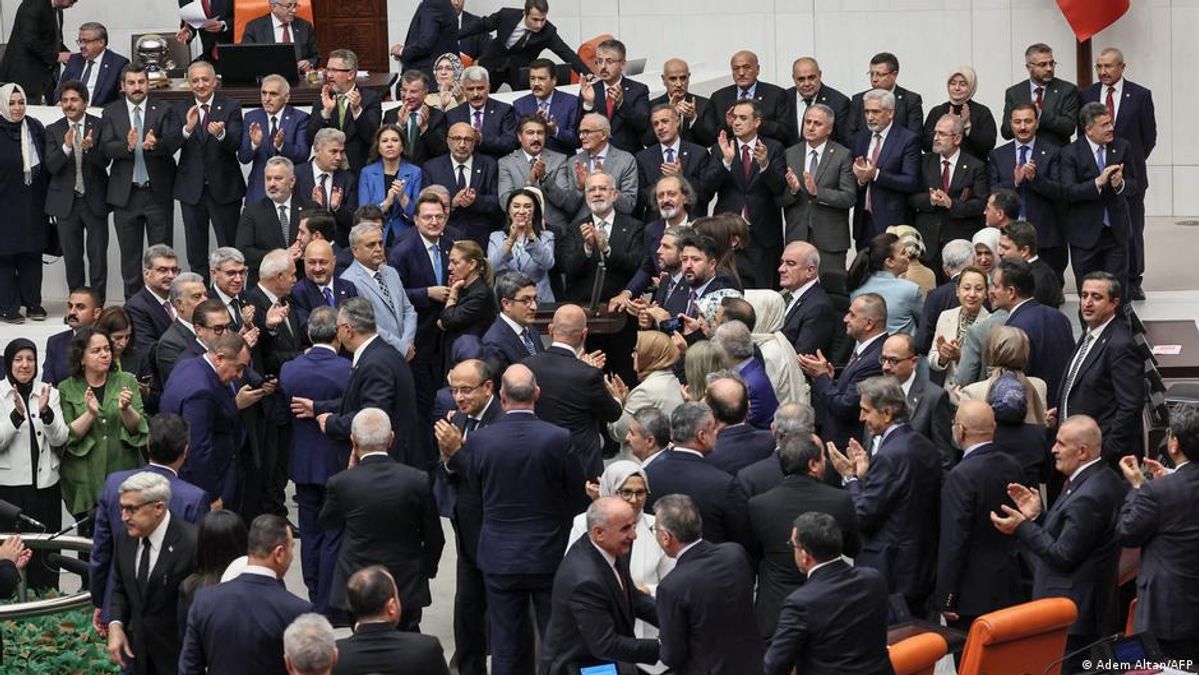
Turkey's parliament has passed a law offering a conditional pardon to thousands of Kurdish PKK militants, marking a significant step towards ending the decades-long conflict. The law sets out procedures for the PKK's disarmament and dissolution, as well as the reintegration of some members into civilian life. The government has stressed that it is not a general amnesty, and those convicted of intentional killings and some serving life sentences are excluded.
The law is a result of a delicate balance of power between the Turkish government, the PKK, and other regional players. President Recep Tayyip Erdogan's AK Party and its nationalist MHP allies have backed the law, while the pro-Kurdish DEM party has also supported it. However, nationalist opposition lawmakers have accused the government of making concessions to the PKK, and the law's success depends on the ability of the government to address their concerns. The PKK, on the other hand, has called the legislation a 'beginning' but has demanded the release of its founder, Abdullah Ocalan, and guarantees that fighters can engage in politics without prosecution.
The conflict between Turkey and the PKK has resulted in the deaths of over 40,000 people and has caused significant economic damage in Kurdish-majority southeastern Turkey. The law offers a glimmer of hope for the families of those affected by the conflict, but its success depends on the willingness of both parties to compromise. The law could also have regional implications, including closer Turkish-Iraqi ties and the integration of areas in Syria administered by the Kurdish-led Syrian Democratic Forces (SDF) with Damascus.
While the law is being hailed as a historic step towards peace, there are concerns that it may be used as a tool for Erdogan to consolidate power. The law's success depends on the ability of the government to address the concerns of nationalist opposition lawmakers, who have accused the government of making concessions to the PKK. Additionally, the law does not cover Ocalan, who has been central to the initiative, and his release is a key demand of the PKK. The government's willingness to release Ocalan and provide guarantees to the PKK will be crucial in determining the success of the law.
The next few months will be crucial in determining the success of the law. The Turkish government will need to demonstrate its commitment to the peace process by releasing detainees and providing guarantees to the PKK. The PKK, on the other hand, will need to demonstrate its willingness to disarm and dissolve. The international community, including the US and the EU, will also need to play a role in supporting the peace process and providing economic and diplomatic support to Turkey and the region. The success of the law will depend on the ability of all parties to compromise and work towards a lasting peace.
Editor's Note: The success of the law depends on the ability of all parties to compromise and work towards a lasting peace.
Source referenced: DW
This brief was synthesized by our Editorial Engine and reviewed by The Ground Narrative team.