TRENDING

Monday, 5 October 2026
----------------------
24 Rabi' Al-Thani 1448 AH
Russia's Supreme Court has barred the Yabloko party, the country's only anti-war political force, from participating in upcoming parliamentary elections. This move effectively eliminates any official platform for dissent against the ongoing conflict in Ukraine, consolidating the Kremlin's control over the political landscape.
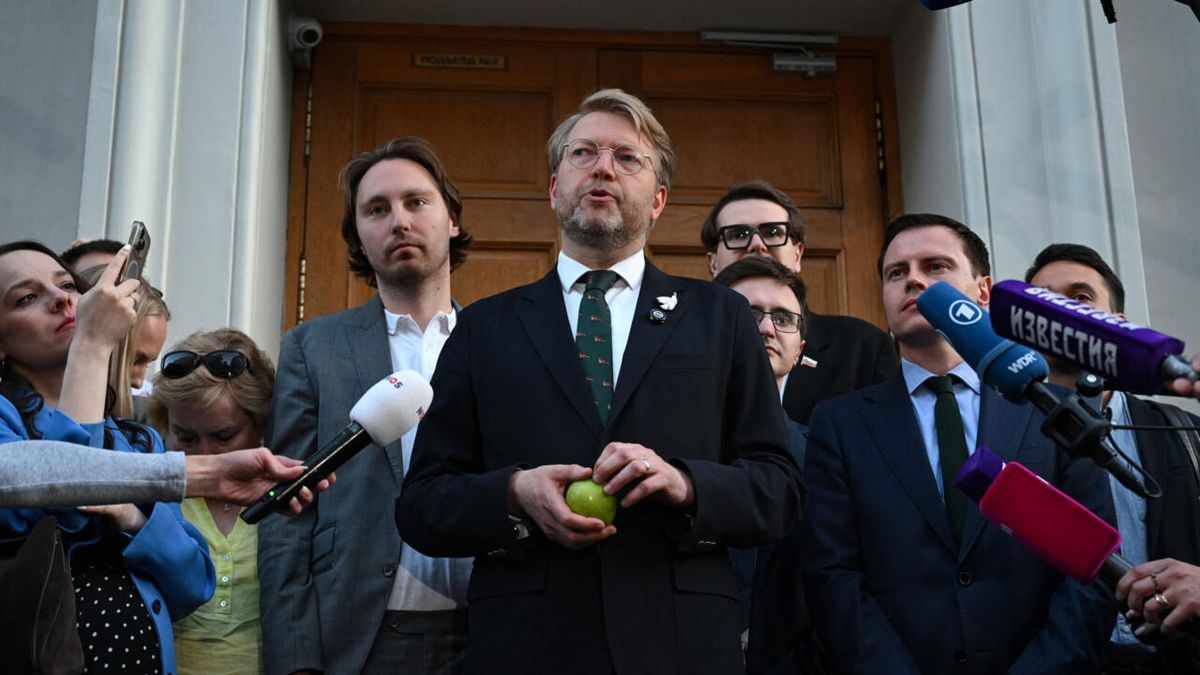
Russia's Supreme Court recently delivered a decisive blow to the country's already constrained political pluralism, officially barring the Yabloko (Apple) party from participating in the upcoming September parliamentary elections. This ruling, which upheld a suit brought by a pro-Kremlin nationalist party, effectively removes the last explicitly anti-war political option from the ballot. Outside the courthouse, a small but vocal group of protesters, largely young people, chanted "Shame! Shame!" as Yabloko leader Nikolay Rybakov vowed to appeal the decision, reiterating the party's commitment to ending the conflict in Ukraine.
This judicial decision is not an isolated event but a calculated step in the Kremlin's long-term strategy to centralize power and eliminate any genuine political opposition. For years, President Vladimir Putin's administration has systematically dismantled independent political structures, either co-opting them, marginalizing them, or outright suppressing them. With most prominent critics either jailed, exiled, or dead—a grim list that includes figures like Alexei Navalny and the ongoing legal battles against Lev Shlosberg—Yabloko, despite its historically modest electoral support (polling at around 3% recently, below the 5% threshold for Duma entry), represented a symbolic alternative. Its explicit anti-war stance made it a unique and inconvenient voice in a political system increasingly designed to project national unity behind the conflict in Ukraine. By removing Yabloko, the Kremlin ensures that the upcoming elections will feature only parties that align with or pose no significant challenge to the official narrative, thereby reinforcing the dominance of the ruling United Russia party and securing the regime's grip on power. This move is less about Yabloko's electoral chances and more about controlling the political discourse and legitimizing the state's actions through a carefully curated electoral process.
The immediate human cost of this ruling falls squarely on Russian citizens who harbor anti-war sentiments or simply desire a genuine political choice. For those who seek a peaceful resolution to the conflict in Ukraine, the ballot box has now been stripped of its last, albeit slim, hope for legitimate political representation. The small crowd of protesters outside the court—mostly young, a demographic often more open to alternative viewpoints—represents a segment of society whose voices are being systematically silenced. This erosion of democratic avenues can lead to a profound sense of powerlessness and apathy among the populace, potentially fueling resentment that, lacking an outlet, could manifest in less predictable ways. Furthermore, the psychological toll of living in a system where dissent is not only unrepresented but actively suppressed can be significant, fostering an environment of fear and self-censorship that stifles open debate and critical thought, ultimately impacting the fabric of civil society.
What governments and official statements often downplay or omit in such situations is the fundamental assault on the *pretense* of a multi-party democracy. While Russia maintains a multi-party system on paper, the systematic removal of genuinely independent voices, particularly those challenging core state policies like the war, reveals the true nature of its political landscape. The Kremlin's narrative emphasizes stability and national unity, but it strategically omits the fact that this unity is often engineered through the suppression of dissent rather than genuine consensus. Independent polls, as the raw intelligence suggests, indicate that a significant portion of the Russian public actually favors peace negotiations with Kyiv. This underlying public sentiment is precisely what the removal of Yabloko seeks to obscure, creating an illusion of overwhelming support for the war and its associated policies. The untold story is the long-term cost to Russia itself: a society where legitimate grievances have no electoral outlet can become brittle, making any future political transitions potentially more volatile and unpredictable.
As the September elections approach, observers should watch for several key indicators. While Yabloko's appeal is likely to be a symbolic gesture, its outcome will confirm the judiciary's role in political gatekeeping. The performance of other 'systemic' opposition parties in the elections will be telling; will voters, deprived of a genuine anti-war option, simply abstain or cast protest votes for other, less critical parties? More broadly, the fate of remaining anti-war activists and independent voices operating outside the electoral system will be crucial. Will their suppression intensify, or will new, informal channels of dissent emerge? Ultimately, the trajectory of the war in Ukraine itself will continue to be the primary driver of domestic political control. Any significant shifts on the battlefield or sustained human and economic costs could test the Kremlin's ability to maintain its carefully constructed narrative, potentially leading to new, unforeseen stirrings within Russian society, even in the absence of an official anti-war voice on the ballot.
Source referenced: FRANCE24
This brief was synthesized by our Editorial Engine and reviewed by The Ground Narrative team.


