TRENDING

Monday, 5 October 2026
----------------------
24 Rabi' Al-Thani 1448 AH
US President Trump has signed executive orders targeting birthright citizenship, sparking a constitutional debate over who qualifies as an American citizen. This move directly challenges the long-held interpretation of the 14th Amendment.
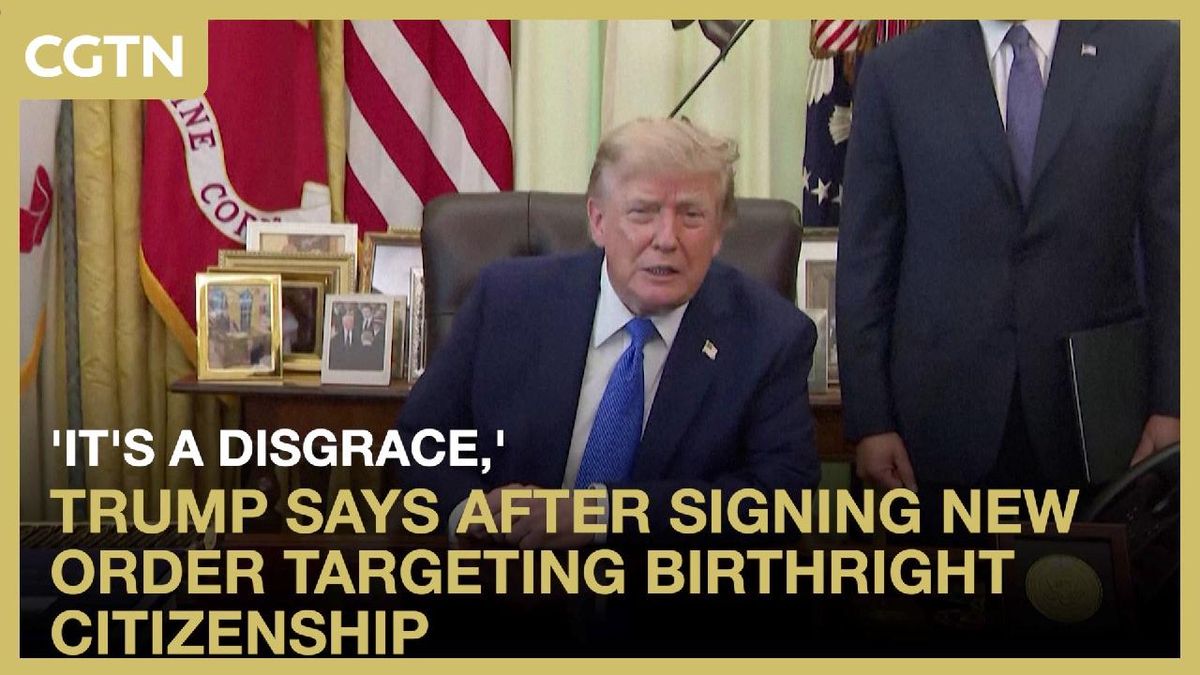
US President Donald Trump has issued two executive orders aimed at significantly restricting birthright citizenship. The first order targets what the administration terms "birth tourism," seeking to prevent foreign nationals from entering the US on nonimmigrant visas with the sole purpose of giving birth on American soil. The second order defines new categories of individuals ineligible for birthright citizenship, including children of foreign government employees, members of designated Foreign Terrorist Organizations, and those involved in fraudulent activity to obtain citizenship. This action follows a previous attempt by the administration to alter birthright citizenship that was struck down by the Supreme Court.
This executive action is a calculated assertion of presidential power, testing the boundaries of constitutional interpretation and executive authority. For the Trump administration, it serves as a powerful signal to its political base, fulfilling a core campaign promise to tighten immigration controls and redefine national identity. The move pits the executive branch directly against established legal precedent and potentially the judiciary, setting the stage for a significant constitutional showdown. By framing "birth tourism" as a "disgrace" and an abuse by "wealthy people," the administration seeks to rally public support, shifting the narrative from a complex legal debate to one of perceived fairness and national security. The underlying power dynamic is a struggle between a president seeking to reshape the nation's demographic and legal landscape, and the constitutional framework designed to limit such unilateral changes.
The immediate human cost of these orders will fall disproportionately on families and individuals navigating the complex US immigration system. Pregnant individuals from certain countries or with specific visa types will likely face increased scrutiny and potential denial of entry, leading to anxieties about family separation and the logistics of international travel. Children born to parents deemed ineligible under these new rules could find themselves in a legal limbo, potentially becoming stateless or facing prolonged, costly legal battles to affirm their citizenship. Beyond specific cases, these orders contribute to a broader climate of fear and uncertainty within immigrant communities, fostering a sense of insecurity that can deter individuals from seeking necessary services or engaging fully in society, regardless of their legal status. The economic impact also extends to the service industries that cater to international visitors, including medical and hospitality sectors, which will see disruption.
What is largely downplayed in the official statements is the profound legal challenge inherent in these executive orders. The 14th Amendment's citizenship clause states, "All persons born or naturalized in the United States, and subject to the jurisdiction thereof, are citizens of the United States." Historically, the phrase "subject to the jurisdiction thereof" has been interpreted narrowly, primarily excluding only foreign diplomats and enemy combatants. The administration's orders attempt to unilaterally broaden this exclusion, effectively reinterpreting a foundational constitutional principle without legislative action or a constitutional amendment. This is not merely about curbing specific abuses; it's a strategic attempt to redefine the very concept of American citizenship through executive fiat, a move that could have far-reaching implications for future generations and the global understanding of US legal principles. The focus on "birth tourism" serves as a palatable entry point for a much larger, more fundamental re-evaluation of who belongs.
The immediate future will be dominated by legal challenges. Civil liberties organizations and immigrant advocacy groups are expected to swiftly challenge these executive orders in federal courts, arguing their unconstitutionality. The ultimate arbiter will likely be the Supreme Court, which has previously signaled its stance on similar attempts to restrict birthright citizenship. Beyond the courts, observers should watch how these orders are enforced at US borders and ports of entry, specifically how immigration officials interpret and apply the new definitions of ineligibility. This policy will also inevitably become a central issue in future political campaigns, serving as a litmus test for candidates and a rallying cry for both proponents and opponents of birthright citizenship. Finally, the international community's reaction will be important, as other nations assess the implications for their citizens and the broader principles of international law regarding nationality and human rights.
Source referenced: CGTN
This brief was synthesized by our Editorial Engine and reviewed by The Ground Narrative team.