TRENDING

Thursday, 15 October 2026
----------------------
4 Jumada Al-Awwal 1448 AH
Ukraine faces a significant internal challenge as the ousting of its popular Defence Minister, Mykhailo Fedorov, sparks public protests and a bitter public dispute within the military's top ranks. This internal discord emerges four years into the conflict with Russia, raising concerns about national unity and the effectiveness of the war effort.
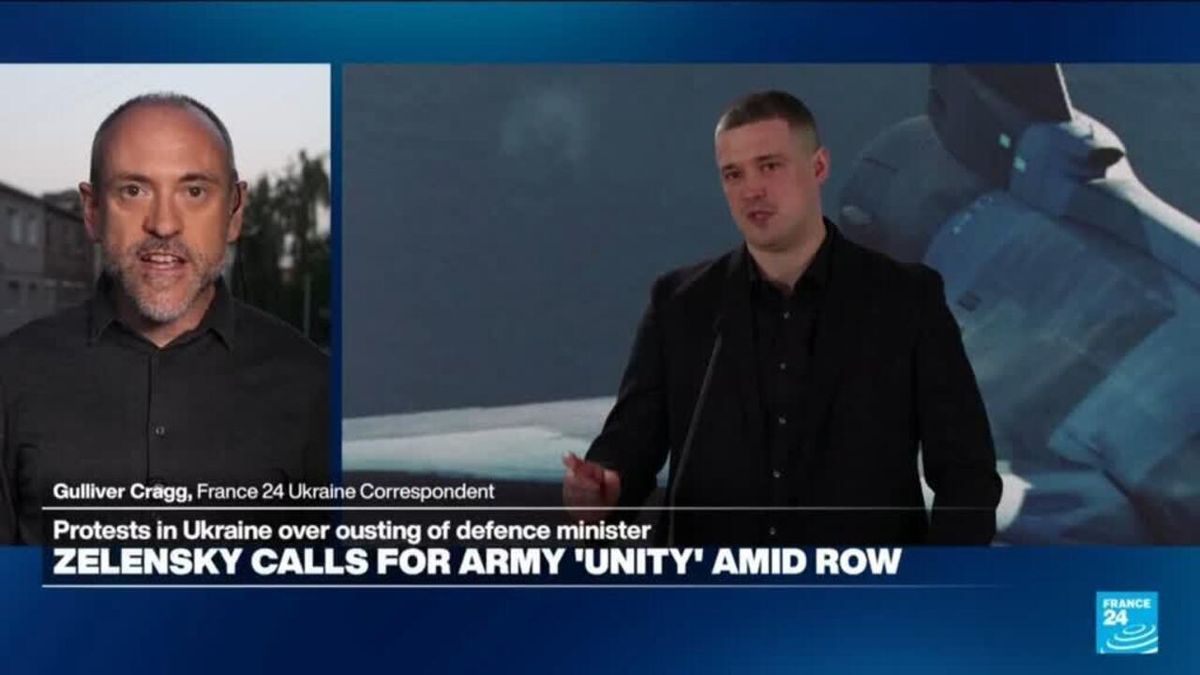
Kyiv, Ukraine – On July 16, 2026, Ukraine's political and military landscape was rocked by the dismissal of Defence Minister Mykhailo Fedorov, a move that has ignited widespread public protests and exposed a deep rift within the nation's military command. The events unfolded four years into Ukraine's protracted conflict with Russia, underscoring the immense pressures and internal fragilities that can emerge during prolonged warfare.
Mykhailo Fedorov, who had served as Defence Minister for only six months, was removed from his position by President Volodymyr Zelensky. Fedorov had garnered significant public support for his initiatives aimed at digitising and modernising an army described as fatigued by years of combat. His popularity was evident in the immediate aftermath of his dismissal, as large protests erupted across several Ukrainian cities, with demonstrators expressing strong disapproval of the decision and hailing Fedorov as Kyiv's 'most successful defence minister.'
The timing and nature of Fedorov's removal are particularly sensitive. In a nation engaged in an existential struggle, the stability and perceived competence of its defence leadership are paramount. The public's swift and vocal reaction suggests a strong belief in Fedorov's reform agenda and a potential distrust in the motivations behind his sudden departure. While the specific reasons for his dismissal remain officially undisclosed, such high-level changes during wartime often point to underlying policy disagreements, power struggles, or concerns over performance and strategy.
Adding to the gravity of the situation, the ousted Defence Minister did not depart quietly. Mykhailo Fedorov directed stunning public criticism at the army's top commander, whose identity was not specified in initial reports but is understood to be the highest-ranking military official. This public spat between a former defence minister and the military's top brass represents an unprecedented level of internal discord for Ukraine during wartime.
In response to the escalating tensions and public outcry, President Volodymyr Zelensky was compelled to issue a direct call for unity. His intervention highlights the severity of the emerging split, acknowledging the potential for such divisions to undermine national cohesion and the broader war effort. The President's plea underscores the urgent need to present a united front, both domestically and internationally, especially as the conflict with Russia continues to demand unwavering resolve.
This internal crisis carries significant geopolitical ramifications for Ukraine. Firstly, a public split within the military leadership during active conflict can severely impact troop morale and operational effectiveness. Disunity at the top risks creating confusion in command structures, potentially hindering strategic planning and tactical execution on the front lines. For an army already battling fatigue after four years of intense fighting, such internal strife is a dangerous distraction.
Secondly, the visible discord could be exploited by Russia. Moscow's propaganda apparatus will likely seize upon these events to sow further division, undermine international confidence in Ukraine's leadership, and project an image of a fractured and unstable adversary. This narrative could be used to weaken international support for Kyiv, particularly among Western allies who provide crucial military and financial aid.
Thirdly, international partners will be closely observing these developments. The perception of instability or disunity within Ukraine's government and military could raise questions about the country's ability to effectively manage aid, implement reforms, and maintain a coherent strategy against Russian aggression. Sustained international support is contingent on a belief in Ukraine's capacity for effective governance and a unified war effort.
Finally, the protests and the public criticism reflect a broader challenge to public trust and accountability within Ukraine's wartime government. Maintaining public confidence is vital for sustaining the national will to fight. Any perception of political infighting or arbitrary dismissals of popular figures can erode this trust, potentially leading to broader social unrest and weakening the government's mandate.
The events surrounding Mykhailo Fedorov's dismissal represent a critical test of Ukraine's resilience and its leadership's ability to manage internal pressures while simultaneously confronting an external threat. Resolving this internal discord swiftly and transparently will be crucial for maintaining national unity, reassuring international allies, and sustaining the momentum of the war effort. Failure to do so risks creating strategic vulnerabilities that could prolong the conflict or complicate Ukraine's path toward a stable and secure future.
Source referenced: FRANCE24
This brief was synthesized by our Editorial Engine and reviewed by The Ground Narrative team.


