TRENDING

Sunday, 4 October 2026
----------------------
23 Rabi' Al-Thani 1448 AH
A recent incident in Kherson, where a drone tracked and injured a civilian, underscores the evolving and increasingly personal nature of warfare in Ukraine. This event highlights the unprecedented scale of drone deployment and production by both sides, transforming the battlefield and civilian experience.
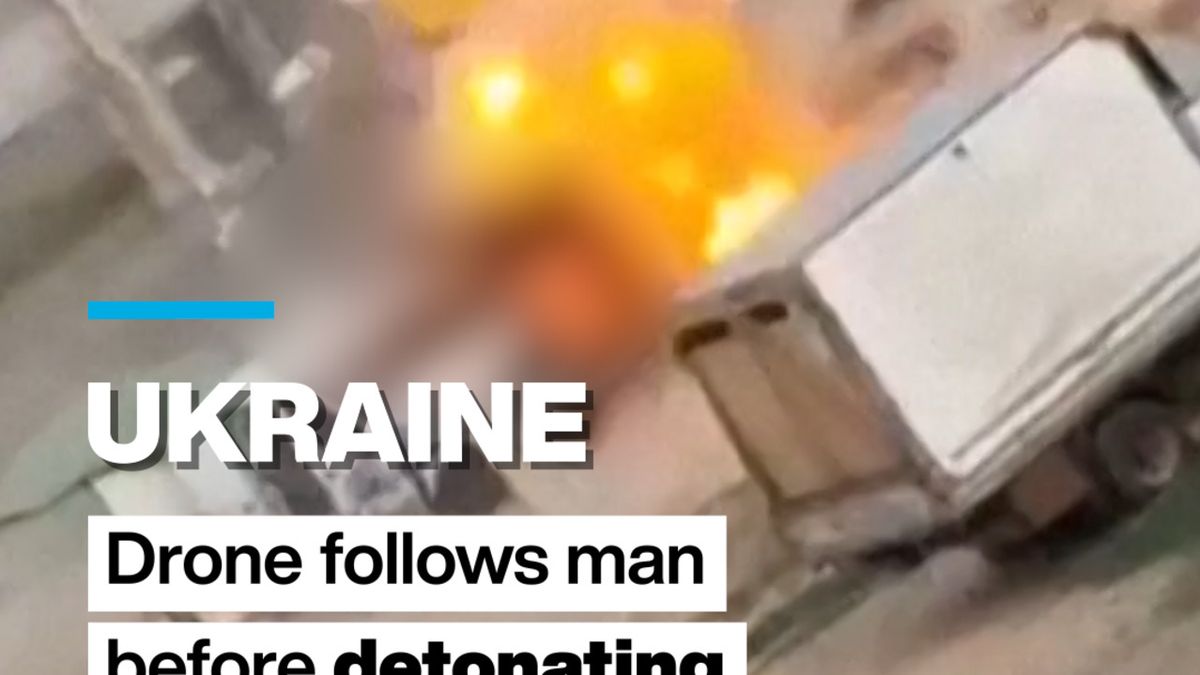
On August 4, 2026, a video released by the Kherson Regional Military Administration showed a drone deliberately following a man before detonating and injuring him. This incident serves as a stark illustration of the pervasive and increasingly precise role of unmanned aerial vehicles (UAVs) in the ongoing conflict in Ukraine, bringing the front line's dangers directly into civilian spaces.
The war in Ukraine has become the proving ground for drone warfare, marking a fundamental shift in military strategy and power dynamics. Both Kyiv and Moscow are locked in an unprecedented production race, with Ukraine aiming for an ambitious target of seven million drones annually, while Russia is estimated to deploy hundreds of long-range attack drones daily. This scale transforms reconnaissance, targeting, and even direct engagement, democratizing certain aspects of air power and blurring the lines between tactical and strategic assets. For powerful actors, drones offer cost-effective precision, reduced risk to human pilots, and the ability to overwhelm traditional defenses, fundamentally altering the balance of power in localized engagements and across front lines. The capacity to mass-produce and deploy these systems is now a critical measure of a nation's industrial and technological resilience, shifting the focus from traditional heavy armor and manned aircraft to agile, networked drone swarms.
The man injured in Kherson is not an isolated casualty but a symbol of the profound human cost of this new era of warfare. For civilians, the constant threat of drones transforms daily life into a perpetual state of surveillance and potential attack. The sky, once a symbol of freedom, becomes a source of anxiety, as unseen eyes and unseen weapons can strike at any moment. This pervasive threat erodes psychological well-being, disrupts community life, and makes basic activities like walking down a street fraught with danger. Beyond direct physical harm, the fear of being targeted by an autonomous or semi-autonomous system creates a chilling sense of dehumanization, where individuals become mere data points for targeting algorithms, stripped of their agency and personal safety. The sheer volume of drones means that no one is truly safe from the sky's gaze.
While governments and military strategists laud the "efficiency" and "cost-effectiveness" of drone warfare, they often downplay or entirely omit the profound ethical and humanitarian questions it raises. The incident in Kherson highlights the increasing autonomy of these systems, or at least the capacity for operators to make highly granular, individual targeting decisions from afar. There's a deliberate silence around the long-term psychological impact on populations living under constant drone surveillance and attack. Furthermore, the global proliferation risk of these technologies, and the lack of international norms governing their use, are rarely addressed with the urgency they demand. The narrative often focuses on military gains, overlooking the precedent being set for future conflicts where the line between combatant and civilian, and between human and machine decision-making, becomes dangerously blurred. The powerful actors benefit from the perceived precision and reduced risk to their own personnel, while the full implications for global security and human rights are left unexamined.
Observers should closely watch the ongoing drone production race between Ukraine and Russia, as it will dictate the intensity and nature of future engagements and the broader trajectory of the conflict. Beyond the battlefield, the ethical and legal frameworks (or lack thereof) governing autonomous weapons systems will be critical. Will international bodies move to establish clear regulations, or will the proliferation of these technologies outpace any attempts at control? Pay attention to how other nations begin to integrate lessons from Ukraine into their own military doctrines and procurement strategies, potentially accelerating a global drone arms race. Finally, the long-term mental health impact on civilian populations in drone-heavy conflict zones will be a crucial, if often overlooked, indicator of the true human cost of this evolving form of warfare.
Source referenced: FRANCE24
This brief was synthesized by our Editorial Engine and reviewed by The Ground Narrative team.


