TRENDING

Monday, 5 October 2026
----------------------
24 Rabi' Al-Thani 1448 AH
Turkey's recent surge in activist arrests ahead of the NATO summit has sparked international concern, with many questioning the government's motivations and the implications for regional stability.
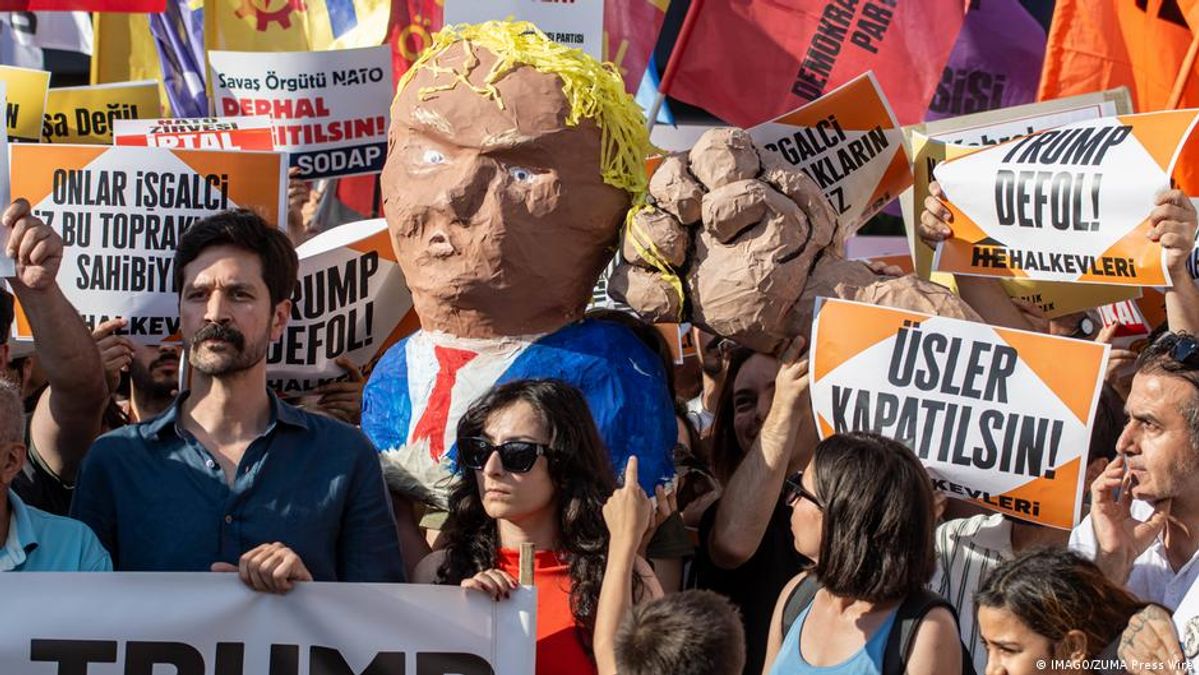
The Turkish government's decision to arrest over 225 activists, including human rights and environmental advocates, journalists, and economists, in the lead-up to the NATO summit has sent shockwaves across the international community. The crackdown, which has seen 178 individuals remain in pretrial detention, has been justified by Turkish prosecutors as part of ongoing investigations into terrorist organizations.
However, many experts and human rights organizations have questioned the government's motivations, suggesting that the arrests may be a deliberate attempt to silence dissenting voices and undermine the legitimacy of the NATO summit. Political scientist Berk Esen noted that the move is 'hard to understand' and could be seen as a signal to the US, particularly given the high-profile nature of the summit.
The arrests have also been criticized for targeting individuals with no apparent ties to the political left, with some being questioned about possible links to the banned Communist Party of Turkey/Marxist-Leninist. This has led to concerns that the government is using terrorism laws as a pretext to silence opposition voices and stifle dissent.
The timing of the crackdown is particularly significant, coming as it does ahead of the NATO summit. The meeting is seen as a crucial opportunity for Turkey to strengthen its ties with its Western allies, particularly in light of its strategic location on the southeastern flank of the alliance. However, the arrests have already sparked international criticism, with Human Rights Watch urging NATO allies to use their influence to urge the Turkish government to change course.
The crackdown has significant implications for regional stability, particularly in light of Turkey's role as a mediator between Iran and the US. The country's ability to balance its relationships with its Western allies and its regional partners will be put to the test in the coming weeks and months.
The arrests have also raised concerns about the erosion of civil liberties and the rule of law in Turkey. The use of terrorism laws to silence opposition voices and stifle dissent is a worrying trend that could have far-reaching consequences for the country's democratic institutions.
The Turkish government's decision to crack down on activists ahead of the NATO summit can be seen as part of a broader pattern of behavior. The country has a history of using repression to silence opposition voices, particularly in the lead-up to major international events.
The move can also be seen as a deliberate attempt to undermine the legitimacy of the NATO summit and to create a sense of unease among Western allies. By targeting activists and opposition voices, the Turkish government may be trying to create a sense of uncertainty and instability that could be used to its advantage in future negotiations.
The Turkish government's crackdown on activists ahead of the NATO summit has sparked international concern and raised questions about the country's motivations and the implications for regional stability. While the government has justified the arrests as part of ongoing investigations into terrorist organizations, many experts and human rights organizations have questioned the legitimacy of the move.
The crackdown has significant implications for regional stability, particularly in light of Turkey's role as a mediator between Iran and the US. The country's ability to balance its relationships with its Western allies and its regional partners will be put to the test in the coming weeks and months.
Editor's Note: The analysis is based on publicly available information and may not reflect the full complexity of the situation on the ground. Further research and analysis may be necessary to fully understand the motivations and implications of the Turkish government's actions.
Source referenced: DW
This brief was synthesized by our Editorial Engine and reviewed by The Ground Narrative team.


