TRENDING

Monday, 5 October 2026
----------------------
24 Rabi' Al-Thani 1448 AH
A prisoner exchange between Kinshasa and the M23 rebels, mediated by Qatar, offers a glimmer of hope in the eastern Democratic Republic of Congo. Yet, the core drivers of the decades-long conflict, particularly the scramble for resources and regional power plays, remain unaddressed.
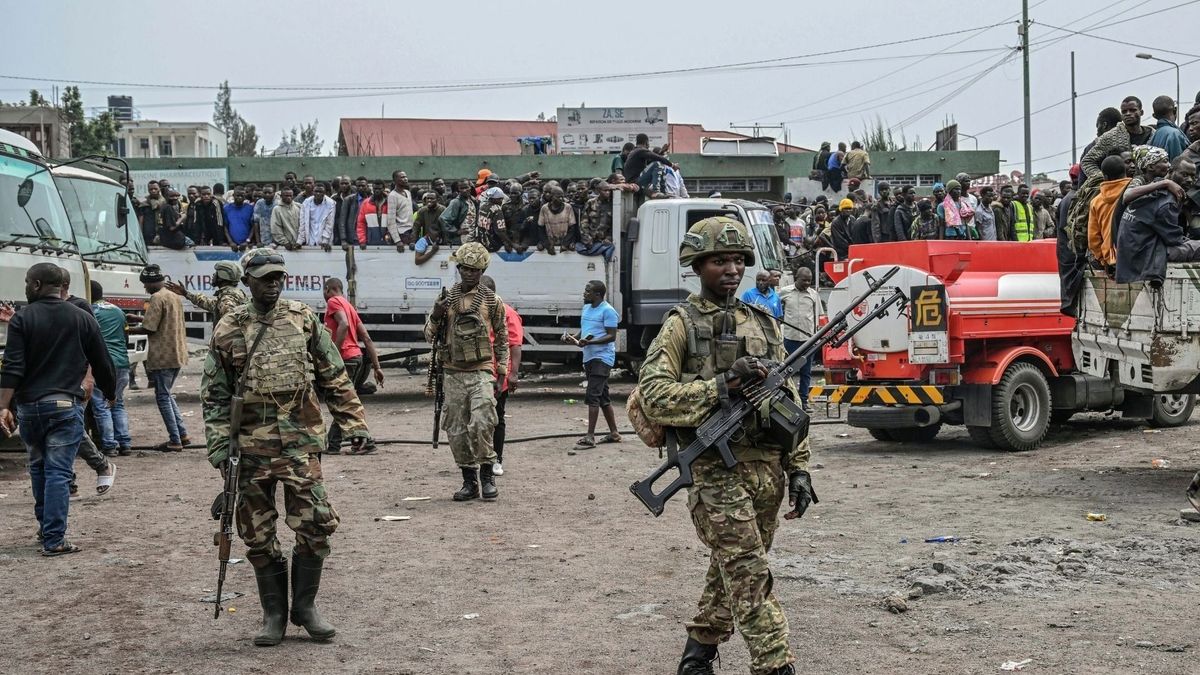
In a development that signals a cautious step forward, the M23 rebel group in the eastern Democratic Republic of Congo (DRC) has accepted the release of 15 of its members by the Kinshasa government. This prisoner exchange is a direct outcome of the Doha Framework agreement, a peace process mediated by Qatar. While seemingly minor, this gesture is presented as a potential catalyst for broader de-escalation in a region ravaged by conflict for decades, following numerous failed attempts at lasting peace.
The conflict in eastern DRC is not simply a local insurgency; it is a complex web of regional power dynamics, economic exploitation, and historical grievances. Kinshasa, the central government, struggles to assert control over its resource-rich eastern provinces, where an estimated 130 armed groups operate. For the M23, widely believed to be backed by Rwanda, their leverage stems from military might and the ability to disrupt stability, often tied to control over lucrative mineral deposits like coltan, cobalt, and gold. Rwanda's alleged involvement is driven by a mix of security concerns regarding Hutu militias operating near its border and, critically, economic interests in the DRC's vast mineral wealth. The Doha Framework, facilitated by Qatar, represents a projection of soft power, allowing Qatar to position itself as a global mediator, gaining diplomatic influence without direct military involvement. The structural forces at play are clear: a weak central state, powerful non-state actors, and external state interests all vying for control of resources, with political survival often hinging on the ability to secure these economic lifelines.
The human cost of this protracted conflict is staggering and largely borne by ordinary Congolese citizens. Millions have been displaced, forced from their homes into precarious camps, facing rampant violence, sexual assault, and chronic food insecurity. Basic services like healthcare and education are non-existent in many areas, creating a lost generation. The constant cycles of violence prevent any semblance of normal life or economic development, trapping communities in poverty and despair. While leaders negotiate prisoner swaps and framework agreements, the daily reality for those on the ground is one of survival, fear, and profound uncertainty. These are the people whose voices are rarely heard in the diplomatic chambers, yet they are the ones who pay the ultimate price for every strategic maneuver and every mineral extracted.
What official statements and mediated agreements often downplay or omit are the fundamental drivers that keep the conflict alive: the insatiable global demand for the DRC's minerals and the systemic corruption that allows these resources to be plundered. While the prisoner exchange is a welcome sign, it addresses a symptom, not the disease. Governments and corporations rarely acknowledge the full extent to which the conflict is fueled by illicit resource extraction, with profits often flowing to regional elites and international networks rather than benefiting the Congolese people. The historical context of the Rwandan genocide and the subsequent influx of Hutu refugees and ex-genocidaires into eastern DRC also plays a critical, often understated, role, creating a complex web of ethnic tensions and security dilemmas that are easily exploited. The true 'untold story' is how easily these frameworks can become another temporary pause rather than a genuine shift, as long as the underlying economic incentives for conflict remain so powerful and unaddressed.
For the people of eastern DRC, the true measure of success will not be in a prisoner swap, but in tangible, sustained peace and security. Readers should watch for several key indicators. First, will this initial gesture lead to a broader cessation of hostilities, including verifiable disarmament and demobilization of M23 fighters? Second, will Rwanda demonstrate a genuine commitment to disengage from supporting M23, moving beyond rhetoric to concrete actions? Third, can the Kinshasa government leverage any newfound stability to establish effective governance, security, and provide essential services in the East? Finally, and most critically, observers should scrutinize any efforts to address the illicit mineral trade, which remains the primary engine of the conflict. Without tackling the economic incentives that fuel the violence, any peace agreement risks being merely a temporary reprieve before the next cycle of conflict begins.
Source referenced: ALJAZEERA
This brief was synthesized by our Editorial Engine and reviewed by The Ground Narrative team.