TRENDING

Monday, 5 October 2026
----------------------
24 Rabi' Al-Thani 1448 AH
Indian police have cracked down on protesters demanding an overhaul of the state's examination system, highlighting deeper issues of corruption and inequality. The unrest has significant implications for India's democratic fabric and the future of its youth.
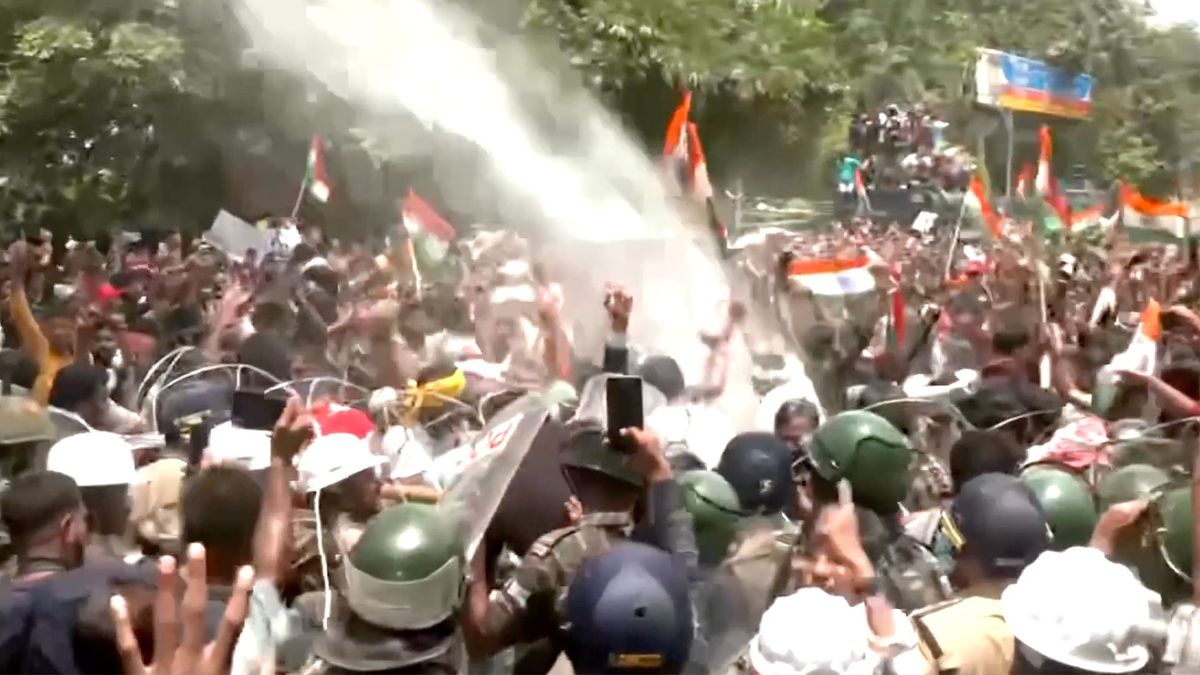
Indian police have used force against protesters in Jharkhand who were marching to the state assembly to demand action over alleged irregularities in government recruitment tests. The protesters were seeking an overhaul of the state's examination system, which they believe is plagued by corruption and favoritism.
The Indian government's response to the protests is a classic example of power preservation. By using force to disperse the protesters, the government is attempting to maintain its grip on power and suppress dissent. However, this approach is likely to backfire, as it will only fuel further unrest and anger among the youth. The government's incentives are clearly aligned with maintaining the status quo, rather than addressing the underlying issues of corruption and inequality.
The protesters, mostly young people, are bearing the human cost of the government's actions. They are not only facing physical violence but also the risk of being labeled as troublemakers or anti-nationals. The government's response is also likely to have a chilling effect on free speech and assembly, making it harder for people to express their grievances and demand change. The communities affected are primarily from marginalized backgrounds, who are already struggling to access education and employment opportunities.
What the government is downplaying is the systemic nature of the problem. The exam irregularities are not an isolated issue but a symptom of a broader culture of corruption that pervades Indian society. The government is also omitting the fact that the protesters are not just demanding an overhaul of the examination system but also better governance and accountability. The part no one is talking about is the role of politicians and bureaucrats who are complicit in the corruption and are using their power to maintain the status quo.
Readers should watch for the government's next move, which could either be a conciliatory approach or further crackdown on the protesters. The opposition parties will also be crucial in determining the outcome, as they could either capitalize on the unrest or remain silent. The international community should also be aware of the developments, as India's democratic credentials are at stake. The protesters' demands should be seen as a wake-up call for the government to address the underlying issues of corruption and inequality, rather than just a law and order problem.
Editor's Note: The analysis is based on publicly available information and may not reflect the full complexity of the situation on the ground.
Source referenced: ALJAZEERA
This brief was synthesized by our Editorial Engine and reviewed by The Ground Narrative team.


